Estimated reading time: 10 minutes
Last updated on June 23rd, 2026 at 07:07 am
If you’ve ever walked into your laundry room and found the top of the washer doing double duty as a shelf — detergent bottles, a stray sock, maybe a basket of stuff that’s been there for three days — you already know the problem isn’t really the size of the room. It’s that there’s nowhere else for any of it to go.
Small laundry rooms get a bad reputation, but most of the time the issue isn’t square footage. It’s that every surface ends up as a catch-all because nothing has an actual home. The good news is that fixing this doesn’t require knocking down walls or buying all new appliances. A handful of smart changes — done in the right order — can turn even a tiny closet or awkward nook into something that actually functions.
Let’s go through what’s worth doing first, and what’s genuinely worth the effort.
Where to Start: Prioritizing Storage in a Small Laundry Room
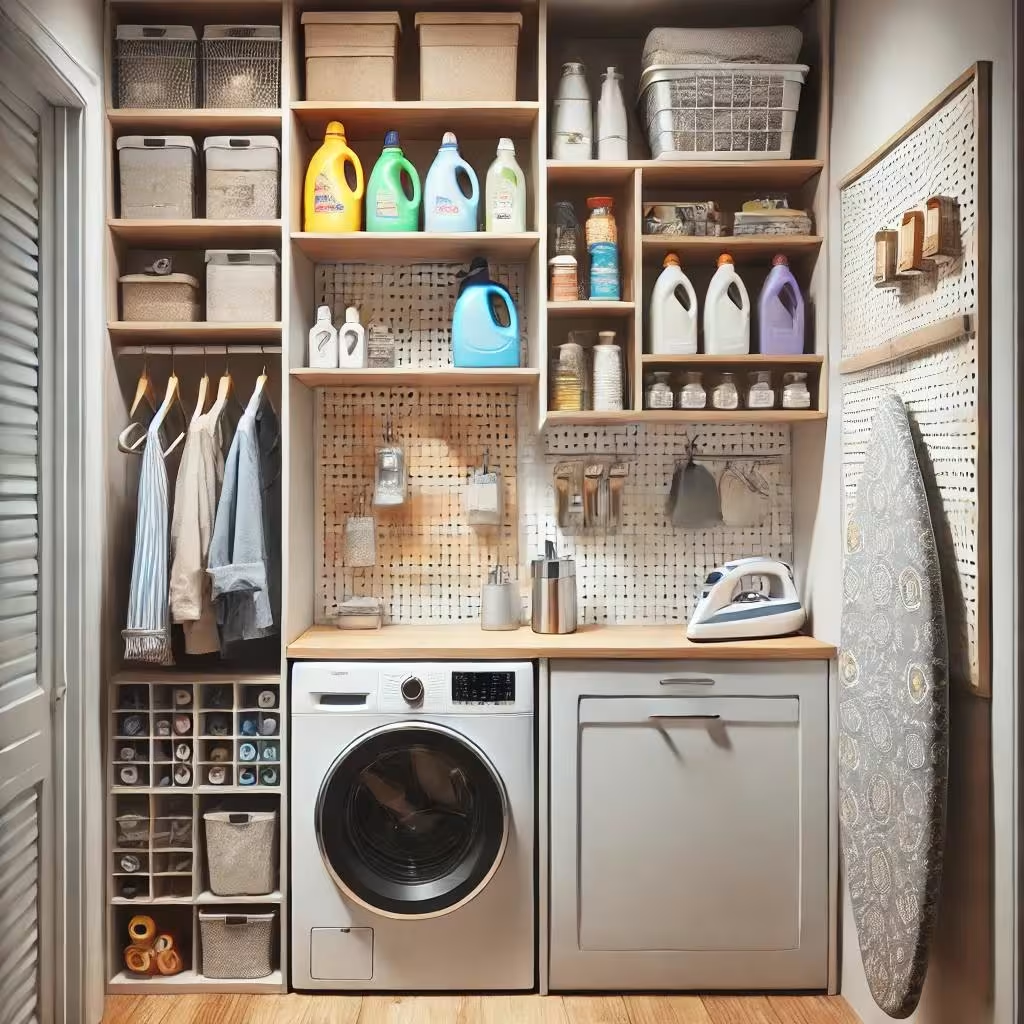
Here’s the thing about small laundry room storage ideas — there are a lot of them, and trying to do all of them at once usually just creates a different kind of clutter (now it’s organizational products instead of detergent bottles).
If you can only tackle one or two things, start here:
- Get stuff off horizontal surfaces first. Anything sitting on top of the washer or dryer should move to a shelf, cabinet, or wall hook. This single change makes the biggest visual difference for the least effort.
- Add one vertical storage solution. A shelf or small cabinet above the machines solves the “where does detergent go” problem permanently.
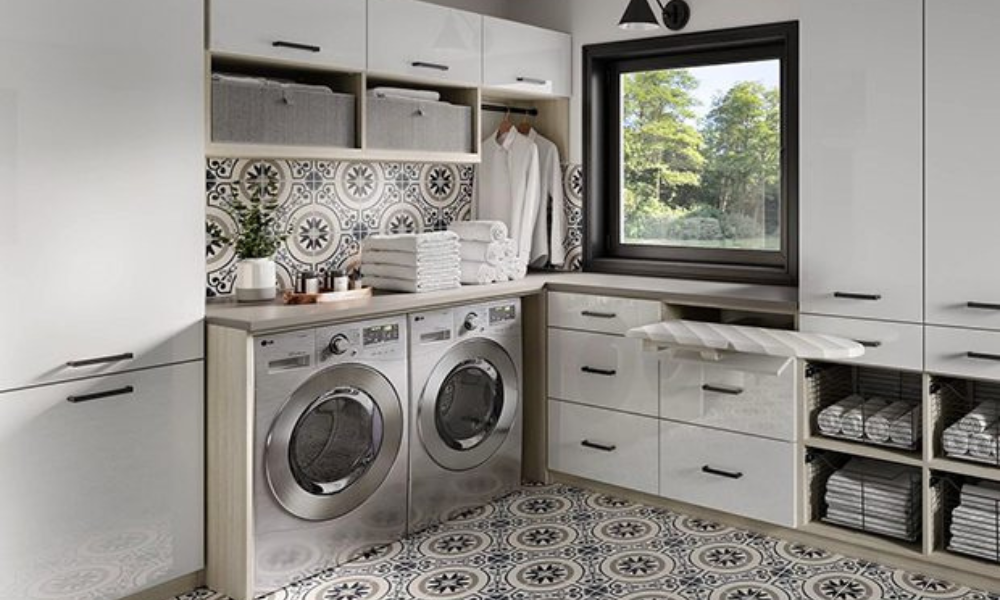
- Create a folding surface, even a small one. Even a narrow wall-mounted table changes how usable the room feels day-to-day.
Everything else — appliance swaps, closet conversions, decorative touches — matters, but it’s secondary. Get these three things right first, and the room already feels like a different space.
Vertical Storage: Getting Stuff Off the Floor and Counters
This is the highest-impact, lowest-cost change you can make, and it’s where most small laundry rooms have the most untapped potential — literally, the space above your machines is almost always empty.
Open shelves above the washer and dryer are the simplest option. They’re cheap, easy to install, and give you a spot for detergent, stain remover, dryer sheets, and baskets — all the stuff that currently lives on top of the machines or on the floor next to them. The one honest trade-off here: open shelves mean everything is visible, which looks great in photos but only works if you’re actually willing to keep it tidy. If you know that’s not realistic for your household, overhead cabinets with doors solve the same problem while hiding the mess.
Wall space is your other underused resource. A wall-mounted, expandable drying rack — the kind that folds flat against the wall when you’re not using it — gives you somewhere to air-dry delicates without permanently eating up floor space. Just make sure it’s mounted into a stud or with weight-rated anchors, not standard drywall anchors. Wet clothes are heavier than people expect, and a rack that pulls out of the wall mid-load is a mess nobody wants to deal with.
Hooks and rails are the unsung heroes here. A simple rail on the wall or the side of a cabinet gives an ironing board, a mop, or laundry bags somewhere to hang instead of leaning against a wall or getting shoved behind the dryer. It sounds minor, but these are exactly the items that tend to clutter floor space in small rooms because they don’t have an obvious home.
Folding Tables and Workspaces That Actually Fit
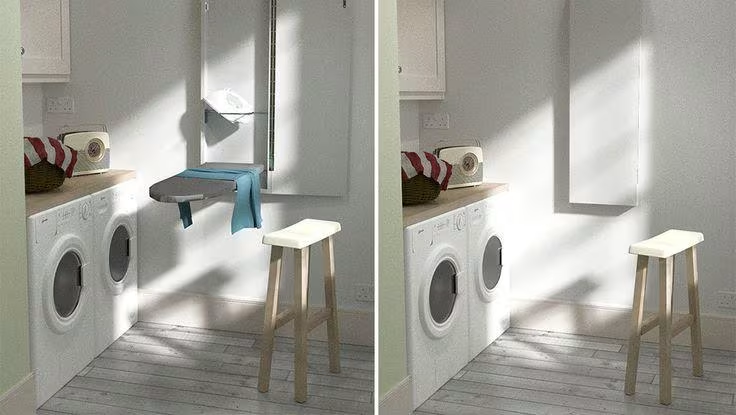
This is the idea that gets mentioned in almost every laundry room guide, but rarely with any real detail — and the detail is what makes the difference between “useful” and “decorative.”
A wall-mounted folding table that flips down when needed and folds flat against the wall when it’s not is genuinely one of the best space-saving additions for a small laundry room. But here’s the part that matters: to actually be useful for folding clothes — not just symbolically present — it needs to be roughly 24 to 30 inches wide. Anything narrower and you’ll find yourself folding on top of the dryer anyway, which defeats the purpose.
If you’ve got the wall space, look for a table that includes built-in storage underneath — even a small shelf or a couple of hooks turns dead space into somewhere for a laundry basket or a stack of folded towels waiting to be put away.
For really tight spots where even a fold-down table isn’t an option, the top of a dryer can double as a folding surface — but only if you’ve already cleared it of everything else. This is part of why the “get stuff off horizontal surfaces” priority matters so much; it’s not just about looking tidy, it’s about reclaiming the one flat surface you already have.
Stackable vs. Side-by-Side: Which Appliance Setup Makes Sense?
This is one of those decisions that sounds simple until you actually start measuring, and it’s worth getting right because it affects almost everything else in the room.
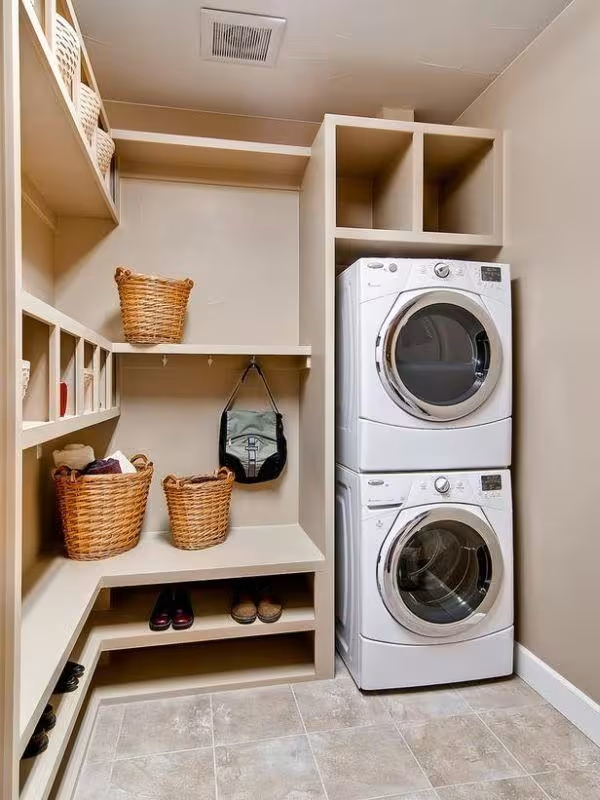
Stackable units — where the dryer sits on top of the washer — are the obvious space-saver for narrow closets and nooks. But there are a few practical things worth checking before you commit:
- You’ll generally need at least 6 to 7 feet of ceiling clearance for a stacked unit, depending on the models.
- Not every closet door is wide enough to bring a fully assembled stacked unit through — sometimes the units need to be stacked after they’re inside the space, which means you need enough floor clearance to maneuver them into position first.
- Front-loading machines are typically what get stacked; top-load washers generally can’t be stacked underneath a dryer.
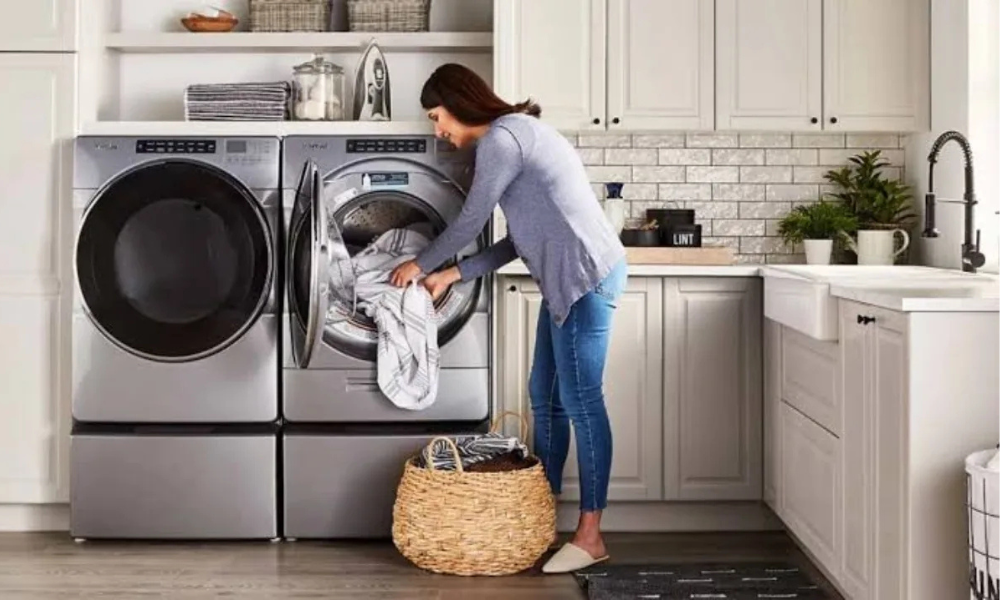
Side-by-side setups need more floor width but give you more flexibility — top-load or front-load, and easier access for loading and unloading without bending or reaching up. If you’ve got a slightly wider space but not much depth, side-by-side with a bridging cabinet or shelf unit above both machines can actually look more polished than a stacked unit, while also giving you that vertical storage we talked about earlier.
If your space is genuinely narrow — think closet width rather than small room — a compact or slimline washer might be worth considering even without a matching dryer situation. These run narrower than standard units and can make the difference between a workable laundry nook and one where you’re squeezing past the machines every time you walk through.
Turning a Closet or Nook Into a Real Laundry Space
This is the idea with the most potential — and also the one that goes wrong most often if a few details get overlooked.
Converting a closet, an under-stairs nook, or an awkward alcove into a dedicated laundry space can genuinely transform how a home functions, especially in apartments where laundry has been crammed into a hallway or bathroom. But before you start adding shelves and decorative touches, there are three things worth checking.
Ventilation and Moisture
This is the one most idea lists skip entirely, and it’s not just an aesthetic concern. A closet with a dryer and no airflow can trap heat and moisture, and over time that creates the kind of damp, musty smell that’s a sign of mildew starting to develop. If you’re converting a closet, make sure there’s some form of ventilation — whether that’s the dryer’s exhaust venting properly to the outside, a vent in the door, or even just leaving the door cracked during and after drying cycles. It’s a small thing to plan for upfront and a genuinely annoying thing to fix after the fact.
Lighting for Windowless Spaces
Closets and under-stairs nooks are almost always windowless, which can make even a well-organized space feel like a dark little box. A simple light fixture — even a battery-powered stick-on light if wiring isn’t an option — makes a bigger difference than people expect. On top of that, peel-and-stick wallpaper in a light, bright pattern can make a windowless space feel noticeably less cramped, and it’s something you can change later without much commitment if your taste shifts.
Hiding the Space When Not in Use
If your “laundry room” is really a converted closet in a hallway or living space, folding doors or curtains let you close it off visually when it’s not in use. This matters more than it sounds — a tidy laundry nook still looks like a laundry nook if it’s sitting open in your living room, but closed doors turn it back into “just a closet” the rest of the time.
Inside the nook itself, small touches — baskets, jars for clothespins and dryer sheets, a couple of cubbies — keep supplies organized without needing full shelving units. The goal here is “everything has a spot,” not “everything is on display.”
Mistakes to Avoid in a Small Laundry Room
A few things come up again and again in cramped laundry spaces, and they’re worth flagging directly:
- Overcrowding open shelves. A shelf packed wall-to-wall with bottles and boxes looks more cluttered than no shelf at all. Leave some breathing room, or switch to closed cabinets if you’ve got more supplies than shelf space.
- Blocking dryer vents or appliance access. It’s tempting to use every inch of space around the machines for storage, but blocking ventilation or access panels can cause real problems down the line — both for performance and safety.
- Hanging heavy items on standard drywall anchors. A loaded drying rack or a rail full of wet towels is heavier than it looks. Anchor into studs, or use anchors rated for the actual weight you’re hanging.
- Choosing appliances based on floor space alone. Ceiling height and door clearance matter just as much, especially for stacked units — measure twice before you buy.
- Treating decorative touches as the priority. Wallpaper and pretty jars are the finishing touches, not the foundation. Get the storage and workspace right first, and the decorative stuff will actually have somewhere to shine.
If you’re working through a whole apartment and not just the laundry space, a lot of these same principles — vertical storage, multi-use furniture, closet conversions — apply to small closet organization and other tight spots throughout the home. And if you do end up converting a closet or nook, it’s worth a quick read on preventing mold and mildew in small spaces before you finish the project, since it’s much easier to plan for than to fix later.
FAQ
How do I organize a small laundry room?
Start by clearing everything off the top of your washer and dryer, add one shelf or cabinet above the machines for supplies, and create even a small folding surface — these three changes make the biggest difference with the least effort.
Can stackable washers fit in any closet?
Not always. Stacked units typically need at least 6-7 feet of ceiling clearance, and the closet door needs to be wide enough to bring the units in — sometimes they have to be stacked after being moved into place separately.
What size should a laundry folding table be?
For a folding table to be genuinely useful rather than just decorative, aim for at least 24-30 inches of width. Anything narrower tends to get bypassed in favor of folding on top of the dryer.
How do I make a windowless laundry room feel bigger?
Light, bright peel-and-stick wallpaper and a simple light fixture (even a stick-on battery light) make a noticeable difference in how open a small, windowless space feels.
Do wall-mounted drying racks hold heavy items?
Only if they’re mounted into studs or with weight-rated anchors. Wet clothing is significantly heavier than dry clothing, and standard drywall anchors aren’t built to hold that weight long-term.