Estimated reading time: 12 minutes
Most home repairs aren’t accidents. They’re the predictable result of skipped maintenance — and almost all of them follow a seasonal pattern.
The frozen pipe that burst in January? It was vulnerable since October when the insulation was never checked. The HVAC that failed in the first heatwave of July? It hadn’t been serviced since the previous spring. The roof leak that appeared during a November storm? The damaged shingle had been sitting there since spring, waiting for its moment.
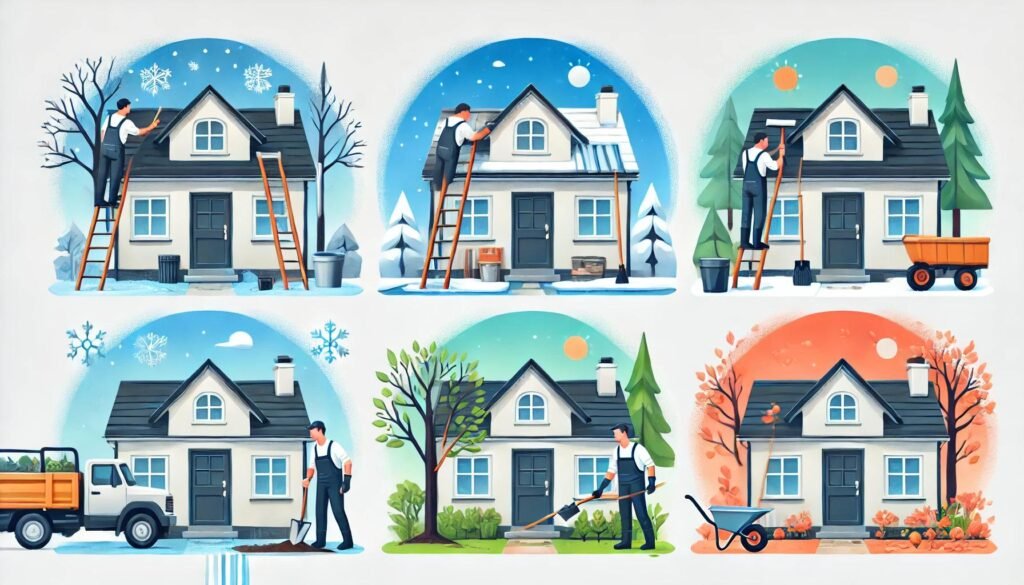
This yearly home maintenance guide exists to break that cycle. Not with a wall of vague tasks, but with a season-by-season plan that explains what to do, when to do it, and — just as importantly — why that timing matters. Bookmark it, return to it at the start of each season, and adjust for your home’s specific needs.
Why the Timing of Maintenance Matters as Much as the Tasks Themselves
There’s a version of seasonal maintenance that most homeowners do — and a version that actually protects their home. The difference is usually timing.
Servicing your furnace in November after you’ve already been running it for three weeks is better than not servicing it at all, but it’s not ideal. Getting your air conditioning checked in July when demand for HVAC technicians is at its peak means longer waits and higher prices. Cleaning your gutters after the first heavy fall rain instead of before it means the water you were trying to redirect has already been sitting against your foundation.
Good maintenance isn’t just the right tasks. It’s the right tasks at the right moment in the year.
Spring: Assess What Winter Left Behind
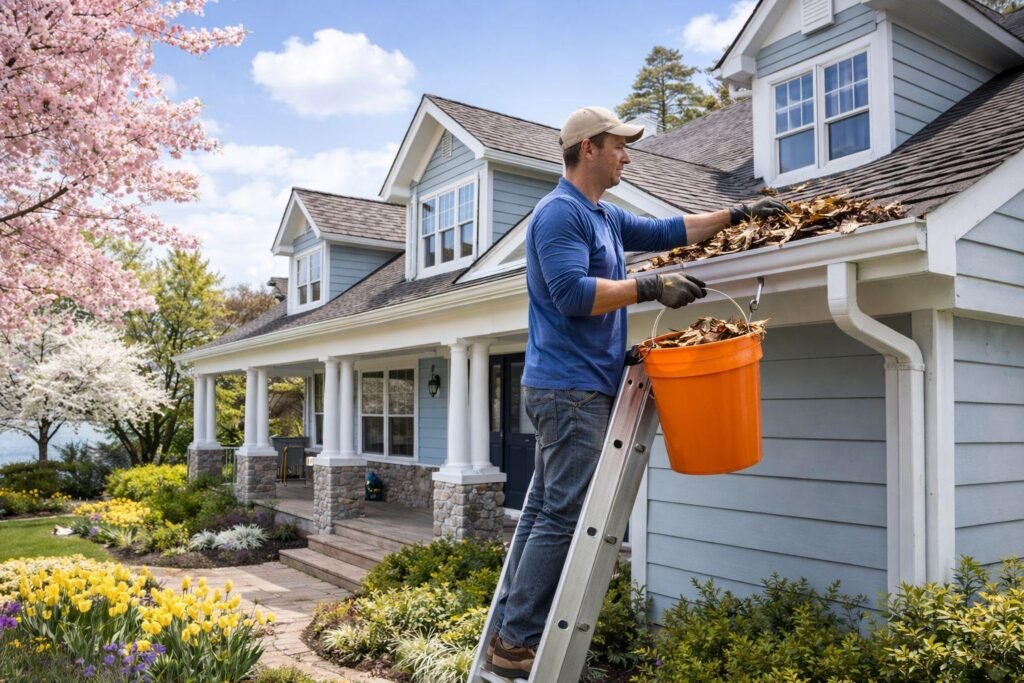
Spring maintenance is mostly about one thing: figuring out what winter did to your home. Cold temperatures, ice, and wet weather create damage that’s often invisible until everything thaws out.
Start With the Roof and Gutters
Get outside in early spring — before temperatures climb consistently — and scan your roof from ground level or safely from a ladder. You’re looking for missing or curled shingles, visible gaps in flashing around chimneys or vents, and any areas that look like they’ve held water. You don’t need to be a roofing expert to spot obvious problems. For a full breakdown of what to look for each season, our seasonal roof maintenance checklist covers the details.
Gutters should be cleared of any debris that accumulated over winter — compacted leaves, ice residue, and general grime. Run water through them with a hose and watch where it exits. Downspouts should direct water at least six feet away from your foundation. If they don’t, that’s where spring flooding starts.
Get Your HVAC Ready Before You Need It
Spring is when you want a professional HVAC technician to check your air conditioning system — not July, when every technician in your area is booked out two weeks. A spring tune-up means the system is checked, cleaned, and ready before the heat arrives. Swap out the air filter at the same time. Our HVAC maintenance checklist covers what a proper seasonal service should include.
Walk the Exterior
Winter is hard on siding, decking, and fencing. Walk slowly around your home’s exterior and look for cracked or warped siding panels, soft spots on wooden decks (a sign of moisture damage underneath), loose fence posts, and any gaps in caulking around windows and doors. Small cracks sealed in spring stay small. Left alone through a wet summer, they don’t.
Summer: Outdoor Upkeep and Keeping Cool
Summer has a more relaxed maintenance pace than fall or spring, but it’s not maintenance-free.
The outdoor focus makes sense — this is when you’re actually using the deck, the lawn, the patio, and the irrigation system. Wooden deck and patio surfaces that aren’t cleaned and sealed periodically will absorb moisture, which eventually leads to warping, graying, and rot. If your deck surface feels rough or looks dry, a cleaning and a fresh coat of sealant is a worthwhile afternoon project.
Your irrigation system deserves a proper check-in early summer: walk each zone while it’s running and look for heads that aren’t popping up correctly, dry patches that suggest uneven coverage, or obvious leaks at connection points. An inefficient irrigation system quietly adds to your water bill every month.
Pest season peaks in summer. Termites, carpenter ants, and other wood-destroying insects are most active when temperatures are warm. If you haven’t had a professional pest inspection in the last year — especially in a region prone to termites — summer is a reasonable time to schedule one. The cost of an inspection is minor compared to the cost of discovering structural damage during a home sale. Don’t forget the areas homeowners most often overlook — our guide to outdoor maintenance tasks homeowners forget is worth a read before you wrap up your summer checklist.
Fall: The Most Important Season for Home Prep
Fall is the season most homeowners underestimate — and then regret.
Everything you do (or don’t do) in fall determines how your home handles winter. That makes it the most consequential maintenance season of the year and the one worth spending the most time on.
Furnace and Heating Systems
Here’s a mistake that happens every year in homes across the country: the weather turns cold, the furnace gets switched on for the first time, and it either runs poorly or fails completely. Then the homeowner calls an HVAC technician — who is now one of a thousand people calling at the same time.
Get your furnace inspected and serviced in early fall, before the heating season starts. A licensed HVAC technician can check the heat exchanger for cracks (a carbon monoxide risk), clean the burners, test the igniter, and verify the system is running efficiently. This is not a DIY task. The gas components and heat exchanger inspection require professional equipment and training.
Sealing and Weatherproofing
Run your hand along the bottom of exterior doors and around window frames on a cold day. Any draught you feel is energy leaving your home — and money leaving your heating bill. Weatherstripping degrades over time and is one of the cheapest, highest-return fixes in home maintenance. Replacing a door’s weatherstripping takes about 20 minutes and costs very little.
Check all exterior caulking around windows, where siding meets trim, and where any penetrations come through the exterior wall (pipes, wires, vents). Caulk that’s cracked or pulling away needs replacing before moisture finds its way in. This genuinely is a task most homeowners can handle themselves — the best tools for maintenance tasks covers what you’ll need to do it properly.
Chimney and Fireplace
If you use a wood-burning fireplace, have the chimney inspected and swept by a certified chimney sweep annually — ideally in early fall before you use it. Creosote buildup inside the flue is the primary cause of chimney fires, and a blocked or damaged chimney can let carbon monoxide back into your living space. This is another task where professional service isn’t optional.
Yard and Outdoor Plumbing
Rake leaves before they mat down and suffocate lawn areas. Drain and winterize outdoor hose bibs and irrigation systems before the first hard frost — water left in outdoor pipes and irrigation lines will freeze, expand, and crack them. This is a straightforward DIY task: turn off the water supply to outdoor bibs, open the bib to drain remaining water, and disconnect hoses.
Winter: Protection, Safety, and Staying Ahead
Winter maintenance is less about a big checklist and more about steady vigilance.
Protecting Your Pipes
Pipes in exterior walls, unheated garages, and crawlspaces are vulnerable to freezing when temperatures drop significantly. Foam pipe insulation is inexpensive and easy to install — it’s the kind of task that takes an hour and prevents a repair bill measured in the thousands. If temperatures are forecast to be unusually low, letting a thin stream of water run from faucets on exterior walls overnight can prevent freezing. Our DIY plumbing maintenance guide covers the prevention steps in more detail.
Ice Dam Prevention
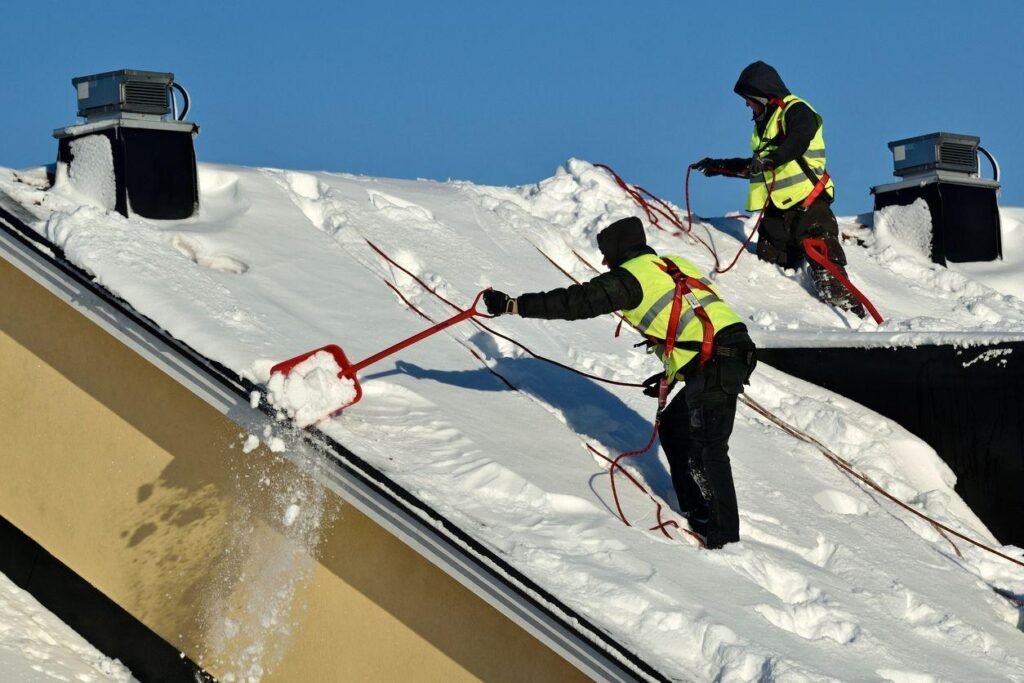
Ice dams form when heat escapes through the roof and melts snow near the ridge, which then refreezes at the eaves. The resulting ice can force water under shingles and into your ceiling — damage that often doesn’t become obvious until the ice melts and water appears on your walls or ceiling inside.
The long-term fix is proper attic insulation and ventilation. The short-term fix during a heavy snow year is carefully removing snow from the lower portion of your roof with a roof rake to reduce melting. Don’t use a metal implement directly on shingles.
Indoor Safety Checks
Winter is when homes are closed up, heating systems run constantly, and the risk of carbon monoxide buildup increases. Test smoke detectors and carbon monoxide detectors monthly — a habit worth keeping year-round, but especially critical during heating season. Replace batteries at least annually. The National Fire Protection Association recommends replacing smoke alarm units entirely every ten years, regardless of whether they seem to be working.
Year-Round Tasks That Don’t Belong to One Season
Some maintenance tasks run on a monthly or ongoing schedule regardless of season. These are covered in detail in the monthly home maintenance checklist, but the short version:
- HVAC filters: Replace every 30–90 days depending on filter type and household conditions
- Smoke and CO detector testing: Monthly
- Under-sink plumbing checks: Monthly — look for water stains and moisture, not just drips
- Sump pump testing: Monthly if you have one, especially in wetter seasons
Annual tasks that don’t belong to a specific season include electrical panel inspection (have a licensed electrician check for outdated wiring, overloaded circuits, or corrosion), basement and crawlspace moisture checks, and a termite/pest inspection if you’re in a high-risk region.
How Much Should You Budget for Home Maintenance Each Year?
The widely cited rule is 1–4% of your home’s value annually. For a $300,000 home, that’s $3,000–$12,000 per year. For a $500,000 home, $5,000–$20,000.
That range sounds alarming until you understand what’s driving it. The lower end applies to newer homes in good condition where most maintenance is genuinely preventive. The higher end reflects older homes, deferred maintenance that’s catching up, or properties with complex systems. If your home has a pool, a long driveway, mature trees, or a well and septic system, budget toward the higher end.
How to Prioritise When You Can’t Do Everything
Not every maintenance task carries equal weight. The non-negotiables — the things that create safety hazards or expensive cascading damage if skipped — are:
- Furnace and HVAC servicing (twice yearly)
- Smoke and carbon monoxide detector maintenance
- Roof integrity checks after winter and storm season
- Pipe protection before winter
- Gutter and drainage maintenance
Everything else is important over time, but these five carry the highest consequence if missed. When budgets are tight, prioritise safety and structural integrity first. Our budget home maintenance ideas covers where you can save without cutting corners on what actually matters.
DIY vs Professional: Where the Line Actually Is
Most homeowners can handle: gutter cleaning, filter replacement, caulking and weatherstripping, exterior painting, deck sealing, yard drainage, and basic appliance maintenance.
Professional service is the right call for: furnace and AC servicing (especially anything involving gas lines or refrigerant), chimney sweeping, electrical panel inspection, roof repairs beyond surface-level observation, and any structural concern in the crawlspace or foundation.
The honest distinction isn’t about skill level — it’s about risk and access to specialist equipment. A gas furnace has a heat exchanger that can develop invisible cracks and produce carbon monoxide. A licensed technician has combustion analysers that can detect that. You don’t. That’s the line.
Frequently Asked Questions
What is a yearly home maintenance guide?
A yearly home maintenance guide is a season-by-season plan of the inspections, cleaning, and preventive tasks homeowners should complete across spring, summer, fall, and winter to protect their home, avoid costly repairs, and maintain safety and efficiency.
What home maintenance should I do each season?
Spring focuses on post-winter inspection — roof, gutters, exterior, and HVAC prep. Summer covers outdoor upkeep, lawn care, and pest control. Fall is the most critical season: furnace servicing, weatherproofing, chimney inspection, and winterising outdoor plumbing. Winter emphasises pipe protection, ice dam prevention, and ongoing safety checks.
How much should I budget for home maintenance per year?
A realistic budget is 1–4% of your home’s value annually. A $300,000 home should have $3,000–$12,000 set aside per year. Newer homes in good condition sit at the lower end; older homes or those with deferred maintenance sit higher. Start with a dedicated savings account for home maintenance and build from there.
When should I get my HVAC serviced?
Twice a year: spring for the air conditioning system before summer arrives, and early fall for the furnace before heating season begins. Scheduling in advance avoids peak-season delays and ensures your system is ready when you actually need it.
What happens if you skip seasonal home maintenance?
Skipped maintenance creates compounding problems. A missed fall furnace service can mean a system failure in January. Ignored weatherstripping leads to heat loss and higher energy bills all winter. Uncleaned gutters cause water to pool against the foundation, which can lead to basement moisture and, over years, foundation damage.
Is seasonal home maintenance a DIY job or does it need professionals?
Both, depending on the task. Gutter cleaning, caulking, filter replacement, and deck sealing are straightforward DIY tasks. Furnace servicing, chimney sweeping, electrical inspection, and roof repairs beyond basic observation should go to licensed professionals. The distinguishing factor is usually safety risk and specialist equipment.
How do I prepare my home for winter?
The winter prep checklist covers: furnace inspection (schedule in early fall), pipe insulation in unheated spaces, weatherstripping and caulk checks on doors and windows, chimney cleaning if you use a fireplace, draining outdoor hose bibs and irrigation systems, and having a plan for roof snow removal if you’re in a heavy-snow region.
What annual home maintenance tasks should be done every year regardless of season?
Electrical panel inspection by a licensed electrician, a full roof inspection, a termite or pest inspection in high-risk areas, basement and crawlspace moisture checks, and dryer vent cleaning. These don’t belong to a specific season but need to happen at least once annually.