Estimated reading time: 11 minutes
Last updated on June 23rd, 2026 at 07:16 am
I was grating a block of parmesan by hand on a Tuesday night, knuckles getting a little too close to the grater for comfort, when I finally asked myself the question I’d been putting off for months: why do I still own a food processor that’s been sitting in a cabinet since my cousin’s wedding?
So I pulled it out. Washed off the dust. And honestly, that one decision changed how I cook on weeknights more than almost anything else in my kitchen — more than the fancy knife I saved up for, more than the air fryer everyone was talking about.
If you’re sitting on the fence about the benefits of using a food processor, or you’ve got one tucked away unused, this is the honest version. Not the “it does everything!” version. The real one — including the parts that take a little getting used to.
What Does a Food Processor Actually Do?
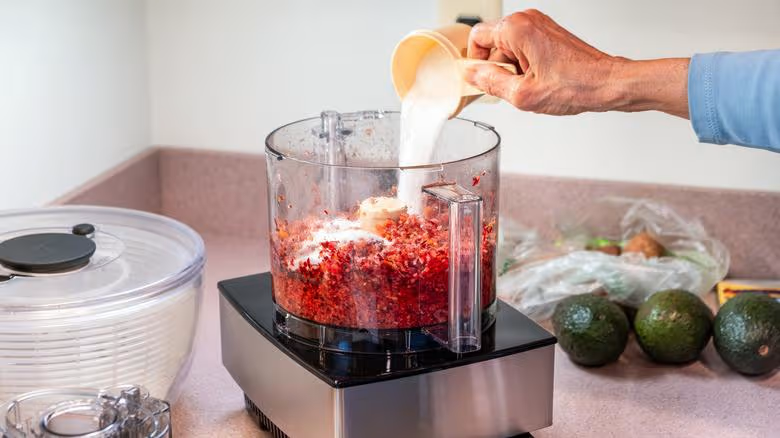
At its core, a food processor is a motorized bowl with interchangeable blades and discs that chop, slice, shred, puree, and mix food — fast. Think of it as the muscle behind the boring, repetitive prep work that eats up your time before you even start cooking. It’s not a blender (we’ll get to that), and it’s not just a fancy chopper. It’s the appliance that handles your mise en place so you can actually get to the cooking part.
That’s really the whole pitch. It doesn’t make food taste better on its own. It just removes the friction that makes cooking feel like a chore.
10 Things a Food Processor Actually Changes About Your Cooking
These aren’t theoretical. These are the moments where you’ll catch yourself thinking, “wait, it can do that?”
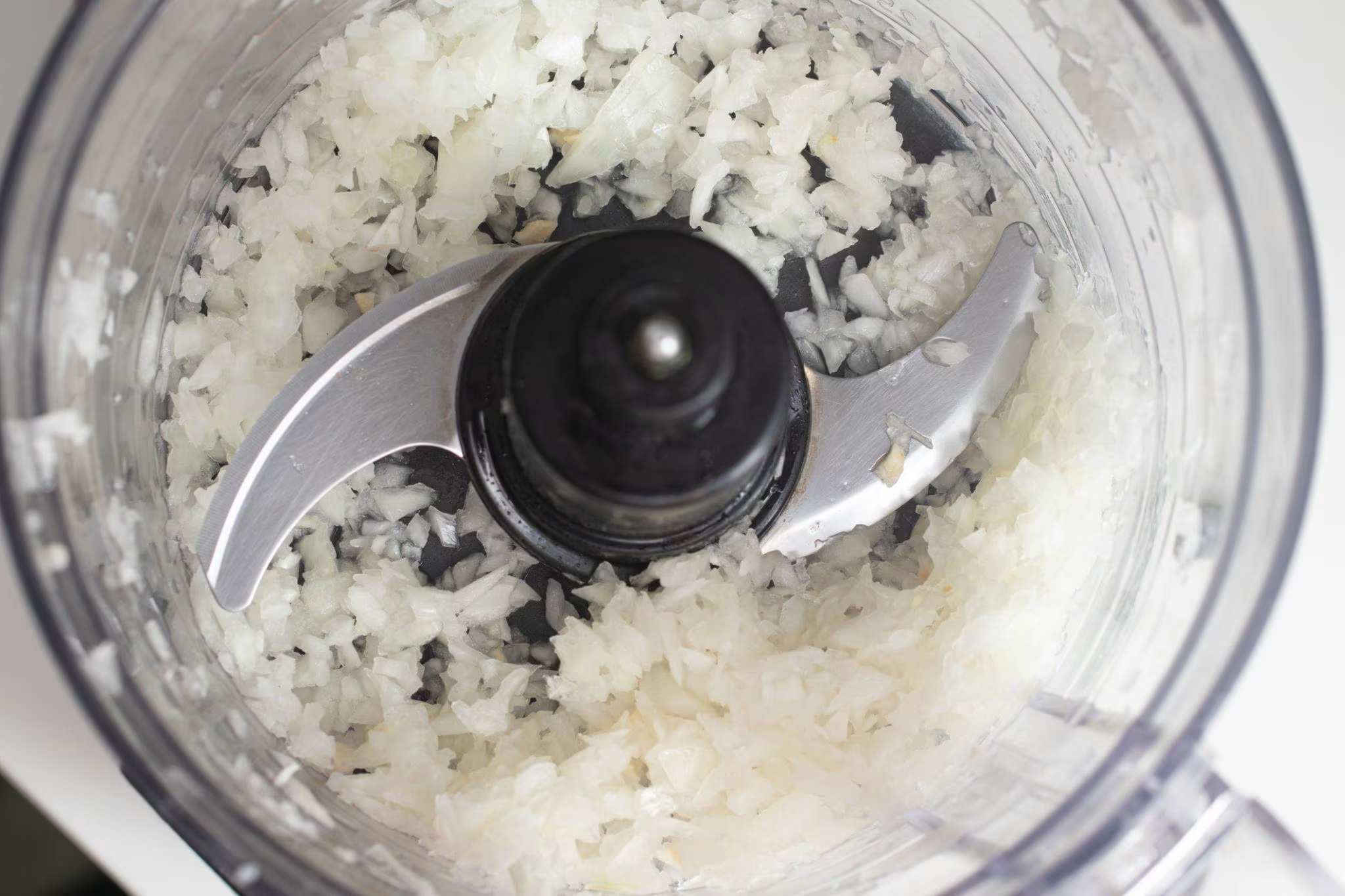
1. It dices onions before your eyes have time to react. You know that slow burn that creeps in around the second onion? With a food processor, three onions go from whole to uniformly diced in about ten seconds. No tears, no uneven chunks, no excuse to skip the recipe that calls for “finely diced onion, sautéed until translucent.”
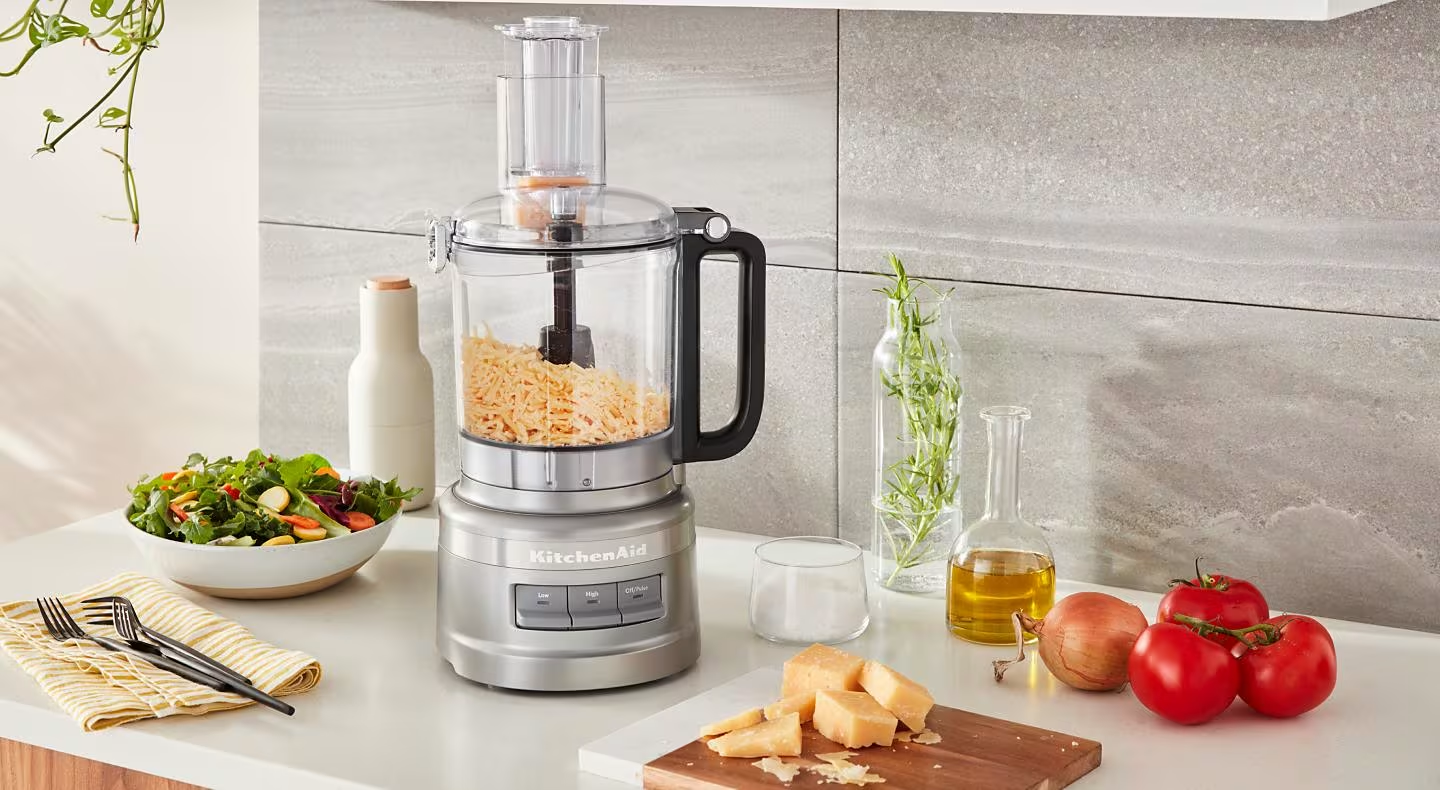
2. It shreds a block of cheese in under a minute. That parmesan-grating moment I mentioned? Swap the grating disc in, drop in the block, and you’ve got a bowl of shredded cheese before you’ve even preheated the oven. Works for cheddar, mozzarella, even semi-soft cheeses if you chill them first.
3. It makes hummus that actually tastes like hummus. Chickpeas, tahini, garlic, lemon, olive oil — pulse it all together and you get that smooth, slightly grainy texture that store-bought versions never quite nail. The pulse setting matters here; it gives you texture control that a smoothie-style blend just can’t replicate.
4. It turns oats into flour in about 60 seconds. This one genuinely surprised me the first time. Rolled oats, processed until fine, become a workable gluten-free flour substitute for pancakes, muffins, and quick breads. No specialty bag, no trip to a separate aisle.
5. It grinds your own meat with full control over the fat ratio. If you’ve ever wanted ground beef that’s leaner — or richer — than what’s in the store, a food processor with chilled, cubed meat and a few quick pulses gets you there. Burgers made this way have a texture that’s noticeably different from pre-ground meat, in a good way.
6. It makes nut butter without the upcharge. Peanuts, almonds, cashews — process them long enough (longer than you’d think, with a few scrape-downs) and you get creamy, customizable nut butter. Add honey, salt, cinnamon, whatever you want. It’s one of those “why didn’t I do this sooner” moments.
7. It slices vegetables into uniform rounds for gratins and salads. The slicing disc turns a pile of potatoes or cucumbers into evenly thin slices in seconds — the kind of uniform slices that make a gratin cook evenly or a salad look like it came from a restaurant.
8. It pulls together pie dough and pastry without overworking it. Cold butter, flour, a few pulses — the blade cuts the butter into the flour quickly enough that it doesn’t melt from your hand’s warmth, which is the whole secret to flaky pastry. Some processors even come with a dough blade for this.
9. It blitzes sauces and dips to the exact texture you want. Pesto, salsa, romesco, chimichurri — the pulse function lets you stop exactly when the texture is right, whether that’s chunky or smooth. This is where a food processor quietly outperforms a blender, which tends to either under-process or turn everything into soup.
10. It batch-preps for the whole week in one sitting. This is the one that actually changes your routine. Sunday afternoon, twenty minutes, and you’ve got chopped onions, shredded carrots, diced peppers, and sliced mushrooms ready for the week. Batch cooking stops feeling like a project and starts feeling like a habit.
What a Food Processor Can’t Do (The Honest Part)
Here’s where a lot of articles go quiet, and it’s exactly where I think honesty matters most.
A food processor is not good at blending liquids. Smoothies, soups you want silky-smooth, protein shakes — all of that belongs to a blender. The wide, flat blade and shallow bowl of a food processor are built for solid and semi-solid foods, not for creating a vortex that pulls liquid down into the blades. Try to make a smoothie in one and you’ll end up with a frustrating mess around the edges and chunks in the middle.
It’s also not great for anything that needs to be airy — whipped cream, meringues, that kind of thing. A stand mixer or hand mixer does that better because it incorporates air, while a food processor mostly just cuts and combines.
And realistically, it takes up countertop real estate. If your kitchen is small, this is a genuine trade-off, not something to wave away.
Food Processor vs Blender — The Question Everyone Actually Has
This comes up constantly, and the honest answer is: they’re not really competitors. They’re built for different textures.
A blender excels at liquids — smoothies, soups, sauces that need to be completely smooth, frozen drinks. The narrow jar and tall blades create a vortex that pulls everything down repeatedly until it’s uniform.
A food processor excels at solids and semi-solids — chopping, slicing, shredding, dough, thicker dips. The wide bowl and flat blade let ingredients sit and get cut rather than swirled.
Can a food processor replace a blender? Mostly not, especially for smoothies. Can a blender replace a food processor? Also mostly not — try shredding cheese in a blender and you’ll see why. If you cook often and do both kinds of tasks regularly, you’ll probably end up wanting both eventually. But if you had to choose one first, think about which frustration you hit more often: chopping and prep, or smoothies and soups.
If you want a deeper breakdown, this comparison of a food processor vs blender goes through it task by task. There’s also a solid rundown on food processor vs juicer if that’s the other appliance you’re weighing.
What to Look for When Buying One
Motor Wattage, Explained Practically
Wattage numbers get thrown around without context all the time, so here’s the practical version: 600 watts handles the vast majority of home cooking tasks — chopping, slicing, shredding, pureeing, even occasional light dough work. If you’re someone who kneads bread dough regularly, or you’re processing a lot of nuts and tough root vegetables, look toward 700 watts or above. Anything below 500 watts tends to struggle with denser tasks and can bog down mid-process, which is more annoying than it sounds.
Bowl Size for Your Actual Cooking Habits
This is where a lot of buying guides skip the nuance. A 7-cup bowl is genuinely fine for one or two people, weeknight cooking, and occasional use — something like a KitchenAid 7-cup fits that life well. If you’re meal-prepping for a family, batch cooking on weekends, or you just hate doing multiple rounds, a 11–14 cup bowl, like what you’d find on a Cuisinart 14-cup, makes a real difference. Going too small means you’ll be processing in batches constantly, which kind of defeats the time-saving point. Going too big for a single person means more bulk to store and wash for tasks that didn’t need that much capacity.
Brands like Cuisinart, KitchenAid, and Breville all make solid options across these size ranges, and honestly, the differences between them at a given price point are often smaller than people expect — it’s more about size and wattage matching your habits than chasing a specific brand name.
If you’re still narrowing down which category fits your kitchen, this guide to types of food processors breaks down mini choppers, compact processors, and full-size models side by side.
The Cleaning Reality
Let’s not pretend this part doesn’t exist. A food processor has more parts than a knife — the bowl, the lid, the blade, and whichever disc you used. That’s four things to wash instead of one, and the first few times, it can feel like more effort than it’s worth for a task that would’ve taken five minutes with a knife anyway.
The good news: most of these parts are dishwasher-safe, and once you build the habit of just tossing them straight into the dishwasher after use, it stops feeling like a separate chore.
The One Thing to Hand Wash
The main blade is the exception. It’s sharp enough that running it through a dishwasher repeatedly can dull it faster, and reaching into a dishwasher rack to grab it is its own small hazard. A quick rinse and wipe by hand, set somewhere safe to dry, takes about fifteen seconds and saves the blade’s edge.
Where to Start If You’re New (or the Attachments Overwhelm You)
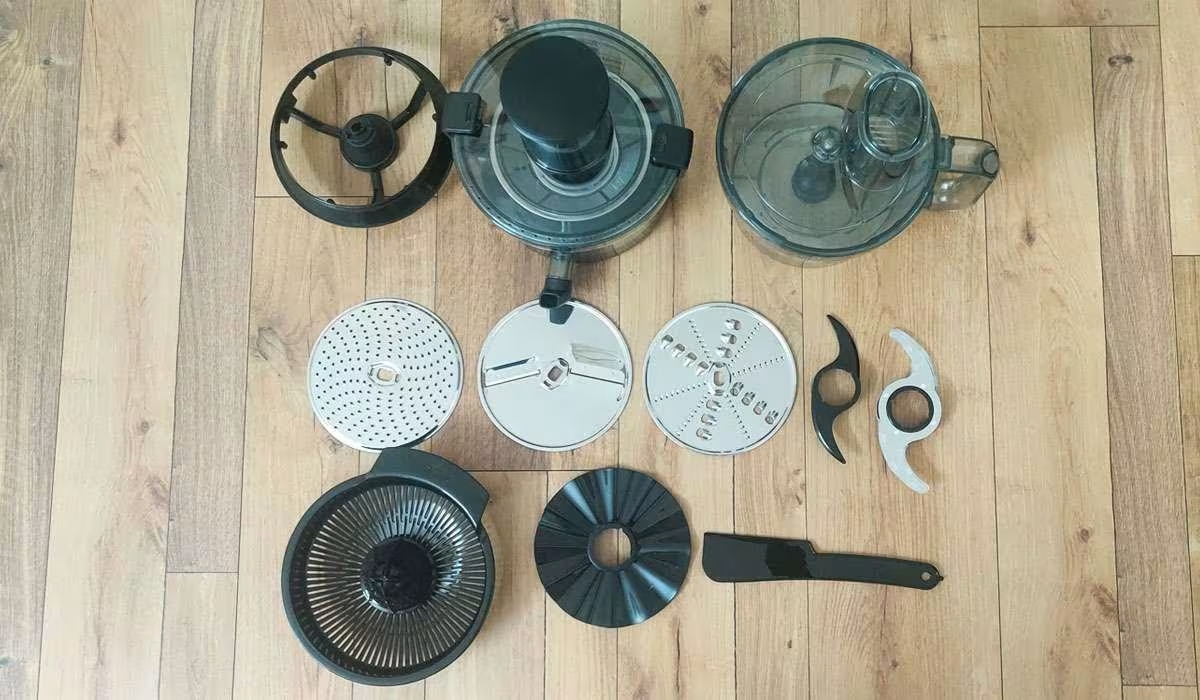
If you just got one — gift, impulse buy, whatever — here’s the honest starting point: don’t try to use every attachment in week one. Start with the standard chopping blade for onions, garlic, and herbs. That alone will get you using it daily. Once that feels natural, add the shredding disc for cheese and vegetables. The slicing disc and dough blade can wait until you’re already in the habit — they’re great, but they’re not where the daily value comes from.
Is It Actually Worth It?
If your prep work is the part of cooking that makes you not want to cook — the chopping, the grating, the dicing that piles up before you’ve even turned on the stove — then yes, a food processor earns its space. It won’t replace your blender, it adds a few extra dishes to your routine, and it does take up some counter space. But for the tasks it’s built for, it removes a specific kind of prep fatigue that, over time, adds up to actually wanting to cook more often.
If your kitchen is already tight on space, it might be worth pairing the decision with a look at essential small kitchen appliances or some kitchen storage organizers to figure out where it’ll actually live.
FAQs
Is a food processor worth it?
For most people who cook regularly, yes — the benefits of using a food processor come down to time saved on repetitive prep like chopping, shredding, and slicing. The main trade-offs are extra parts to clean and some counter space, but for frequent cooks, the time saved usually outweighs that.
What can a food processor do that a blender can’t?
A food processor handles solid and semi-solid foods — shredding cheese, slicing vegetables, making dough, grinding meat, and creating textured dips like hummus or salsa. A blender is built for liquids and smooth purees, like smoothies and soups, which a food processor struggles with.
What size food processor do I need?
For one or two people and occasional use, a 7-cup bowl is usually enough. For batch cooking, meal prepping for a family, or frequent use, an 11–14 cup model saves you from processing in multiple rounds.
How do you clean a food processor?
Most parts — the bowl, lid, and discs — are dishwasher-safe, so they can go straight in after use. The main chopping blade is best hand-washed to protect its edge and avoid handling a sharp blade in a dishwasher rack.
Can a food processor replace a blender?
Not really, especially for smoothies and soups that need a fully smooth, liquid-based texture. The two appliances are built for different jobs — a food processor excels at chopping, shredding, and thicker mixtures, while a blender is better for anything liquid-heavy.
Can a food processor knead dough?
Yes, many models come with a dough blade designed for this. It works well for pizza dough, bread dough, and pastry — though for very large batches or very wet doughs, a stand mixer with a dough hook may still be preferable.