Estimated reading time: 9 minutes
Last updated on June 23rd, 2026 at 07:25 am
If you’re standing in the humidifier aisle trying to figure out which one to grab — or scrolling product pages at midnight because your kid has croup and your house feels like a desert — here’s the honest truth: both types work. But for most people, one is clearly the better fit. And once you know which factors actually matter, the decision gets a lot simpler.
The cool mist vs warm mist humidifier debate has more nuance than most articles admit. It’s not just about personal preference. It’s about your home, your climate, who’s using it, and — honestly — how diligent you’re willing to be about cleaning it.
Let’s sort it out properly.
The Short Answer (If You Just Need a Quick Decision)
Cool mist humidifiers are the safer, more versatile choice for most households — especially if you have children, live somewhere warm, or plan to use it year-round. Warm mist humidifiers are quieter, slightly more hygienic by design, and work particularly well during cold winter months when you want a little extra warmth in the room alongside the added moisture.
Here’s a side-by-side breakdown:
| Feature | Cool Mist | Warm Mist |
| Safe for kids & babies | Yes | No (burn risk) |
| Energy use | Lower (30–50% less) | Higher |
| Noise level | Moderate (fan models) | Very quiet |
| Winter comfort | Neutral | Adds warmth |
| Bacteria risk | Higher if not cleaned | Lower (boiling kills most) |
| Room coverage | Larger rooms | Better for smaller spaces |
| Maintenance | Weekly cleaning needed | Regular descaling needed |
That table tells most of the story. But the details behind each point are what actually help you make the right call.
How Each Type Actually Works
Cool mist humidifiers come in two varieties, and they work differently. Evaporative models pull air through a wet wick or filter using a fan, releasing moisture into the room as water vapour. Ultrasonic models use high-frequency vibrations to break water into a fine micro-mist — no fan, less noise, but they can leave a fine white powder on nearby surfaces if you’re using hard tap water.
Warm mist humidifiers — sometimes called steam vaporizers — heat water to boiling point before releasing it as steam. The boiling process kills most waterborne bacteria and mold before anything reaches the air, which is one reason some people consider them cleaner. The downside, obviously, is that boiling water is involved, which creates a burn risk if the unit gets knocked over or a curious toddler gets too close.
Both types are genuinely effective at raising the relative humidity in a room. The American Academy of Pediatrics and the Mayo Clinic both suggest keeping indoor humidity between 40–60% for respiratory comfort — and either type of humidifier can get you there.
Cool Mist: Who It’s Actually Best For

Families with babies or young children
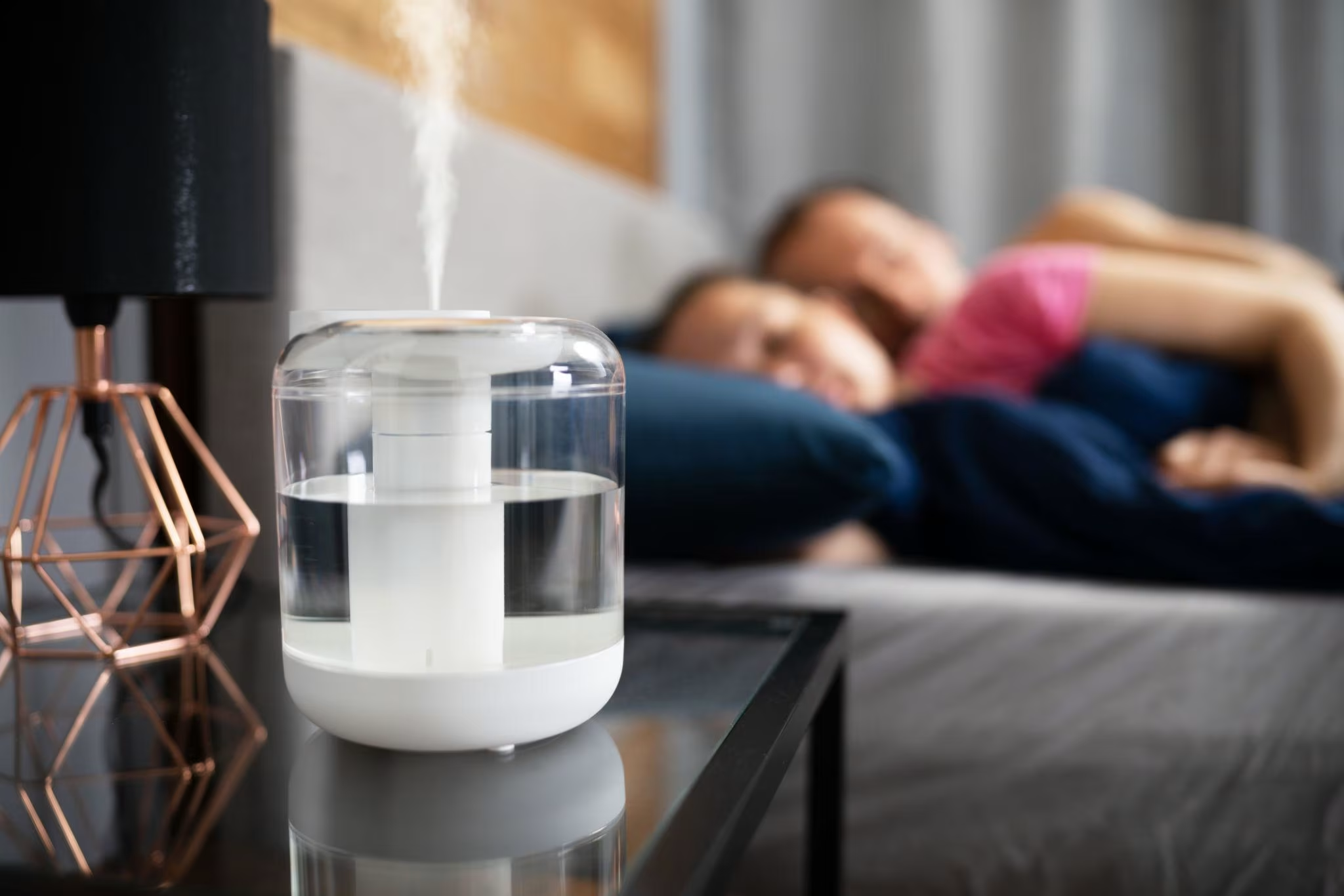
Cool mist is safer. Full stop. There’s no heating element, no boiling water, and no risk of a steam burn if the unit gets tipped over. For a nursery or a toddler’s bedroom, pediatricians consistently recommend cool mist for this reason alone.
The American Academy of Pediatrics specifically advises cool mist humidifiers for children with croup or respiratory congestion — the cool moisture helps reduce airway swelling without any burn risk. If that’s your situation, the decision is already made for you.
Setting up a nursery? Our guide on how to choose the perfect humidifier for your home covers sizing and placement tips worth reading before you buy.
Anyone in a warm or year-round dry climate
If you live somewhere that doesn’t get cold winters, a warm mist humidifier doesn’t make much sense — you’d be adding heat to a room that doesn’t need it. Cool mist works in any season, any climate, without making a warm room feel stuffy.
People who want lower energy costs
Evaporative and ultrasonic cool mist models don’t need to boil anything, which means they use significantly less electricity than warm mist units. Over a full winter of daily use, that difference adds up on your energy bill.
The white dust problem — and how to solve it
One thing most articles brush past: if you buy an ultrasonic cool mist humidifier and use regular tap water, you may notice a fine white residue settling on furniture near the unit. This is mineral dust from the water — calcium and magnesium that get broken up along with the water droplets and dispersed into the air.
It’s not harmful, but it’s annoying. The fix is simple: use distilled or demineralized water, or pick up a demineralization cartridge for your specific model. Some ultrasonic humidifiers include one. Problem solved. Want to understand the difference between ultrasonic and evaporative models in more depth? Our cool mist humidifier benefits guide goes into more detail.
Warm Mist: Who It’s Best For

Light sleepers and anyone noise-sensitive
This is where warm mist genuinely wins. Because there’s no fan involved, a steam vaporizer operates almost silently. If the gentle hum of an evaporative unit is enough to keep you awake, a warm mist humidifier is worth considering — especially for a bedroom.
Cold climates and winter use
Running a warm mist humidifier in a cold bedroom adds a subtle layer of warmth alongside the moisture. It won’t replace your heating system, but on a bitter January night it can make the room feel noticeably more comfortable. If you’re prepping your home for winter more broadly, these home maintenance tips for winter are a solid starting point.
For more detail on getting the most out of one, our warm mist humidifier guide covers setup, benefits, and the key things to watch for.
Congestion and sinus symptoms
Warm steam can feel immediately soothing on irritated nasal passages and airways — which is why steam inhalation has been used for respiratory relief for generations. The warmth opens things up in a way that cool mist doesn’t quite replicate. That said, both types genuinely help with dry air symptoms like dry skin, chapped lips, and scratchy throats. The warm mist advantage here is more about comfort than clinical effectiveness.
What Health Professionals Actually Say
Here’s the nuance that most humidifier articles skip: pharmacists and respiratory health professionals tend to favour cool mist — not because warm mist is inherently dirty, but because the standing water in any humidifier can become a breeding ground for bacteria and mold if the tank isn’t cleaned regularly. And in practice, most people don’t clean their humidifier as often as they should.
With warm mist, the boiling process kills most of what grows in the tank before it reaches the air. But the tank itself still needs regular cleaning to prevent mineral buildup and biofilm. With cool mist, if you let water sit in the tank for days without cleaning it, you can end up dispersing mold spores and bacteria directly into the room air.
The conclusion from the Mayo Clinic and most respiratory health guidance is consistent: the type of humidifier matters less than keeping it clean. Both types are safe when maintained properly. Both types can cause problems if neglected.
The Maintenance Reality Check
Most articles say “clean your humidifier regularly” and leave it there. That’s not actually helpful.
Here’s what regular cleaning actually looks like for each type:
Cool mist (evaporative or ultrasonic): Empty and rinse the water tank daily if possible — at minimum every two days. Do a deeper clean with white vinegar or a diluted bleach solution once a week to prevent mold and bacteria growth. Replace filter wicks every one to three months depending on your water hardness and how often you run it.
Warm mist (steam vaporizer): Descale the heating element every one to two weeks using white vinegar, since mineral deposits build up from the repeated boiling process. Rinse the tank regularly. This is less about bacteria and more about keeping the unit running efficiently.
Neither is particularly difficult or time-consuming. But if you know yourself and you’re unlikely to keep up with a weekly cleaning routine, a warm mist unit is slightly more forgiving in the short term — the boiling process does some of the antibacterial work for you.
A proper cleaning routine matters for your home’s overall air quality too — these air duct cleaning tips are worth bookmarking alongside your humidifier maintenance schedule.
The Bottom Line: Pick Based on Your Situation
If you have a baby or young child in the house: cool mist, no debate. If you’re a light sleeper who wants quiet: warm mist. If you live somewhere warm or want to use it in summer: cool mist. If it’s for a cold bedroom in winter and noise isn’t a concern either way: warm mist is a comfortable, logical choice.
What neither type should be is neglected. An unclean humidifier — regardless of which kind you choose — can make air quality worse, not better. Keep it clean and you’ll be fine with either.
FAQs
Is cool mist or warm mist better for congestion?
Both help by adding moisture to dry air, which soothes irritated airways. Warm mist can feel more immediately comforting due to the heat, which may help loosen congestion faster. For children, however, cool mist is the safer option regardless of symptoms.
Are cool mist humidifiers safe for babies?
Yes. Cool mist humidifiers are the recommended choice for nurseries and children’s rooms. There’s no heating element, which eliminates any risk of steam burns if the unit is bumped or touched.
Do warm mist humidifiers kill bacteria?
The boiling process does kill most waterborne bacteria before the steam is released. However, the tank itself can still develop biofilm and mineral deposits, so regular cleaning is still essential.
Can I use tap water in an ultrasonic humidifier?
You can, but tap water’s mineral content will likely cause white dust to settle on nearby surfaces. Using distilled or demineralized water prevents this entirely. Some models come with a demineralization cartridge as an alternative.
How often should I clean my humidifier?
Rinse the tank every one to two days and do a thorough clean with white vinegar or diluted bleach once a week. Warm mist units also need descaling every one to two weeks to remove mineral buildup from the heating element.
Which humidifier uses less electricity?
Cool mist models — particularly ultrasonic ones — use considerably less power than warm mist humidifiers, which have to run a heating element continuously. The difference can be meaningful over a full season of daily use.
What’s the difference between an ultrasonic and evaporative cool mist humidifier?
Evaporative models use a fan to blow air through a wet filter, releasing moisture quietly and naturally. Ultrasonic models use vibrations to create a fine mist without a filter — they’re quieter but can produce white dust with hard water. Both are cool mist types; the choice comes down to noise preference and water quality.