Estimated reading time: 9 minutes
Last updated on June 23rd, 2026 at 10:00 am
Stand in your kitchen for a second and look down. See that strip of empty space right under your lower cabinets, the part that’s basically just baseboard? That’s not nothing. That’s a drawer’s worth of storage that’s been sitting there empty the whole time you’ve lived there.
This is the thing about small kitchens — they’re rarely actually “out of space.” They’re just full of space nobody’s using, tucked into corners, under cabinets, above cabinets, and behind doors. Figuring out how to find space in a small kitchen usually isn’t about buying more stuff. It’s about noticing what’s already there.
Here’s where to look, room by room — or really, zone by zone.
The Empty Space Under Your Cabinets Is Bigger Than You Think
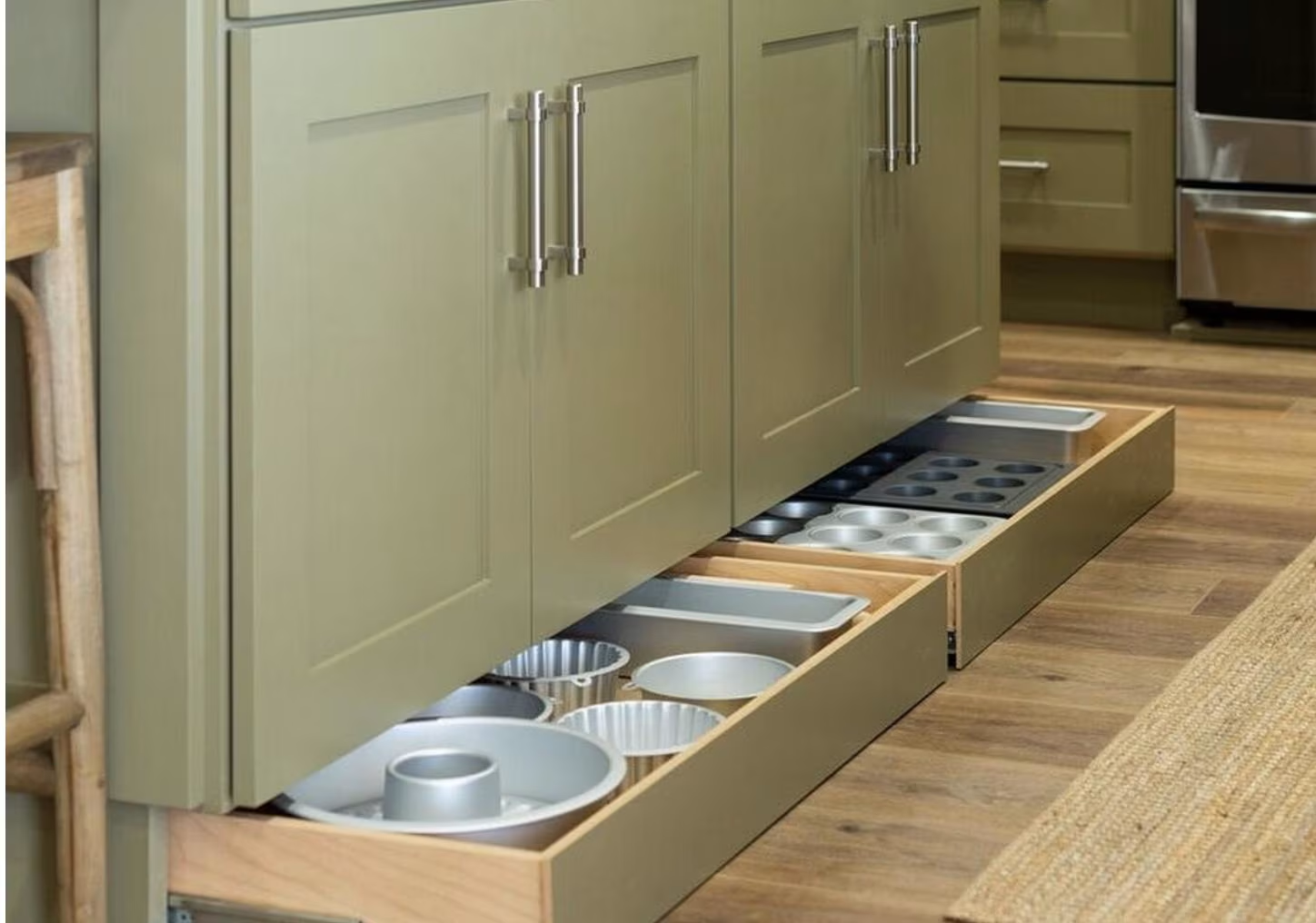
That toe-kick area — the recessed strip at the very bottom of your lower cabinets where your feet go when you stand close to the counter — exists for a practical reason. It gives you somewhere to put your toes so you’re not standing at an awkward angle while you cook.
But behind that little panel? Often just empty air.
Toe-kick drawers convert that void into a shallow, wide drawer that slides out from the base of your cabinets. They’re perfect for flat items — baking sheets, cutting boards, that lid for the roasting pan you only use twice a year. This is genuinely one of my favorite ideas on this whole list, because it’s space that was already there, doing absolutely nothing, and turning it into storage feels obvious once you’ve seen it done. The catch: this usually isn’t a weekend DIY for most people. You’re cutting into the base of your cabinetry, so it’s worth budgeting for a cabinet installer unless you’re comfortable with that kind of carpentry.
Slim pull-out racks are the easier cousin of this idea. If you’ve got an awkward 4-to-6-inch gap next to your fridge or stove — too narrow for anything useful, but too wide to just ignore — a slim rolling cart fits right into that gap. These come pre-made in narrow widths specifically for this purpose, and most just need to be slid into place. No cutting, no installation. If you’ve got one of these gaps and it’s currently collecting dust and lost spatulas, this is a genuinely easy win.
That Awkward Corner Isn’t Actually Dead Space
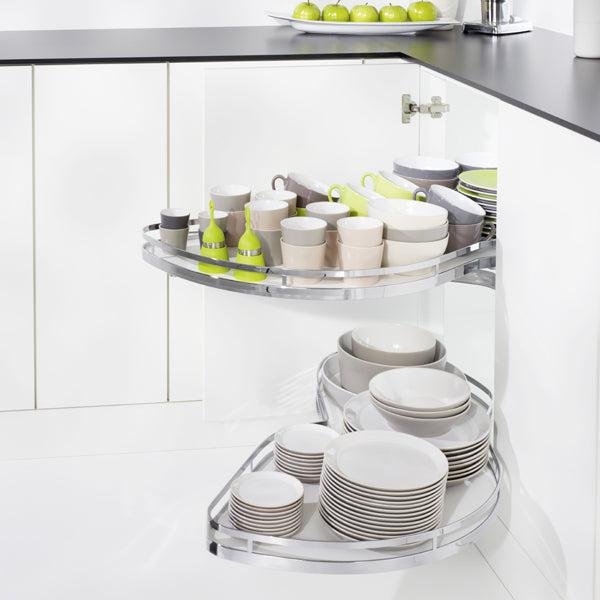
Corner cabinets are notorious for being the worst real estate in any kitchen. You open the door, reach in, and half the space is essentially unreachable — swallowed up by the depth of the cabinet box itself.
This happens because of how cabinets are built. When two cabinet runs meet at a corner, there’s a triangular zone behind where the doors open that a normal shelf just can’t reach. It’s called a “blind corner,” and it’s not a design flaw exactly — it’s just a side effect of how the boxes fit together.
The fix is a blind corner pull-out system (sometimes called a LeMans system), which uses a curved, rotating shelf mechanism to swing the contents of that dead zone out toward you when you open the door. It’s mechanically a bit more involved than a regular shelf — these systems mount on rails and need the cabinet interior reconfigured slightly — so this is typically a project for a cabinet installer rather than a DIY afternoon. But if you’ve got a blind corner you’ve basically given up on, it can recover a surprising amount of usable space.
If your cabinet interiors in general feel chaotic rather than just the corners, our kitchen cabinet organization ideas piece covers some good starting points for the rest of the cabinet too.
Look Up — Your Cabinet Tops and Cabinet Undersides Are Storage Too
Most kitchens have a gap between the top of the upper cabinets and the ceiling. If yours does, that’s prime real estate for things you use occasionally but don’t want cluttering your counters.
Cabinet tops work well for uniform baskets holding appliances you use a few times a year — the stand mixer, the slow cooker, the waffle iron that only comes out for birthdays. The key word there is uniform — a row of matching baskets looks intentional, while a pile of mismatched boxes just looks like clutter you forgot to deal with.
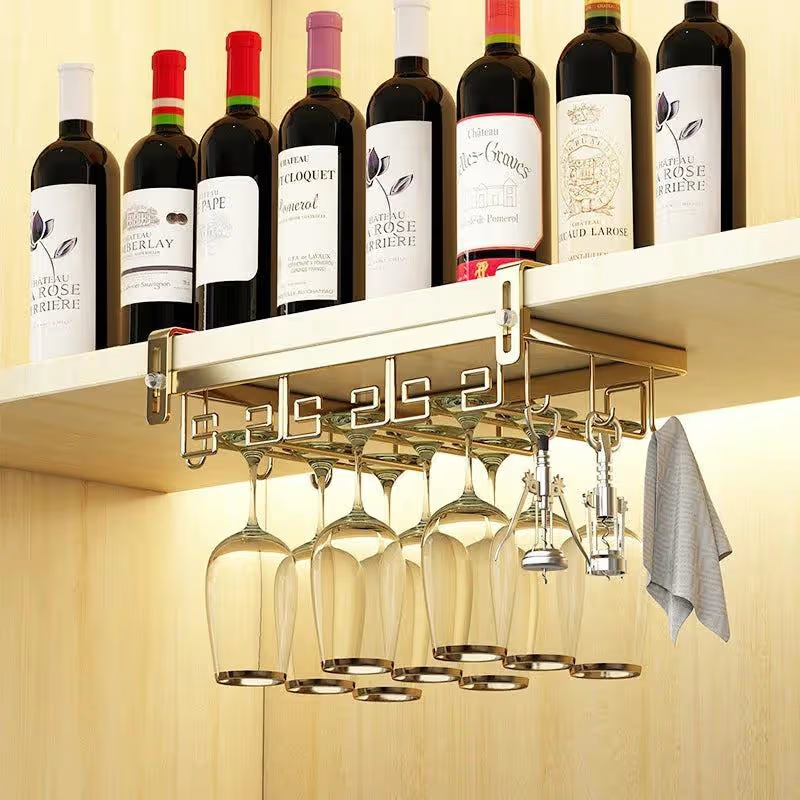
The undersides of your upper cabinets are underused too. A slim track mounted to the bottom of an upper cabinet can hold stemware by the stem, freeing up shelf space inside. Magnetic strips on the underside can hold small metal items like bottle openers or jar lids in place — useful, though it’s worth being realistic that this works for lightweight metal items, not your whole utensil collection.
Both of these are pretty approachable DIY projects — a few screws or adhesive mounts, nothing structural. Good candidates for a weekend if you’ve got a drill.
Your Walls and Doors Can Hold More Than You’d Guess
This is where renters get the most options, since most of these don’t involve permanent changes.
Inside cabinet doors is genuinely underused space. Slim spice racks or adhesive hooks mounted to the back of a cabinet door can hold spice jars, pot lids, or measuring spoons — stuff that otherwise just floats around inside the cabinet getting knocked over every time you open it.
Magnetic rails mounted on a backsplash or wall give you a spot for metal tools — knives, scissors, that random collection of bottle openers. Worth knowing upfront: this only works for magnetic (usually steel) items, so if most of your utensils are wood or plastic, this won’t solve as much as it looks like it will in photos.
Adhesive hooks are the lowest-commitment option on this entire list. No drilling, no damage, and they hold a surprising amount — oven mitts, dish towels, even lightweight pots if rated for it. For renters specifically, this is probably the easiest entry point into all of this.
Multi-Use Ideas Around the Sink
The sink area tends to be one of the most cramped parts of a small kitchen, and there are a couple of clever ways to squeeze more out of it.
Over-the-sink cutting boards sit on ledges across the sink basin, essentially turning the sink into temporary counter space. It’s a genuinely useful trick — but worth being honest that while it’s in place, you’ve lost access to your sink. Great for prep work, less great if you need to wash something mid-task.
Workstation sinks take this idea further with built-in ledges designed for sliding accessories — colanders, drying racks, cutting boards — directly over the basin. This is more of an investment than a quick add-on, since it usually means replacing your sink entirely, but if you’re already planning any kind of kitchen update, it’s worth considering.
Sink tip-out trays are a smaller-scale fix — converting that fake drawer front directly above your sink (the one that’s never actually opened anything) into a tilt-down tray for sponges and scrub brushes. This keeps wet cleaning supplies off the counter and out of sight, and it’s a relatively contained project if you’re comfortable with basic cabinet hardware.
Quick Wins vs. Bigger Projects
If you want to know where to start, here’s roughly how these break down:
This weekend, with basic tools: adhesive hooks, slim pull-out racks for fridge gaps, magnetic rails, under-cabinet tracks for stemware, cabinet-top baskets.
Worth calling in a cabinet installer for: toe-kick drawers, blind corner pull-out systems, sink tip-out trays (depending on your cabinet setup), workstation sink upgrades.
Best for renters: adhesive hooks, magnetic strips (check building rules first), rolling carts, slim pull-out racks — anything that doesn’t involve permanent modification.
A rolling cart deserves its own quick mention here too — a small cart on wheels that tucks away into a closet or pantry when you’re done cooking adds genuine flexible counter space without committing any permanent square footage to it. The only downside is it needs somewhere to “live” when it’s not in use, or it just becomes one more thing in the way.
For more ideas specifically focused on counter space rather than storage, 5 clever ways to get more kitchen counter space is a good next read. And if cabinet drawer organization is your bigger headache, our kitchen cabinet and drawer organizer guide pairs well with a lot of these ideas.
None of this requires ripping your kitchen apart. Pick the one space that’s been bugging you most — the fridge gap, the blind corner, that weirdly empty strip under your cabinets — and start there. Once you see how much was hiding in plain sight, it gets a lot easier to spot the rest.
FAQ
What is a toe-kick drawer?
A toe-kick drawer is a shallow, wide drawer installed in the recessed space at the base of lower kitchen cabinets, commonly used to store flat items like baking sheets, trays, and cutting boards.
How can renters add kitchen storage without damaging walls?
Renters can use adhesive hooks, magnetic strips, slim rolling carts, and over-cabinet baskets, all of which add storage without drilling or making permanent changes to walls or cabinets.
What’s the best way to use a blind corner cabinet?
A blind corner pull-out system, sometimes called a LeMans system, uses a rotating shelf mechanism to bring items from the unreachable back corner of the cabinet out toward you when the door opens.
Are over-the-sink cutting boards worth it?
Over-the-sink cutting boards are useful for creating temporary prep space in a small kitchen, though they do block access to the sink while in use, which is worth considering for your workflow.
How do you create more counter space in a small kitchen?
Rolling carts, over-the-sink cutting boards, and workstation sink ledges can all add usable counter space without requiring a full kitchen renovation.