Estimated reading time: 8 minutes
Last updated on June 20th, 2026 at 06:36 am
Buying a washing machine used to be simple. Front-load or top-load, pick whichever fits your laundry room, done.
Now you’re staring at spec sheets with words like “inverter motor,” “auto-dosing,” and “load sensing,” and half of it sounds like it belongs on a car, not an appliance that’s going to sit in your laundry room for the next decade.
Here’s the thing about modern washing machines: most of these features genuinely matter, but not all of them matter equally, and some are worth paying extra for while others are nice-to-haves you can skip without losing sleep. Let’s go through what actually makes a difference.
Front-Load, Top-Load Impeller, or Top-Load Agitator — Pick Your Starting Point
This is the decision that shapes everything else, so it’s worth getting right first.
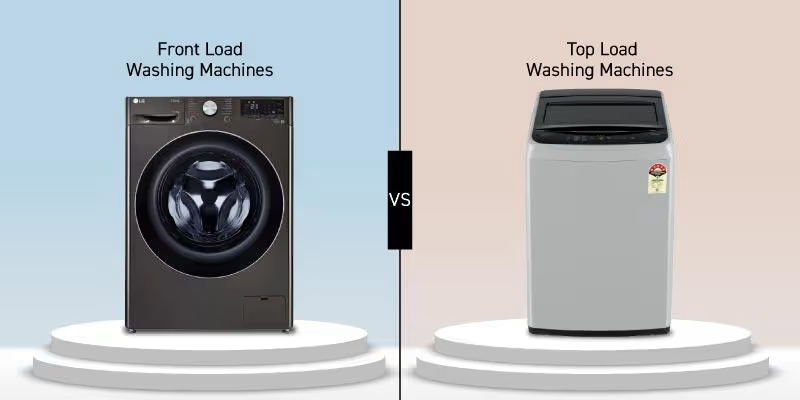
Front-load washers tumble clothes inside a horizontal drum using gravity, which is genuinely gentler on fabric than the alternatives. They also use significantly less water — we’re talking up to 70% less compared to older-style machines — and spin much faster, which means clothes come out of the wash less soaked and dry quicker afterward. The trade-off most people don’t think about until they own one: you’re bending down to load and unload, which gets old fast if you’ve got back issues or just hate bending over a laundry basket every day.
Top-load washers with an impeller use a low-profile spinning disc at the bottom of the drum instead of a center post. They tend to offer large capacities and you load them from the top, standing up — no bending required. They’re a solid middle ground if you want top-loading convenience without the older agitator design.
Top-load washers with an agitator are the classic style — a center spindle that physically churns clothes around. These are usually the most affordable option upfront, and cycles tend to run faster. The trade-off is that agitators are tougher on fabric over time, and they generally use more water than the other two types.
If you’re trying to decide between these in more depth, our guide to the 7 types of washing machines breaks each one down further, and the agitator vs. impeller comparison is worth reading if that’s the specific fork in the road you’re stuck on.
The Three Numbers That Actually Matter
Once you’ve picked a type, there are three specs worth paying attention to before anything else. Everything else — the touchscreen, the app, the steam cycle — is secondary to these.
Capacity. This determines how many loads you’re running per week, which adds up over a year more than people expect. As a rough guide, 7 to 8 kg works well for a couple, while families tend to want 9 to 11 kg or more. Buying too small means more loads; buying too big for your household just means you’re heating and moving water you don’t need to.
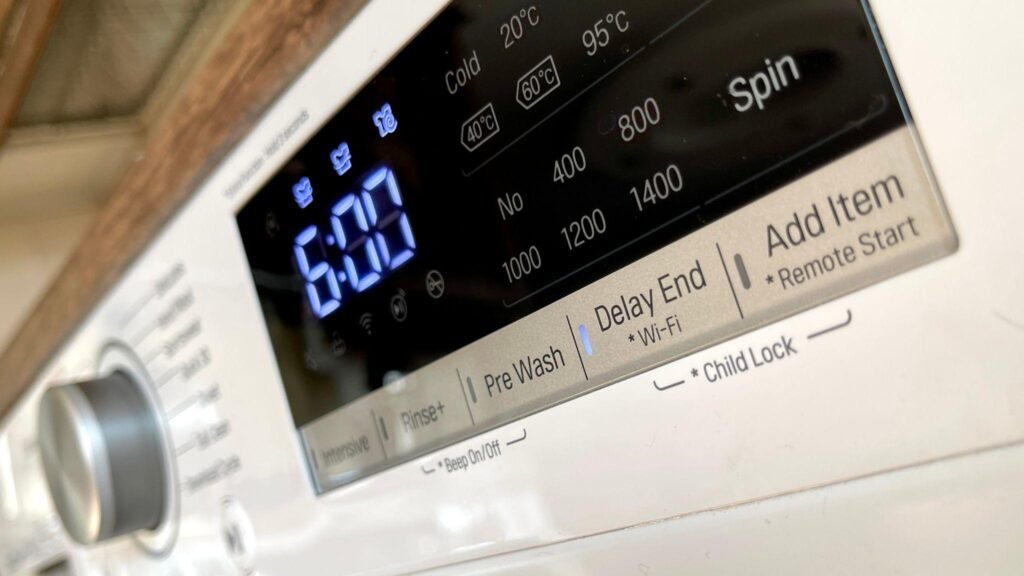
Spin speed. Measured in RPM, this is one of those specs that sounds technical but has a very direct real-world effect — a faster spin extracts more water from your clothes before they ever go near a dryer, which means shorter drying times. Look for something in the 1200 to 1400 RPM range. Below that, and you’ll notice your dryer cycles taking noticeably longer.
Motor type. This one’s less visible day-to-day but matters for the long haul. Brushless inverter or direct-drive motors run quieter, last longer, and use less energy than older brushed motors, because there’s less mechanical wear from physical brush contacts. If you’re buying a machine you expect to keep for ten-plus years, this is worth prioritizing even if it costs a bit more upfront.
The Features Actually Worth Paying For
Once you’re past the basics, here’s where it gets interesting — and where it’s easy to pay for features you’ll never use.
Automatic load sensing is one of the genuinely useful ones. The machine weighs your laundry and adjusts water volume and cycle time accordingly, so a half-load doesn’t get the same water and time as a full one. Over months of use, this adds up to real water and energy savings — it’s not just a marketing line.
Auto-dosing systems store detergent in a reservoir and dispense the exact amount needed per cycle. This is convenient, and it does prevent the over-dosing that leads to detergent buildup in your machine and on your clothes (which, ironically, makes clothes feel less clean over time). The catch: you’re committing to refilling that reservoir periodically, and if you like switching between detergent types or brands, this feature is less flexible than just measuring your own.
Sanitize and steam cycles use very high heat or steam injection to kill the vast majority of common bacteria and allergens — useful if anyone in the house has allergies, or for things like bedding and towels that benefit from a deeper clean periodically. Worth knowing: these cycles run longer and use more energy than a standard wash, so they’re a “when needed” feature, not an everyday one.
Smart connectivity — Wi-Fi linking to a phone app — is the feature most likely to be a “nice to have” rather than essential. Being able to download custom cycles, check energy usage, or get maintenance alerts is genuinely convenient for some people, but if you’re not someone who’s going to actually open that app regularly, it’s not a dealbreaker if your machine doesn’t have it.
Keeping It Running Well (This Part Actually Matters More Than People Think)
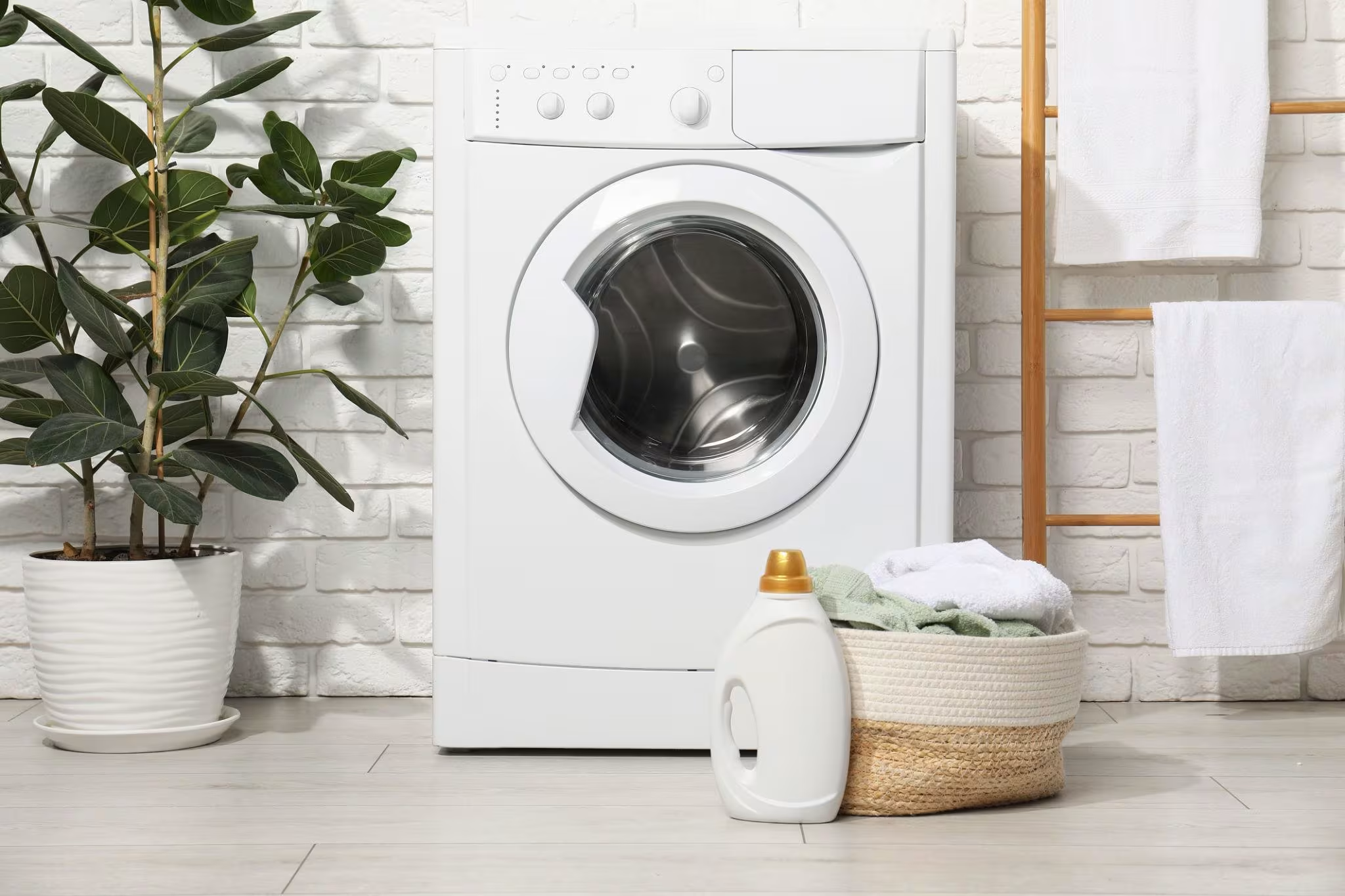
Here’s something that doesn’t get said enough: a lot of the “this machine smells bad” or “my clothes don’t feel clean anymore” complaints aren’t actually about the machine itself — they’re about maintenance that didn’t happen.
Leave the door cracked open after every wash. This feels counterintuitive — isn’t a closed door cleaner? — but a sealed, damp drum is exactly the environment mold and mildew love. Leaving the door ajar lets the drum and rubber seals actually dry out between washes, which is one of the simplest things you can do to prevent that musty smell.
Run a monthly drum-clean cycle. Most modern machines have a dedicated cycle for this, or you can run an empty hot cycle with a washing machine cleaner or a cup of white vinegar. This clears out the detergent residue and mineral buildup that accumulates in places you can’t see — particularly relevant if you’re using auto-dosing, since residue buildup is part of what that feature is trying to prevent in the first place.
Clean the drain pump filter every few months. This is the one almost nobody does until something goes wrong. It’s usually a small panel near the bottom front of the machine, and it catches coins, hair, lint, and the occasional sock button that would otherwise clog your drain. A few minutes every three months can prevent a service call down the line.
If you’re dealing with a machine that’s already developed odor or buildup issues, our guide on removing tough stains from your washing machine and the washing machine drum guide both go deeper into fixing problems that have already started.
Front-Load vs. Top-Load: The Honest Trade-Off
If you’re stuck between front-load and top-load and not sure which way to lean, it really comes down to two things: how much you care about water/energy efficiency and gentler fabric care versus how much you care about not bending down every laundry day.
Front-load wins on efficiency and fabric care, full stop. But the bending-over reality is genuinely a bigger deal for some households than it sounds like on paper — especially if laundry is a daily task rather than a weekly one. If that’s a concern for you, our front-loading washer disadvantages piece covers this honestly, and how to compare front-loading washing machines is useful if you’ve already decided front-load is the way to go and just need to narrow down models.
If there’s one piece of advice that cuts through all the spec-sheet noise, it’s this: get the capacity right for your household, don’t go below 1200 RPM on spin speed, and pick a brushless inverter motor if you’re keeping the machine long-term. Everything else is genuinely about preference — and a little bit about how much you enjoy checking an app for your laundry status.
FAQ
What’s the difference between an inverter motor and a regular motor in a washing machine?
An inverter or direct-drive motor has no physical brushes, which means less mechanical wear, quieter operation, a longer lifespan, and lower energy use compared to traditional brushed motors.
What spin speed should I look for in a modern washing machine?
A spin speed between 1200 and 1400 RPM is ideal, as higher speeds extract more water from clothes and significantly reduce drying time.
Is automatic load sensing worth having in a washing machine?
Yes, automatic load sensing adjusts the water volume and cycle time based on the actual size of your laundry load, which reduces water and energy waste over time.
How often should I clean my washing machine’s drain pump filter?
The drain pump filter should be cleaned roughly every three months to remove trapped lint, hair, coins, and other debris that can affect performance.
Should I leave my washing machine door open after use?
Yes, leaving the door slightly open after each cycle allows the drum and rubber seals to dry out, which helps prevent mold, mildew, and musty odors.