Estimated reading time: 9 minutes
Last updated on June 23rd, 2026 at 07:11 am
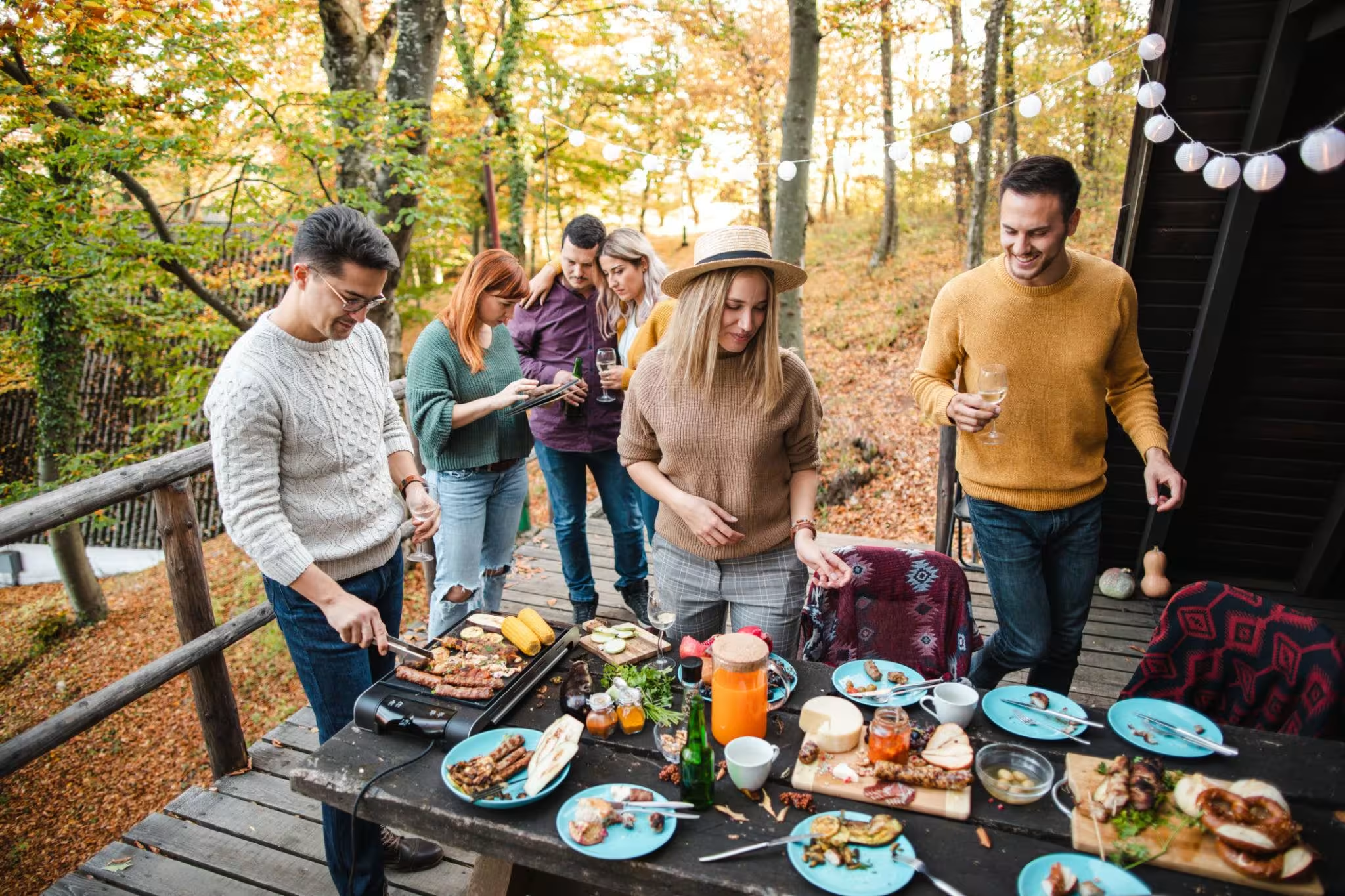
Picture a summer gathering at your place. Inside the kitchen, someone’s stuck managing the stovetop — lid in one hand, tongs in the other, missing every conversation happening out on the patio. Meanwhile, with an outdoor grill, that same person is standing right in the middle of everything, cooking and chatting, cold drink nearby, part of the actual evening rather than supplying it from behind a wall.
That shift — from isolated to present — is honestly the most underrated reason to get an outdoor grill. But it’s far from the only one.
An outdoor grill improves home life in ways that are practical, social, financial, and culinary all at once. If you’ve been on the fence, here’s a clear-eyed case for why it’s worth committing to.
The Social Shift Nobody Talks About Enough

Every article about outdoor grills mentions “great for entertaining.” What they don’t explain is the specific dynamic change that makes it true.
When you cook indoors at a dinner party, you disappear. Guests arrive, you’re in the kitchen. Conversations start, you’re in the kitchen. The first bottle of wine gets opened, you’re in the kitchen. You emerge occasionally to refill a glass or apologise for the delay, then retreat again.
An outdoor grill puts the cook at the centre of the gathering rather than behind a closed door. You’re flipping steaks and having the best conversation of the evening simultaneously. Guests drift over naturally to watch, chat, or simply enjoy the smell of something cooking on hot grates. The grill becomes a focal point — the fire, the smoke, the sound of it — and you’re part of that scene rather than absent from it.
It’s a genuinely different experience of hosting. Once you’ve done it that way, cooking indoors for guests feels oddly isolating.
Why Grilled Food Actually Tastes Better
This isn’t just preference — there’s real food science behind it.
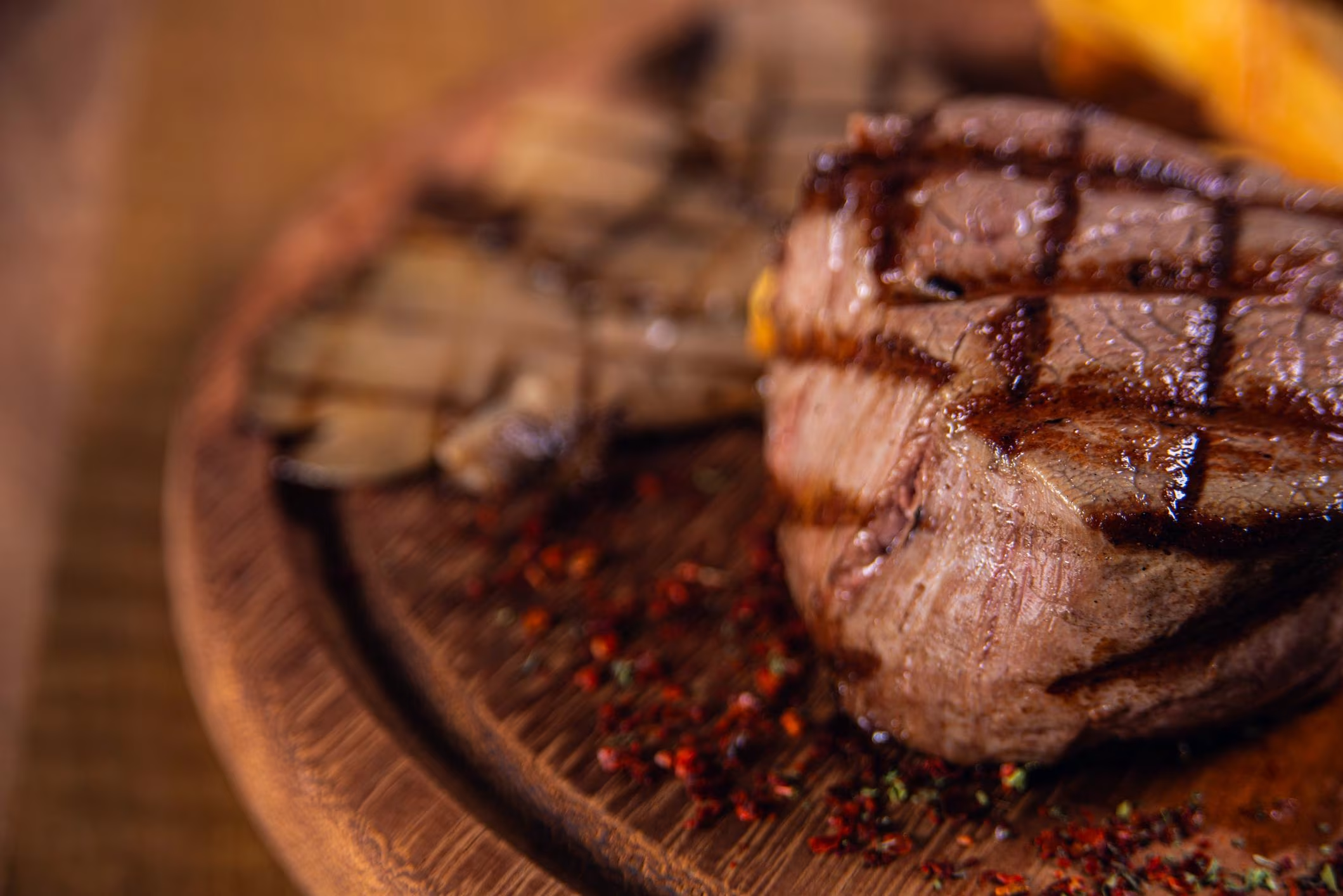
When meat hits a very hot grill, the surface undergoes what’s called the Maillard reaction: proteins and sugars break down under intense heat and form hundreds of new flavour compounds, creating that characteristic crust, colour, and depth that searing at high heat produces. Gas hobs and standard ovens can approximate this, but the consistently high temperatures of a dedicated outdoor grill — and the direct radiant heat from below — tend to produce better searing results on most cuts.
At the same time, the fat that renders out of meat as it cooks drips away rather than sitting in a pan and being reabsorbed. This doesn’t make grilling a “health food” method by any stretch, but it does mean leaner results on things like chicken thighs, burgers, or lamb chops compared to pan-frying in their own fat.
And then there’s charcoal. The smoky, complex flavour you get from cooking over charcoal is entirely its own thing — it genuinely can’t be replicated indoors. If that flavour matters to you, it’s reason enough on its own.
The Practical Benefits That Don’t Get Enough Credit
These aren’t the exciting reasons to buy an outdoor grill, but they’re the ones that stack up meaningfully over time.
Cooking smells stay outside. Fish, curries, charred meats, anything pungent — when you cook these outdoors, the smell doesn’t seep into your soft furnishings, linger in the hallway for two days, or require every window in the house open for an hour after dinner. If you regularly cook bold or strongly scented food, this alone is significant.
Your kitchen stays cooler in summer. Running an oven or stovetop at high heat for an extended period generates meaningful warmth indoors, which your air conditioning then has to counteract. Cooking outside during warm months keeps indoor temperatures lower naturally — a small but real reduction in energy use, particularly over a whole summer of regular cooking.
It’s faster for the right foods. A gas grill can be at cooking temperature in five to ten minutes. No preheating an oven, no waiting for a heavy pan to come up to heat. For weeknight chicken, quick vegetables, or a fast steak after work, a gas grill is often the most efficient option you have.
Does an Outdoor Grill Add Value to Your Home?
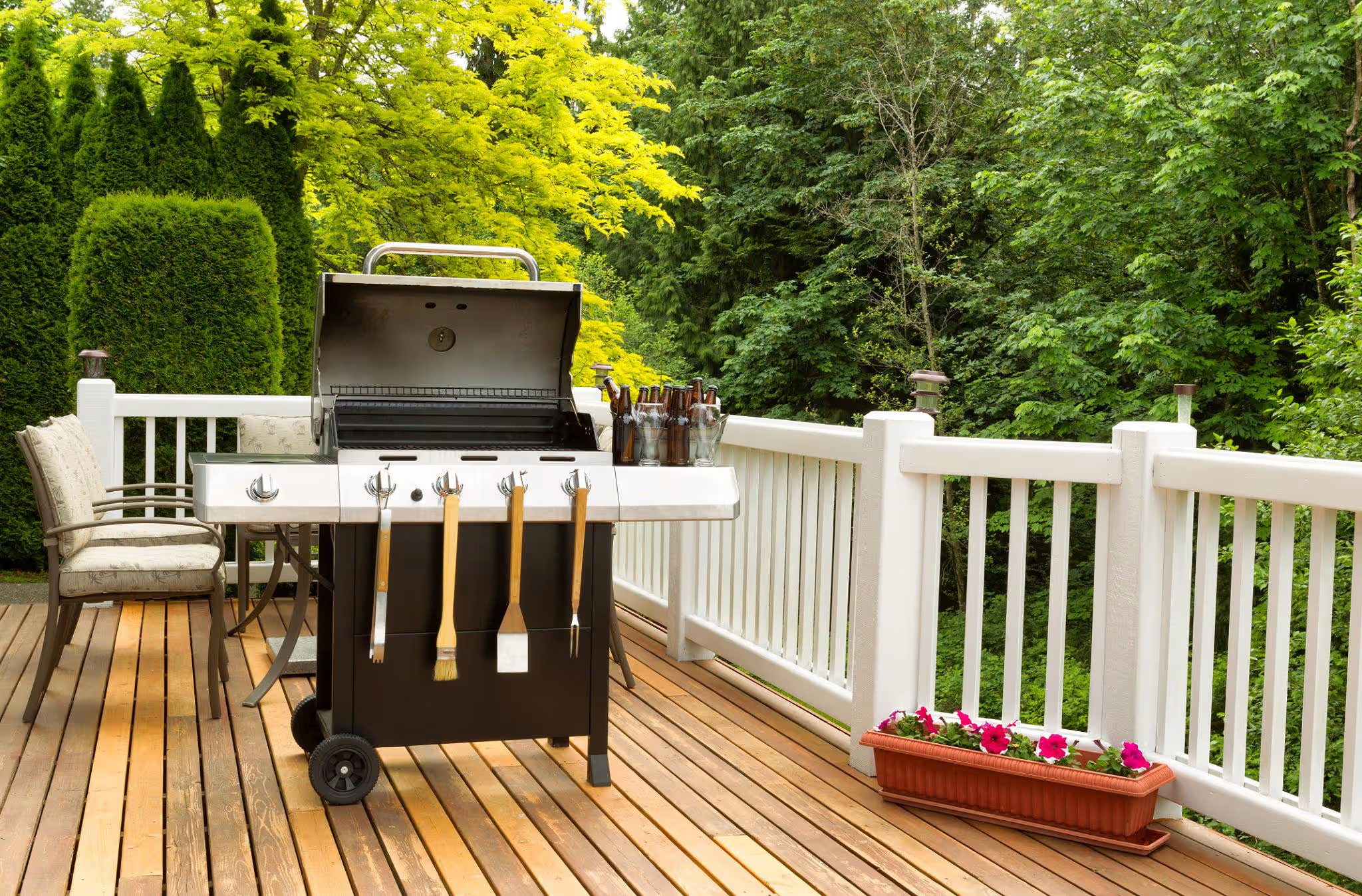
Yes — consistently. Outdoor kitchens and dedicated grill setups are regularly cited by real estate professionals as high-ROI home improvements, particularly in climates where outdoor living is possible for a significant portion of the year.
A built-in grill as part of a well-designed patio or outdoor kitchen carries more resale weight than a freestanding portable unit, but even a quality freestanding setup signals to buyers that the outdoor space is functional and considered rather than just grass and a fence. Prospective buyers who entertain or have families tend to respond well to outdoor cooking infrastructure.
This doesn’t mean you should buy a grill purely as a financial investment — you should buy it because you’ll use it. But it’s worth knowing the money isn’t disappearing into a depreciating appliance. If you’re thinking about a more serious outdoor living upgrade, our piece on why a built-in grill is the ultimate backyard upgrade is a good next read.
Gas, Charcoal, or Built-In: Which Type Is Right for You?
This is the question most people are quietly asking while researching outdoor grills, so it’s worth being direct about it.
Gas grills are the practical everyday choice for most households. They light instantly, reach cooking temperature quickly, and offer consistent, controllable heat. Cleanup is straightforward, and most families find they use a gas grill far more frequently than they ever would a charcoal one. If the goal is to cook outside regularly rather than ceremonially, gas is typically the right answer.
Charcoal grills produce better flavour — specifically that smoky depth that serious grillers care about. The trade-off is time: lighting charcoal, waiting for it to ash over, and managing temperature throughout cooking takes more patience and attention. Charcoal works brilliantly for weekend cooks who want to make an event of it. Less so for Tuesday night dinner.
Built-in or outdoor kitchen setups are the premium option — a permanent installation that becomes a genuine outdoor room rather than a portable appliance. They typically combine a gas grill with side burners, storage, and counter space, and they add the most meaningful value to the property. The investment is higher, but so is the daily usability. For a full comparison of the first two options, our electric vs gas grill breakdown covers the key differences in more detail.
When an Outdoor Grill Might Not Be Worth It
It’s only fair to say this: not every situation calls for one.
If you’re renting a property and can’t make permanent changes, a built-in obviously isn’t feasible — and even a high-quality freestanding grill might not make sense if you’re moving in a year. If you live in an apartment with a balcony, check building rules before buying anything; many high-rise buildings prohibit gas and charcoal grills on balconies for fire safety reasons.
And if you genuinely cook infrequently — a few times a week at most, and never outdoors — a grill is likely to gather covers rather than earn its space. The people who get the most from outdoor grills are the ones who cook regularly and host occasionally. If that’s not you, it’s a harder case to make.
But if it is you? The question isn’t really whether to get one. It’s which one suits your space and cooking style — and how soon you want to stop being the person stuck inside the kitchen.
For inspiration on making your backyard work harder while you’re at it, our backyard BBQ ideas guide has plenty of practical setups worth considering. And if you’re thinking about other ways to improve how your home functions, this roundup of easy home upgrades covers changes at every budget level.
FAQs
Does cooking outside on a grill actually save money on energy bills?
It can, particularly during warmer months. Running an oven or stovetop raises indoor temperatures, which increases the load on air conditioning. Cooking outdoors keeps indoor heat lower and reduces how hard cooling systems need to work. The savings are modest on any individual meal, but they accumulate meaningfully over a summer of regular outdoor cooking.
Is grilling a healthier cooking method?
Grilling lets fat drip away from meat as it cooks rather than being reabsorbed in a pan, which can result in slightly leaner meals. High-heat grilling also typically requires less added fat than stovetop cooking. That said, grilling isn’t inherently a “health” technique — the food itself matters more than the method. Grilled burgers are still burgers.
What type of outdoor grill is best for beginners?
A gas grill. It’s easier to control temperature, lights reliably without the learning curve of managing charcoal, and lets you cook dinner quickly without significant prep time. Once you’re comfortable with outdoor cooking, charcoal is worth exploring for the flavour benefits — but gas is the more accessible starting point.
Does an outdoor grill add value to your home?
Yes, in most markets. Outdoor living spaces and kitchen setups are consistently rated as desirable features by buyers, particularly families and people who entertain. Built-in grill installations carry more value than portable units, but any well-maintained outdoor cooking setup contributes positively to a home’s appeal.
Can you use an outdoor grill year-round?
In most climates, yes — with some adjustments. Gas grills perform well in cooler temperatures, though they may take slightly longer to preheat in cold weather. Charcoal can be trickier in wind and rain. Many regular grillers cook outdoors through autumn and winter without issue, especially with a covered patio or canopy. A good weatherproof cover keeps the grill protected when it’s not in use.
What’s the difference between a gas grill and a charcoal grill for everyday cooking?
Gas grills are faster, more convenient, and easier to control — they suit everyday use well. Charcoal grills produce more flavour complexity, particularly that distinctive smokiness, but require more setup time and hands-on management. Most people who grill regularly end up with a gas grill as their primary setup and treat charcoal as a weekend or special-occasion option.