Estimated reading time: 12 minutes
Last updated on June 23rd, 2026 at 07:30 am
There’s a specific moment that turns a lot of people into built-in grill converts. You’re forty minutes into a slow cook, guests are outside, drinks are flowing — and the propane runs out. Not dramatically. Just quietly, mid-sear, leaving you with a half-cooked rack of ribs and a walk of shame to the garage for a backup tank you may or may not have remembered to refill.
If that sounds familiar, a built-in grill for your backyard kitchen is probably already on your mind. And it should be. Going permanent with your outdoor cooking setup is one of those home upgrades that genuinely changes the way you use your space — not just aesthetically, but functionally. Here’s an honest look at why it’s worth it, what it actually involves, and when it might not be the right move for you.
What Actually Makes a Built-In Grill Different
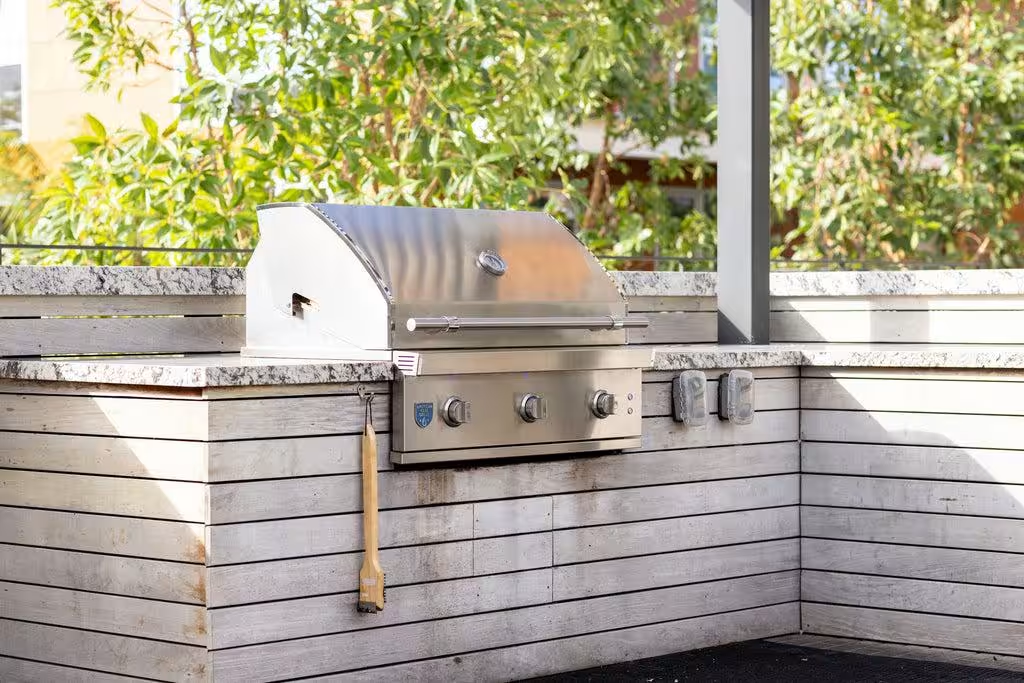
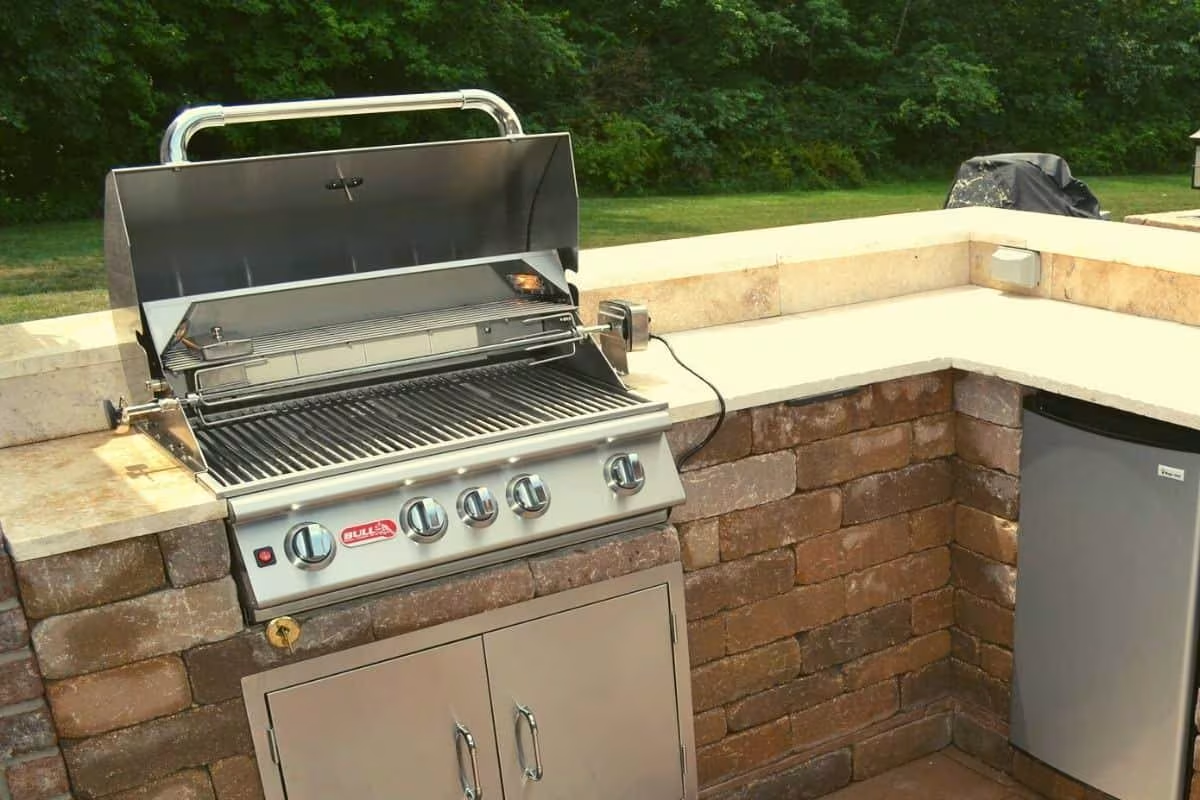
A built-in grill — sometimes called a drop-in grill — is a cooking unit designed to be set into a permanent outdoor kitchen island rather than sitting on its own cart. The grill itself drops into a masonry or steel frame, with countertop space on either side and optional storage cabinets below.
That sounds simple, but the implications go well beyond aesthetics.
For one, the materials are different. Quality built-in grills are made from 304 stainless steel — the same marine-grade alloy used in boat hardware. This isn’t the thin 430 stainless on most freestanding grills that starts showing surface rust within a couple of years. It shrugs off coastal air, heavy rain, and hard winters without the protective covers and winter storage rituals a freestanding grill demands.
For another, the cooking performance is genuinely better. A thicker, better-insulated hood means more even heat distribution and less temperature fluctuation when you open the lid. High-end drop-in models also let you add features that simply don’t exist on portable units: infrared searing zones, dedicated rotisserie burners, integrated smoker trays. These aren’t gimmicks. If you cook seriously outdoors, they change what’s possible.
The Natural Gas Advantage Is the Real Story
This is the single thing people who’ve made the switch cite most consistently: the permanent gas connection.
Most built-in grill setups run on natural gas via a line run directly to the outdoor kitchen island. No tanks. No gauges. No anxiety about running low at the worst moment. You turn it on and cook, the same way you use your indoor stove, for as long as you want.
For people who grill frequently, this is hard to overstate. Propane tanks aren’t just inconvenient — they change how you cook. You cut cooks short. You avoid long, low-temperature sessions because you’re not sure how much gas is left. You either remember to exchange the tank before the weekend or you don’t. With a natural gas connection, none of that is part of the experience anymore.
Worth noting: you can also run a built-in grill on a large permanent propane tank (common where natural gas lines aren’t available), which gives you most of the same benefits without requiring access to a municipal gas line. Either way, the point is the permanent connection — not the fuel source itself.
If you’re still weighing gas against other options, it’s worth reading through the electric vs gas grill breakdown to understand what each fuel type actually delivers before committing to a setup.
Built-In vs. Freestanding: The Honest Comparison
A decent freestanding grill lasts three to five years before the burners corrode and the body starts rusting out. A quality built-in, properly installed, routinely lasts fifteen to twenty years or more — partly because of the materials, and partly because the masonry surround protects the unit from the kind of daily knocks and weather exposure a freestanding cart takes.
| Feature | Built-In Grill | Freestanding Grill |
| Lifespan | 15–20+ years | 3–5 years (average) |
| Fuel supply | Permanent gas line | Exchangeable propane tanks |
| Prep space | Integrated stone countertop | Small folding side shelves |
| Stability | Fixed masonry island | Wheeled cart (can tip) |
| Home value | Adds resale appeal | Depreciating appliance |
| Installation | Professional required | None needed |
| Upfront cost | High | Low to moderate |
The honest version of this comparison: a built-in grill costs significantly more upfront. The installation alone — masonry work, gas line routing, permitting — can easily run several thousand dollars before you’ve paid for the grill itself. If you entertain rarely, or if you’re in a climate where outdoor cooking is a three-month season, the ROI calculation looks very different than it does for someone who grills year-round.
But if you use an outdoor grill regularly, the math flips. You’re not replacing a freestanding grill every few years. You’re not buying propane tanks on rotation. And you’re adding something to your property that genuinely matters to buyers — more on that in a moment.
What Happens to Your Outdoor Space
The practical change to how you actually use your backyard is bigger than most people expect.
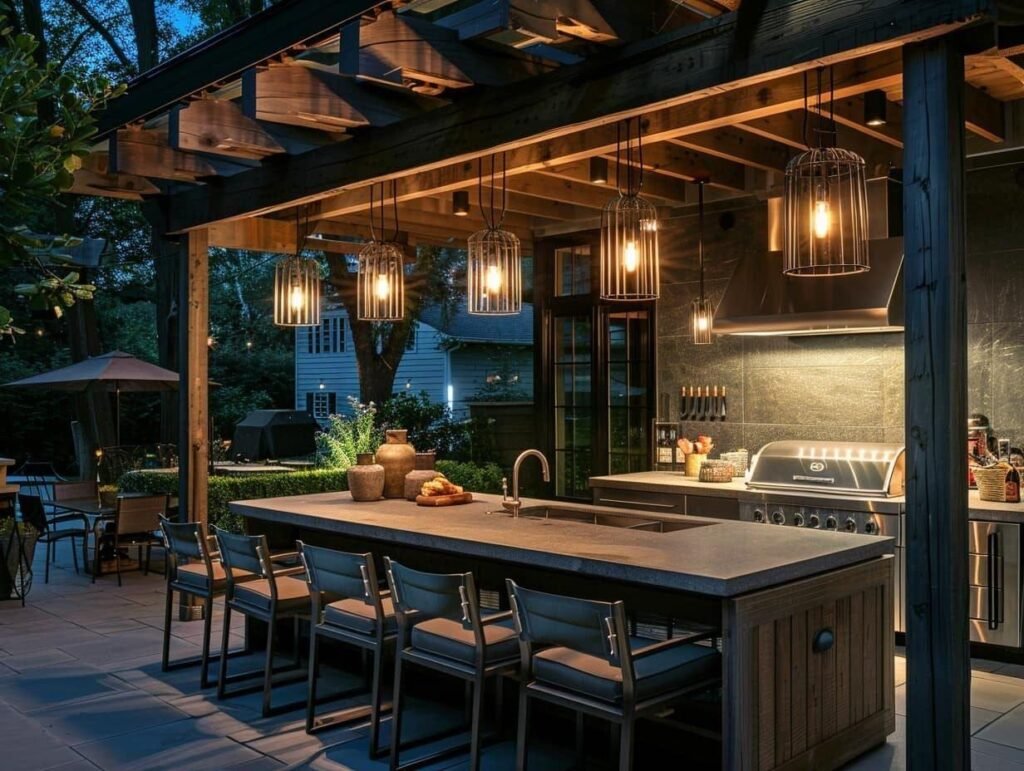
When a grill is built into an island with counter space on either side, your whole outdoor cooking dynamic shifts. Prep work moves outside. Raw ingredients, cutting boards, seasoning — none of it needs to shuttle back and forth to the indoor kitchen. Guests naturally gather around the island instead of being separated from the cook. The outdoor space becomes a place where cooking and hosting happen at the same time, rather than cooking happening in isolation while guests wait somewhere else.
This sounds minor. It isn’t. The social geometry of a proper outdoor kitchen is genuinely different from a freestanding grill pushed to the corner of a patio.
There’s also a practical bonus for your indoor space: shifting heavy summer cooking outside keeps your home cooler. Running the indoor stove and oven for hours during warm months forces your air conditioning to work harder. An outdoor kitchen absorbs that heat burden, which is both more comfortable and, over time, meaningful on your energy bill.
For more ideas on making your outdoor space work harder, backyard BBQ ideas is worth a look — especially if you’re planning the full entertaining setup, not just the grill itself.
Does a Built-In Grill Actually Add Home Value?
Short answer: yes, in most markets — but with context.
Outdoor kitchens consistently rank among the outdoor features modern homebuyers find most appealing, particularly in sunbelt states and warmer climates where outdoor living is a genuine lifestyle priority. A well-built grill island with stone countertops and permanent utilities reads as a premium feature that’s hard to replicate cheaply.
In colder climates where the outdoor season is limited, the ROI is less clear-cut. A buyer in Minnesota may value it less than a buyer in Texas or California. That doesn’t mean it’s not worth building — just that you should be realistic about whether you’re building it primarily for your own use (which is a perfectly good reason) versus primarily for resale value.
What does matter for resale: quality materials and professional installation. A DIY masonry island that looks rough, or a grill unit that’s showing its age, can actually work against you. The same upgrade done well — with good stone work, quality stainless, and a permanent gas connection — is a different conversation.
If you’re looking at your home more broadly through the lens of smart upgrades, how to upgrade your home covers where outdoor improvements sit relative to other renovation investments.
What You Need to Know Before You Install
This is the part most enthusiasm-driven content skips over, and it matters.
A built-in grill is not a DIY weekend project. For most homeowners, it involves:
- A licensed plumber or gas fitter to run and connect the gas line (permits required in most jurisdictions)
- A masonry contractor to build the island structure (concrete block, stone veneer, or prefabricated steel frame)
- Possibly an electrician if you’re adding outlets, lighting, or a refrigerator to the setup
- Local permitting for gas work and sometimes for permanent outdoor structures
Budget expectations vary widely by location and scope. A modest but properly built setup — island, grill, gas line connection, basic countertop — typically runs from $3,000 to $8,000 depending on your region and material choices. A more elaborate outdoor kitchen with refrigeration, a sink, or premium stone work can run considerably more.
The material choice for the island matters more than most people realise. Concrete block with stone veneer is the most common and durable option. Prefabricated steel-framed islands are faster to install and perform well in most climates. Wood-framed structures with cement board are cheaper but less suitable for wet climates and require careful waterproofing.
If you’re also considering how upgrades like this factor into the broader picture of a home renovation, home renovation tips for beginners covers the planning and contractor-hiring basics that apply here too.
Choosing the Right Fuel Type for Your Setup
Gas (natural or propane) is by far the most common choice for built-in grills, for the reasons already covered. But it’s not the only option.
Charcoal built-ins exist and are popular with serious BBQ enthusiasts who prioritise flavour above everything else. The drawback is that a charcoal setup requires more management, produces more ash, and doesn’t offer the convenience benefits of gas. If you’re building a proper outdoor kitchen and you also want the authenticity of charcoal, some people solve this by building two cooking stations — a gas grill as the workhorse and a separate charcoal unit for weekend low-and-slow cooks.
Pellet grill inserts are a newer option that’s growing in popularity. They offer wood-fired flavour with much more precise temperature control than traditional charcoal, and some built-in pellet options are genuinely impressive. The trade-off is that they require electricity, add mechanical complexity, and the pellet hopper needs regular attention on long cooks.
For most people building an outdoor kitchen with a built-in grill, a high-quality gas unit with a natural gas connection is the right starting point. Add speciality cooking options later if the appetite is there.
When a Built-In Grill Isn’t the Right Move (Yet)
Honest version: a built-in grill doesn’t make sense for everyone right now.
If you’re renting, obviously not. If you entertain a handful of times per year and otherwise rarely use a grill, the investment doesn’t have the chance to pay off. If your outdoor space is small or awkwardly shaped, a proper island might not fit in a way that works functionally.
And if you’re not ready to commit to where the outdoor kitchen will live permanently — built-in means built in — it’s worth spending a season with a quality freestanding setup first to figure out exactly how you use the space before you pour concrete around anything.
That said, if grilling is genuinely a regular part of your life and you have the outdoor space for it, this is one of those upgrades that people consistently say they wish they’d done sooner. The experience of cooking outdoors changes when the setup is permanent, well-equipped, and doesn’t require logistical management before every use.
Frequently Asked Questions
What is a built-in grill for a backyard kitchen?
A built-in grill (also called a drop-in grill) is a grill unit designed to be permanently installed into an outdoor kitchen island, typically made from masonry or steel. Unlike a freestanding grill on a cart, it integrates with countertop prep space and connects to a permanent gas line, giving you a fixed, high-performance outdoor cooking station.
How long does a built-in grill last?
A quality built-in grill made from 304 stainless steel, properly installed and maintained, typically lasts 15 to 20 years or more. This is significantly longer than the average freestanding grill, which generally lasts three to five years before corrosion and wear become significant problems.
Does an outdoor kitchen with a built-in grill add home value?
Yes, in most markets — particularly in warmer climates where outdoor living is a priority for buyers. A well-built outdoor kitchen with quality materials and a permanent gas connection is consistently ranked among desirable features by homebuyers. ROI varies by region; in colder climates with shorter outdoor seasons, the value-add is less certain.
What’s the difference between a drop-in grill and a built-in grill?
They’re essentially the same thing. Both terms refer to a grill unit designed to be set into a frame or island rather than sitting on its own cart. “Drop-in” describes how the grill unit fits into the opening in the island from above.
What fuel type is best for a built-in outdoor grill?
Natural gas is the most popular choice because it connects to a permanent line, eliminates tank management, and allows for unlimited cooking time without worrying about fuel levels. Permanent propane (connected via a large tank) is a practical alternative where natural gas isn’t available. Charcoal and pellet built-in options exist and appeal to flavour-focused cooks, but come with added complexity.
Is a built-in grill hard to install?
The grill unit itself drops into a pre-built island opening — that part is straightforward. What requires professional help is everything around it: the masonry island construction, the gas line installation (which requires permits and a licensed plumber or gas fitter in most areas), and any electrical work for lighting or accessories. This is not a weekend DIY project for most homeowners.
What’s a realistic budget for a basic built-in grill setup?
A modest but properly built setup — island, grill, gas line connection, and basic countertop — typically runs from $3,000 to $8,000 depending on your location and material choices. More elaborate outdoor kitchens with sinks, refrigeration, or premium stone surfaces can run considerably more. The grill unit itself ranges from around $800 for an entry-level drop-in to $3,000–$5,000 or more for a premium model.