Estimated reading time: 10 minutes
Last updated on June 23rd, 2026 at 07:30 am
You’re standing in your child’s bedroom, mentally measuring the floor space, trying to figure out how two kids — or one kid and a desk — are supposed to comfortably share this room. You’ve already gone down the rabbit hole online. There are dozens of options, the prices vary wildly, and every comparison article you find describes both beds beautifully without actually telling you which one to get.
So let’s cut to it.
A loft bed elevates a single sleeping surface and leaves the floor completely open underneath. A bunk bed stacks two sleeping surfaces vertically. That’s the core difference — but the right choice depends on your specific setup: how many kids need to sleep there, how old they are, what the ceiling height is, and what you want to do with the space when no one’s sleeping.
Here’s how to figure it out.
The Core Difference at a Glance
| Loft Bed | Bunk Bed | |
| Sleeping capacity | One | Two |
| Under-bed use | Desk, play area, storage | Lower bunk sleeping |
| Best age | 6+ (full loft); 4+ (low loft) | 6+ for top bunk |
| Ideal for | Solo sleepers, small rooms | Siblings, sleepovers |
| Space saved | Floor space underneath | Vertical footprint only |
| Ceiling height needed | 8–9 ft (standard loft) | 7–8 ft (standard bunk) |
When a Loft Bed Is the Better Choice
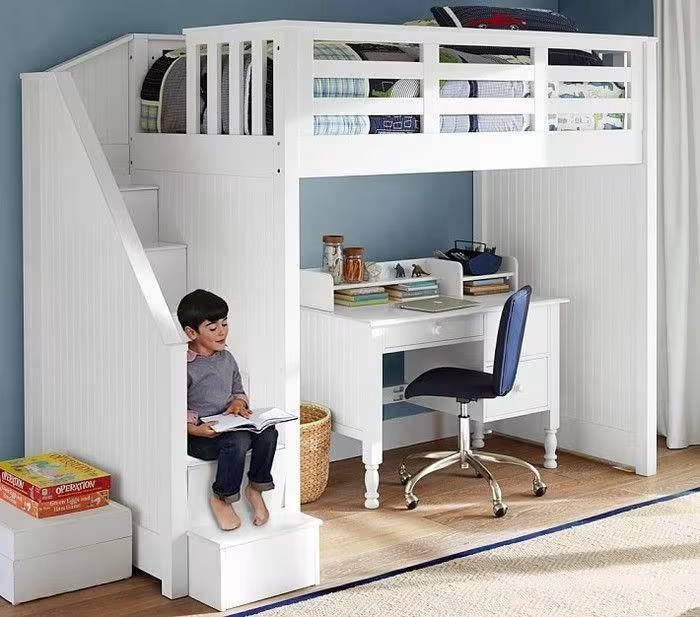
A loft bed does one thing really well: it turns a single bed into a multi-use zone. The space underneath can become a desk setup for a school-age child, a reading nook, a play kitchen, a storage wall — and it can change as your child grows. What’s a play area at seven becomes a study corner at ten, and a gaming setup at fourteen. The bed stays. The use underneath evolves.
The Different Heights (and Why They Matter)
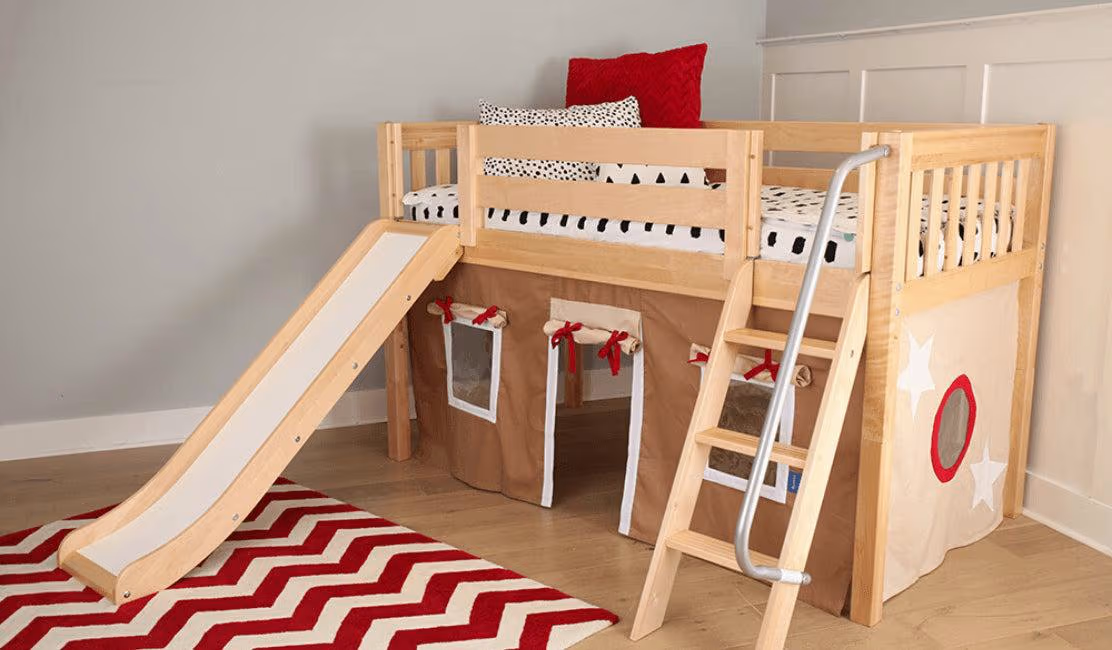
Not all loft beds sit at the same height, and this matters more than most people realise.
A low loft sits around 3–4 feet off the ground, with the space underneath just tall enough for storage and play but not for sitting at a desk. These work for younger children — typically from around age four — and feel less intimidating for kids who are anxious about heights.
A mid loft gives you roughly 4–5 feet of clearance underneath, enough for a small chair and a desk. This is probably the most versatile option for school-age kids.
A full-height loft — the kind with a proper under-desk setup or standing room — needs a ceiling of at least 8 to 9 feet to work safely. This is where people get caught out. Measure your ceiling before you fall in love with a model online.
What to Put Underneath
The under-loft space is only as useful as you make it. Sliding a desk underneath with good task lighting is the most popular option for older kids. For younger children, a small play tent, storage shelving, or a beanbag reading corner works well. If you’re short on kids’ room storage, the under-loft zone can do a lot of the heavy lifting — particularly with a built-in shelving unit or a rolling wardrobe rail.
Best for: A single child in a smaller room who needs both sleeping space and a dedicated study or play area. Also a strong choice for a child who’s outgrown the need to share a room but is still in a compact space.
When a Bunk Bed Makes More Sense
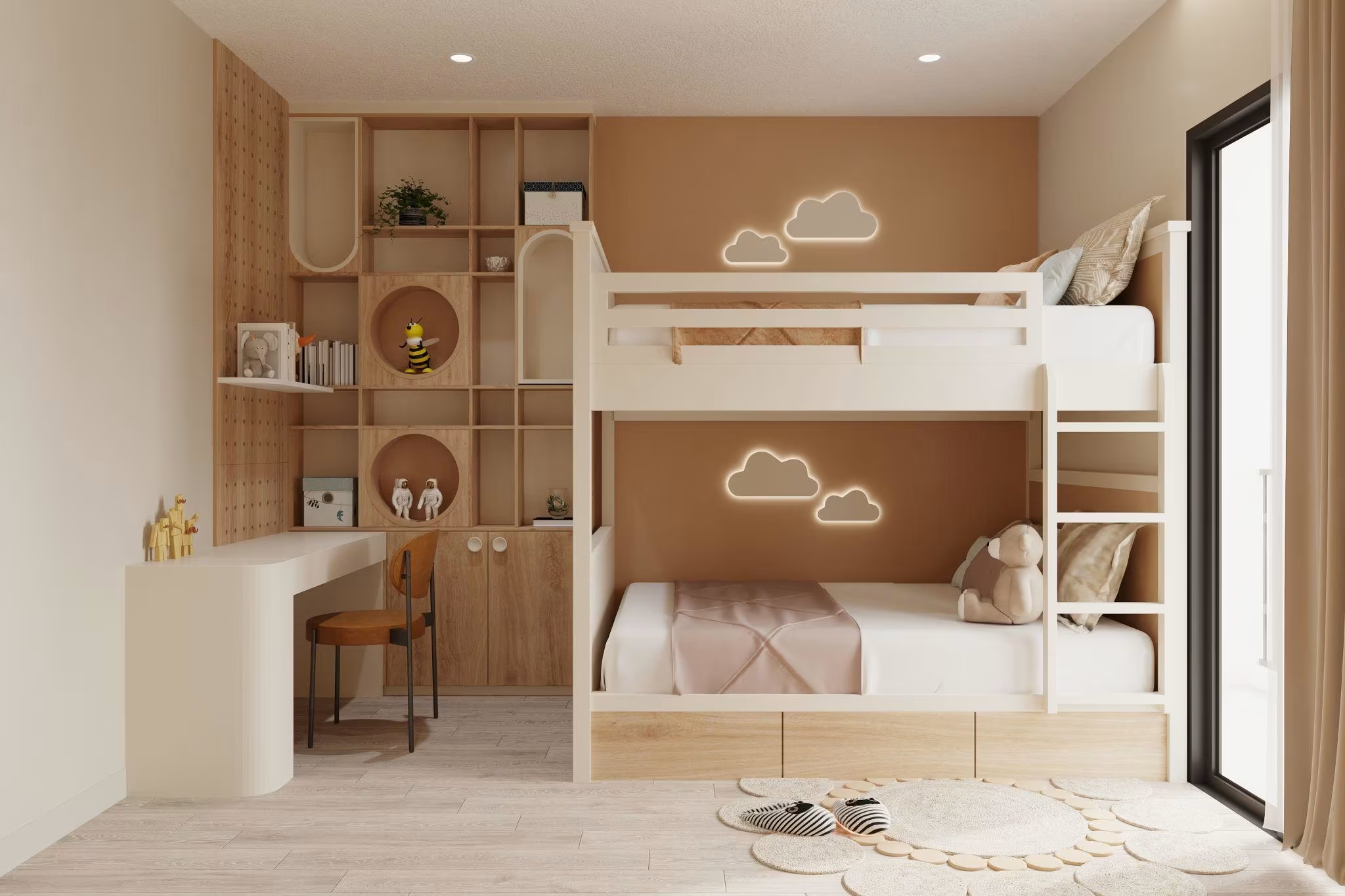
The bunk bed exists to solve one problem: two children, not enough floor space for two separate beds. It does that job well, and in a small shared room, there’s really no better solution.
Twin/Twin vs. Twin/Full
The standard configuration is two twin mattresses stacked — both children get equal sleeping space, the footprint stays compact. The twin-over-full option gives the lower sleeper a larger bed, which works well when there’s an age gap between siblings or when the bottom bunk occasionally doubles as a guest bed for sleepovers.
One honest observation worth knowing: the bottom bunk almost always becomes the preferred one. It’s easier to get in and out of, warmer in winter, and doesn’t require navigating a ladder when half asleep. If you have one child who’s going to feel hard done by on the top, factor that into the conversation before you buy.
Stairs vs. Ladder
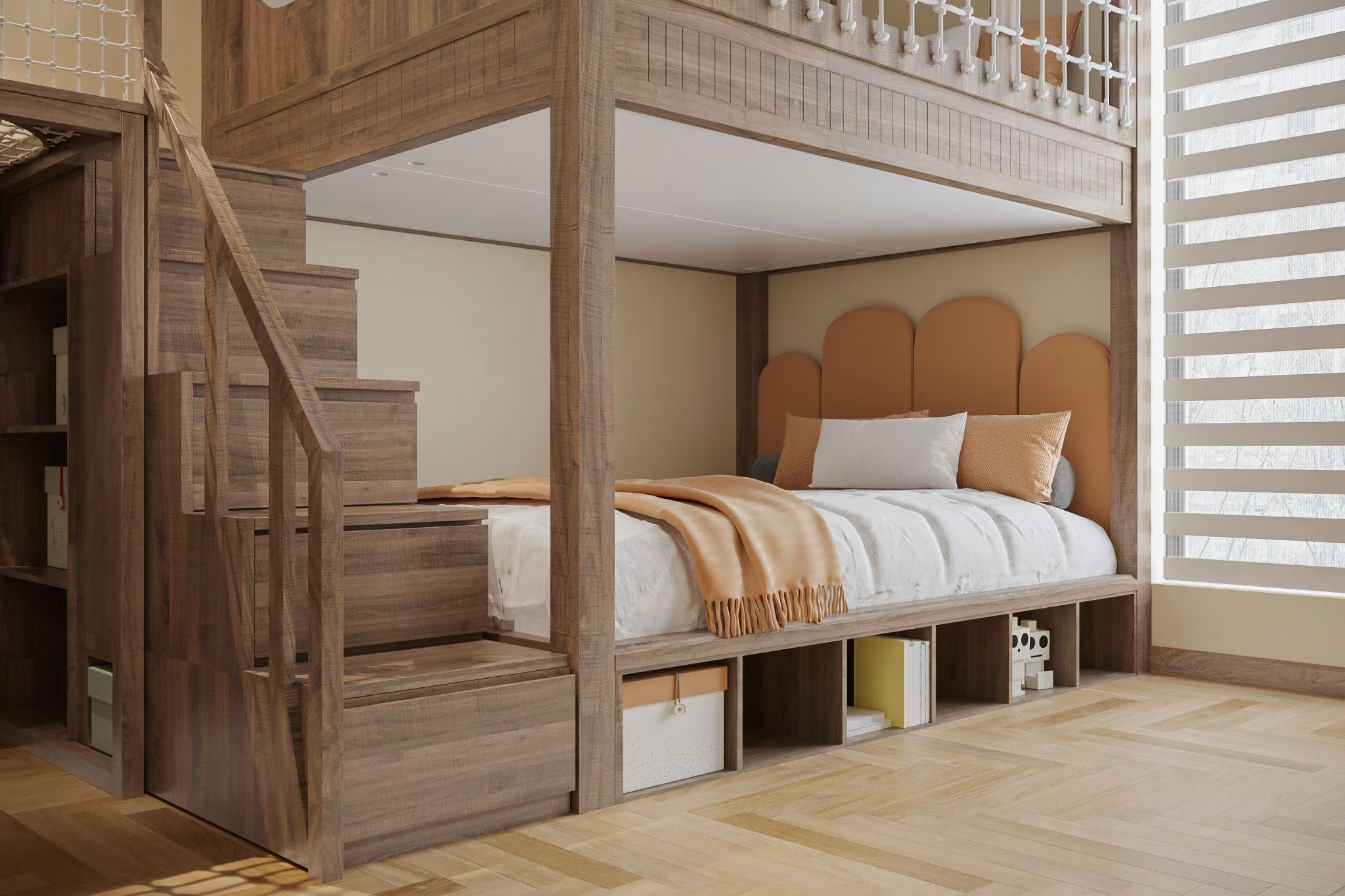
Most bunk beds come with a ladder. Some — typically wider, heavier models — come with built-in stairs, which are significantly easier and safer to use, especially for younger children or nighttime trips to the bathroom. The trade-off is that stair-style bunks take up more floor space along one side. If the room is very narrow, a ladder model is usually the only practical option.
The Trundle Option
Some bunk beds come with a pull-out trundle beneath the lower bunk — a third sleeping surface for sleepovers that tucks away during the day. If your child regularly has friends stay over, it’s worth looking for a model that includes this. It’s far more useful than it sounds. For more ideas on making a shared kids’ bedroom work, kids room decorating ideas covers layout and design in useful detail.
Best for: Two siblings sharing a room, or a child who frequently hosts sleepovers and needs that second sleeping space to be permanent and ready.
Safety: The Concrete Answers Parents Actually Need
Most articles on this topic say something like “follow safety guidelines” and leave it there. That’s not helpful. Here’s what the actual guidance looks like.
Age Recommendations
The general recommendation from paediatric and consumer safety bodies is that children under six should not sleep on an elevated top bunk or a full-height loft bed. This isn’t about physical ability — plenty of five-year-olds can climb a ladder — it’s about what happens at 2am when they’re disoriented and half asleep. Young children don’t reliably remember where they are or how to get down safely when they wake in the night.
Low loft beds (closer to the ground, with solid guardrails on all sides) can work for children around four and up, depending on the individual child.
Ceiling Height Requirements
For a full-height loft bed, you need at least 30 to 33 inches of clearance between the top of the mattress and the ceiling — enough for a child to sit up comfortably without hitting their head. With a standard 8-inch mattress on a full loft, that typically requires a ceiling height of at least 8 feet, and ideally 8.5 to 9 feet for genuine comfort.
Standard bunk beds are more forgiving. Most require around 7 to 8 feet of ceiling clearance, though again, check the specific measurements of any model before buying.
The Mattress Thickness Issue Nobody Mentions
This one catches people out. Most bunk beds are designed with guardrails sized for a mattress of around 6 inches or less. If you use a thicker mattress — say, 8 or 10 inches — the effective height of the guardrail above the sleeping surface decreases. What was a safe 5-inch guardrail above the mattress becomes a 3-inch one, which is a meaningful safety difference.
Check the manufacturer’s recommended mattress depth before choosing a mattress for the top bunk. It matters more than most parents expect. If you’re comparing mattress options, bunk bed mattress vs twin mattress breaks down what actually fits and what doesn’t.
Can One Child Use a Bunk Bed?
More often than people think.
A single child in a bunk bed has some genuinely practical uses for that second sleeping level. The top bunk becomes a dedicated space for sleepovers without needing to pull out a cot or a sofa bed. The bottom bunk can double as a daytime reading or hanging-out space, essentially creating two zones in the room — one for sleeping, one for chilling.
The honest caveat: if your child has no interest in using the top bunk and it’s just going to sit empty, a loft bed will serve them better. The floor space underneath a loft is genuinely more usable than a second sleeping surface that rarely gets slept in.
How to Actually Decide: A Simple Guide
Choose a loft bed if:
- You have one child who needs sleeping space AND a study or play area
- The room is small and floor space is the priority
- Your child is 6 or older (or 4+ for a low loft)
- The ceiling is at least 8 feet tall
- You want a setup that adapts as the child grows
Choose a bunk bed if:
- Two children need to sleep in the same room
- Your child regularly hosts sleepovers and needs a ready second bed
- The room can’t comfortably fit two separate beds
- Both children are 6 or older (for top bunk use)
- Ceiling height is limited (bunks work in lower ceilings than full lofts)
If you’re also thinking about the broader room setup — furniture, storage, layout — it’s worth reading through kids room decor accessories and types of baby beds if you’re also navigating younger children in the mix.
One final thing worth thinking about: what does this room look like in three years? A loft bed that works brilliantly for a seven-year-old’s homework setup might feel cramped for a ten-year-old who’s got more stuff and wants more independence. A bunk bed for two young siblings might have one child wanting their own room by the time they’re twelve. Neither bed is forever — but choosing one that fits the next four to five years (not just the next six months) is worth a few minutes of forward thinking. For a broader look at what toddlers and younger kids need as they transition between bed types, what is a toddler bed is a useful companion read if you’re navigating that transition at the same time.
Frequently Asked Questions
What’s the difference between a loft bed and a bunk bed?
A loft bed has a single elevated sleeping surface with open space underneath — typically used for a desk, storage, or play area. A bunk bed stacks two sleeping surfaces vertically, doubling the room’s sleeping capacity. The key distinction is whether you need one sleeping spot or two.
What age is a loft bed safe for?
Full-height loft beds are generally recommended for children aged 6 and older. Low loft beds — those closer to the ground with robust guardrails — can be appropriate from around age 4, depending on the child. The concern with younger children isn’t climbing ability but rather safe navigation when disoriented at night.
How much ceiling height does a loft bed need?
A standard full-height loft bed requires at least 8 feet of ceiling clearance, and ideally 8.5 to 9 feet for comfortable sitting headroom. The calculation is: mattress height + loft frame height + at least 30 inches of sitting clearance above the mattress. Always check the specific model’s measurements before buying.
Can one child use a bunk bed?
Yes, and it’s more practical than it sounds. The top bunk works well for sleepovers, and the bottom bunk can function as a daytime relaxation or reading space. That said, if the second sleeping surface is unlikely to get real use, a loft bed will give a single child more functional floor space underneath.
What’s a low loft bed?
A low loft bed sits around 3 to 4 feet off the ground — lower than a standard loft but high enough to create usable space underneath for storage or play. The reduced height makes it a safer and less intimidating option for younger children, typically from around age 4.
Is a loft bed or bunk bed better for a small room?
It depends on how many children need to sleep there. For one child, a loft bed is almost always the better choice — it gives you sleeping space plus a functional zone underneath without adding footprint. For two children sharing a small room, a bunk bed is the more practical solution since it provides two sleeping surfaces in the same vertical space a single bed would take up.
What mattress thickness is safe for a bunk bed top bunk?
Most bunk beds are designed for mattresses of 6 inches or less. Using a thicker mattress reduces the effective guardrail height above the sleeping surface, which is a safety concern. Always check the manufacturer’s recommendation for maximum mattress depth before choosing a top-bunk mattress.