Estimated reading time: 10 minutes
Last updated on June 23rd, 2026 at 07:31 am
That white, powdery film on your bookshelf? It’s not dust. It’s minerals from your tap water, blasted into the air by your humidifier’s ultrasonic plate and landing on every surface in the room — including your electronics, your nightstand, and the windowsill your kid keeps drawing pictures in.
If that sounds familiar, you’ve probably stumbled across the term “invisible mist humidifier” while looking for a fix, and wondered if it’s a real thing or just a fancy name slapped on a regular humidifier to make it sound premium.
Here’s the short answer: it’s real, and it’s not new. An invisible mist humidifier is just another name for an evaporative humidifier — a type that’s been around for decades, quietly doing its job without the white dust problem. The “invisible mist” branding is newer, but the technology underneath it isn’t.
Let’s get into what that actually means for your bedroom, your baby’s room, or wherever you’re trying to get the air right.
What “Invisible Mist” Actually Means (And Its Other Name)
Marketing teams love a good rebrand, and “invisible mist” is exactly that — a more approachable name for evaporative technology. You’ll see both terms used interchangeably, sometimes even on the same product listing.
The reason it’s called “invisible” is pretty literal. Unlike ultrasonic humidifiers, which push out a visible fog you can watch drift across the room, evaporative units release moisture as actual water vapor. You can’t see it, you can’t feel it land on your skin, and it doesn’t pool or settle anywhere. It just raises the humidity in the room the same way a pot of water on the stove would — except without the steam cloud.
If you’ve seen “evaporative humidifier,” “cool mist evaporative,” or “invisible mist” on a product page, you’re looking at the same basic mechanism with different marketing dressed on top.
How It Works — The Simple Version
The mechanism is honestly pretty elegant, and once you get it, the rest of this article makes a lot more sense. Here’s the breakdown:
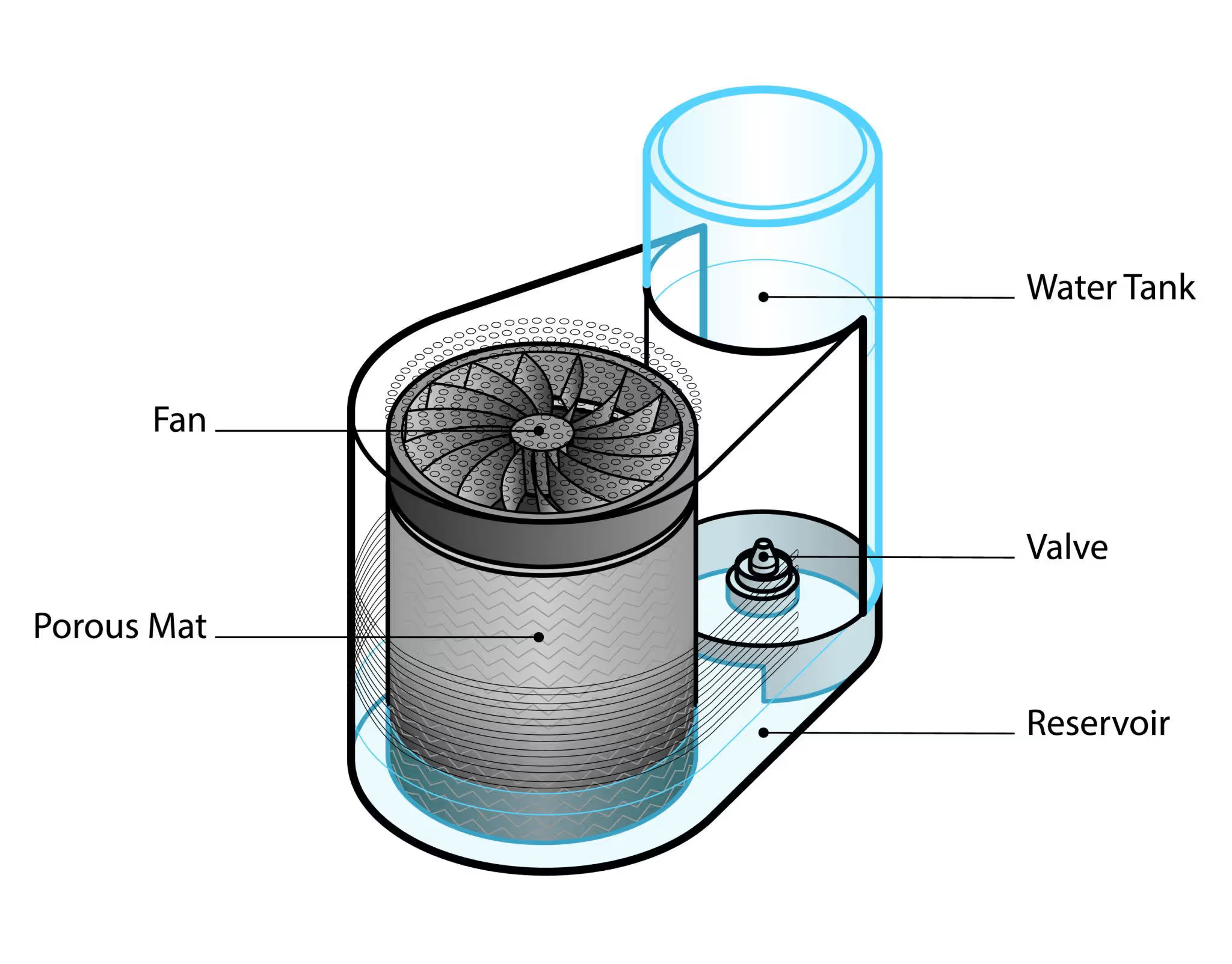
- A fan pulls dry room air into the unit
- That air passes through a wet wick filter (basically a sponge-like material sitting in the water tank)
- As the air moves across the wet wick, some of the water evaporates and gets carried into the airflow
- The now-humidified air gets released back into the room — invisibly, as vapor
That’s it. No vibrating plate, no visible fog, no fine water droplets being flung into the air. Just a fan, a wet filter, and basic evaporation physics doing the work.
Why It Doesn’t Leave White Dust
This is the part most articles either skip or rush through, and it’s honestly the whole reason people switch.
Tap water isn’t pure water — it’s full of dissolved minerals like calcium and magnesium. An ultrasonic humidifier uses a vibrating diaphragm to shake the water into a fine mist, and that mist carries those minerals along with it. When the mist evaporates in your room, the minerals don’t go anywhere. They settle out as a fine white powder on whatever’s nearby: your TV screen, your dresser, your kid’s crib rail.
An evaporative humidifier sidesteps this entirely because of how the wick filter works. As water passes through the wick, the minerals get left behind — trapped in the filter material — while only the water itself evaporates into the air. No minerals, no aerosolized particles, no white dust.
This is also why the filter eventually needs replacing. It’s literally collecting all the mineral buildup that would’ve ended up on your furniture otherwise.
The Self-Regulation Advantage (It Physically Can’t Over-Humidify)
This one’s underrated, and it’s the kind of thing that changes how you think about humidifiers once it clicks.
An evaporative humidifier can’t over-humidify a room. Not because of a sensor. Not because of a fancy setting. Because of basic physics.
Air can only hold so much moisture before it’s saturated. As the relative humidity in your room climbs, the air becomes less “thirsty” — it absorbs water more slowly. So even if your evaporative humidifier keeps running at full blast, the rate of evaporation naturally slows down as the room gets more humid. Eventually it levels off on its own.
Compare that to an ultrasonic humidifier, which keeps pumping out the same volume of mist regardless of how saturated the air already is. That’s how you end up with condensation on windows, damp walls, or that clammy feeling in an overpowered nursery.
This self-regulating behavior is why evaporative units are often described as forgiving — you genuinely don’t have to babysit them the way you might with an ultrasonic on a high setting.
Evaporative vs. Ultrasonic: The Honest Comparison
| Evaporative (Invisible Mist) | Ultrasonic | |
| Visible mist | No | Yes |
| White dust risk | Very low (minerals trapped in filter) | High, especially with tap water |
| Over-humidification risk | Self-limiting | Possible, especially on high settings |
| Noise level | Audible fan hum | Nearly silent |
| Ongoing cost | Filter replacements ($10–$20 every 1–3 months) | Minimal, occasional descaling |
| Best for | Bedrooms, nurseries, allergy-prone households | Quiet spaces, small rooms, light use |
Neither type is universally “better” — it depends what you’re optimizing for. If silence is non-negotiable, ultrasonic wins. If avoiding dust and not having to think about humidity levels matters more, evaporative pulls ahead.
If you’re still on the fence between the two, our cool mist vs warm mist humidifier comparison breaks down the broader category differences too.
The Downsides You Should Know About
No product is perfect, and pretending otherwise doesn’t help anyone.
Fan noise. Evaporative humidifiers have a fan, and that fan makes a sound — a steady hum, somewhere between white noise and a small desk fan. For most people, it’s a non-issue or even welcome as background noise. But if you’re an extremely light sleeper, this is worth testing before committing, because it’s not silent the way ultrasonic units are.
Filter costs add up. You’ll need to replace the wick filter every one to three months, depending on usage and your local water hardness. Replacement filters typically run $10 to $20 each. Over a year, that’s a real ongoing cost — not huge, but not nothing either.
Less punch in big open spaces. Evaporative units work great in bedrooms and moderate-sized rooms, but in a large open-plan living area, the evaporation rate might not keep pace with the space’s volume. You’d need a genuinely large-capacity unit, and even then, results can be slower than what an ultrasonic delivers in the same footprint.
Best Invisible Mist Humidifiers Worth Considering
Honeywell HCM350B — Best Overall for Bedrooms
This one’s been around for years, and honestly, that’s the point. It’s not flashy, it doesn’t have a fancy app, and the design hasn’t changed much — because it doesn’t need to. It’s reliable, the wick filters are cheap and widely available, and it covers a standard bedroom-sized space without breaking a sweat.
The downside: it’s a bit bulky on a nightstand, and the fan noise is noticeable on higher settings. But for most people running a bedroom humidifier, this is probably the right call.
Levoit Superior 6000S — Best for Larger Rooms
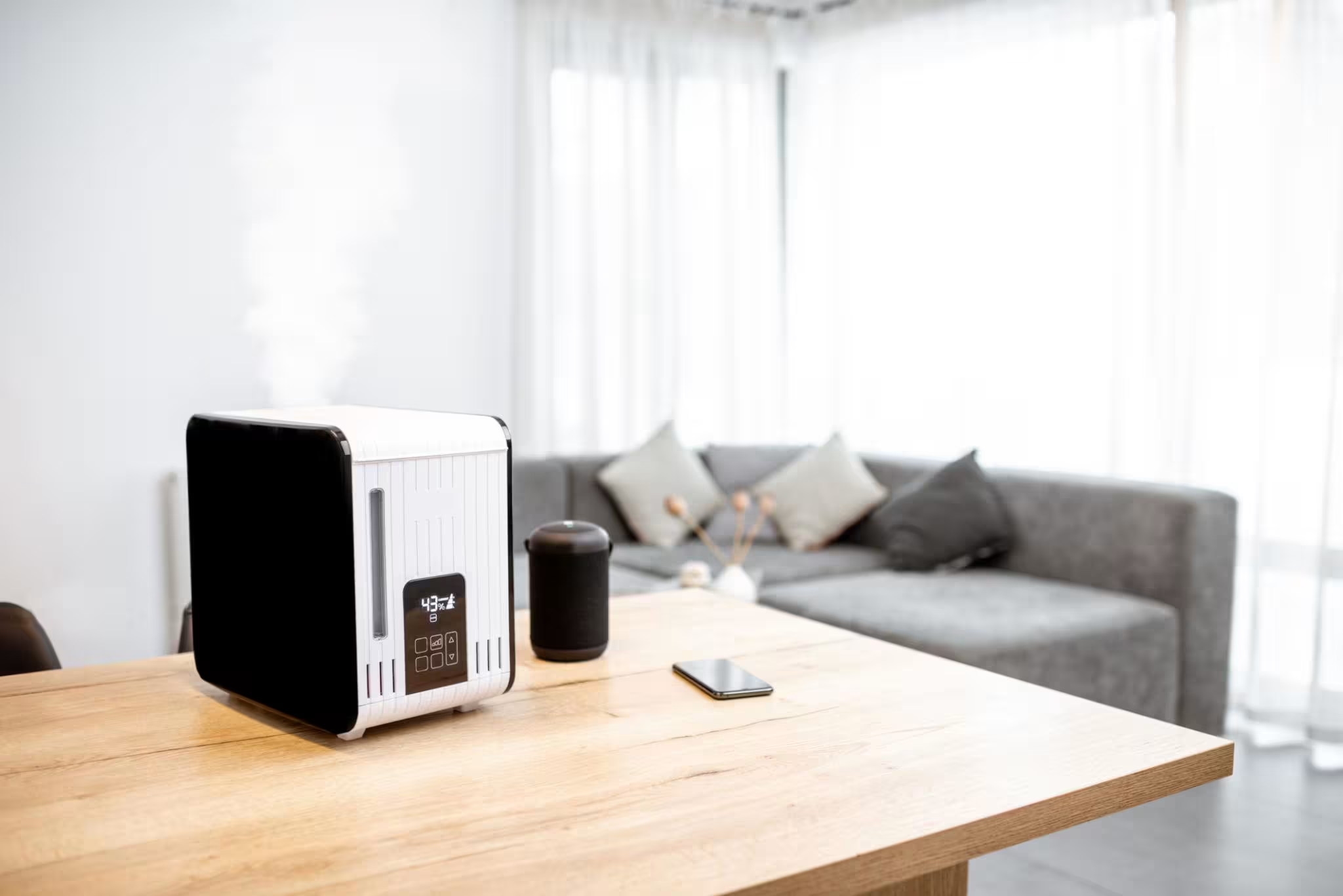
If you’re dealing with a bigger bedroom or an open studio layout, this one has the tank capacity and output to actually make a dent. It also includes a humidistat that lets it self-regulate to a target humidity level, which pairs nicely with the natural self-limiting behavior of evaporative tech.
Honest criticism: the top-fill design is convenient, but the tank is heavy when full, and some users find the smart features more complicated than they need.
Blueair InvisibleMist H35i — Best for Allergy Sufferers
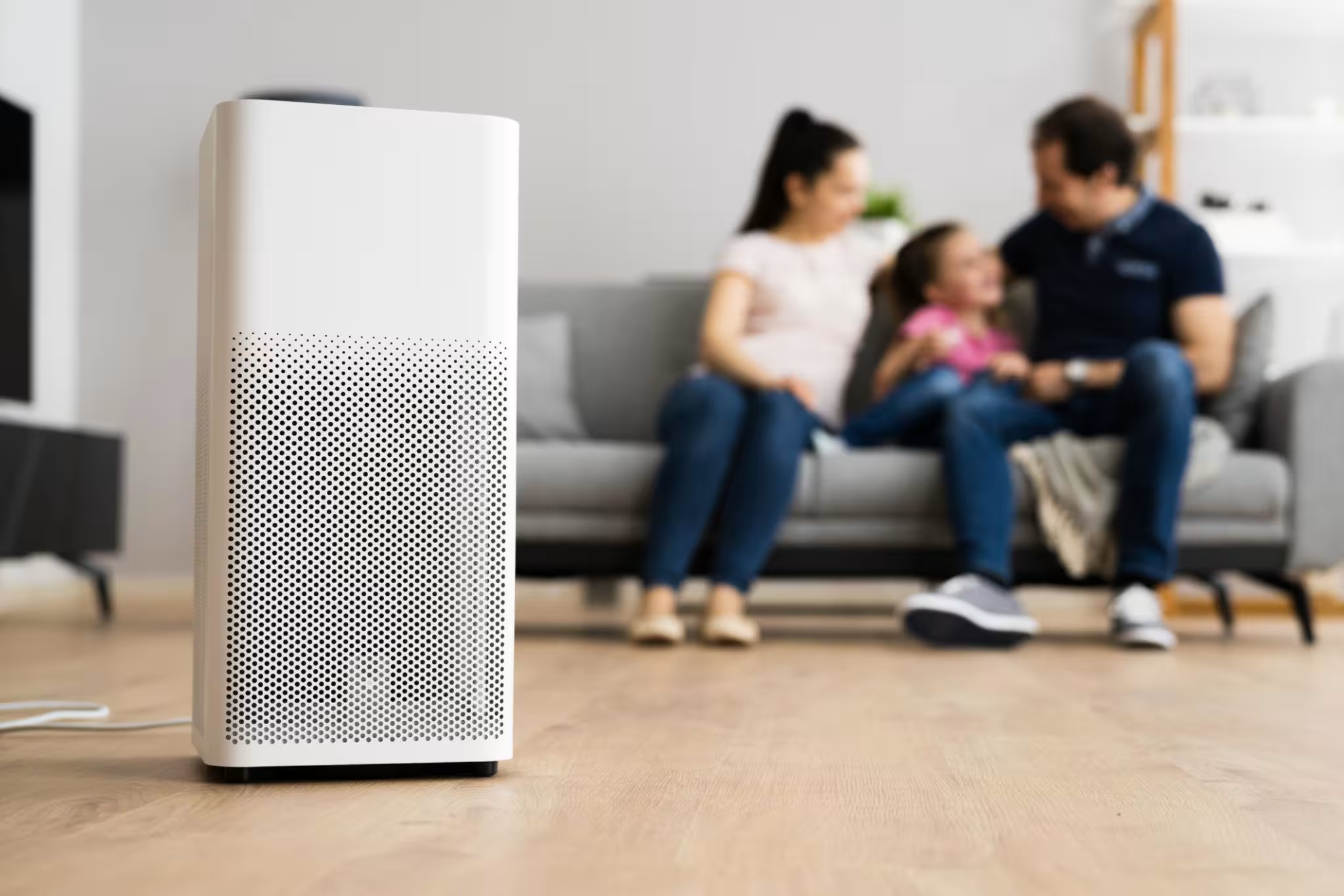
Blueair built its reputation on air purifiers, and this unit leans into that with an antimicrobial-treated filter designed to resist mold and bacterial growth — a genuine concern with any humidifier that sits with standing water for days.
The trade-off is price. This sits at the higher end of the category, and the filters aren’t the cheapest to replace. But if allergies or a respiratory condition are driving your decision, the air-quality focus here is worth the premium.
Dreo HHM014S — Best Budget Pick
If you’re just testing the waters with evaporative humidifiers and don’t want to commit a lot of cash, this is a solid entry point. It covers a small-to-medium room adequately and has a straightforward auto mode that adjusts output based on humidity readings.
It’s not going to wow anyone with build quality, and the tank is on the smaller side, meaning more frequent refills. But for the price, it does what it needs to do.
Canopy Bedside Humidifier 2.0 — Best for Babies’ Rooms
Designed specifically with nurseries in mind, this one has a compact footprint, a quiet-enough fan for light sleepers (including newborns), and a filter-free design that uses replaceable cartridges instead of traditional wicks — which some parents find easier to keep clean.
The catch: those cartridges cost more than standard wick filters, and the tank is smaller, so you’ll be refilling more often if you run it overnight consistently. If nursery air quality is a priority for you, it’s also worth reading through our guide on decorating a kids’ room for other air-quality-friendly touches.
How to Choose the Right One for Your Room
Matching capacity to your space makes a bigger difference than most people expect. A unit sized for a small bedroom will struggle in an open living area, and an oversized unit in a small room can push humidity higher than you’d want — even with self-regulation working in the background.
Small bedroom or nursery (under 250 sq ft): A compact unit like the Canopy or Dreo will handle this comfortably without taking up much space.
Standard bedroom (250–400 sq ft): The Honeywell HCM350B is the dependable middle-ground choice here — it’s the one most people end up with for good reason.
Large bedroom or open living space (400+ sq ft): Look at the Levoit Superior 6000S or similar large-tank units. You may need to run two smaller units instead of one large one if the space is unusually open.
Anyone with allergies, asthma, or a compromised immune system: Prioritize units with antimicrobial filter treatment, like the Blueair, regardless of room size — the air-quality angle matters more than raw output here.
If you’re still narrowing down humidifier types in general before settling on evaporative, our guide to choosing the right humidifier covers the broader decision-making process.
FAQ
What is an invisible mist humidifier?
An invisible mist humidifier is an evaporative humidifier — it uses a fan to pass air through a wet wick filter, releasing moisture as invisible water vapor rather than a visible mist or fog.
Is invisible mist the same as evaporative?
Yes. “Invisible mist” is a marketing term for evaporative humidifier technology. They work identically — both rely on a wick filter and fan to add moisture to the air.
Do invisible mist humidifiers leave white dust?
No, or very minimally. The wick filter traps minerals from tap water before the water evaporates, so the white mineral dust common with ultrasonic humidifiers isn’t a significant issue.
Can an invisible mist humidifier over-humidify a room?
It’s very unlikely. Evaporative humidifiers are self-regulating — as relative humidity rises, the air absorbs less moisture, naturally slowing the evaporation rate even if the unit keeps running.
How often do you replace the filter on an evaporative humidifier?
Typically every one to three months, depending on usage and water hardness. Replacement filters generally cost between $10 and $20.
Is an evaporative humidifier good for a baby’s room?
Yes, for most families. The lack of mineral dust and reduced over-humidification risk make evaporative units a popular nursery choice, though the fan noise is worth testing if your baby is a light sleeper.