Estimated reading time: 9 minutes
Last updated on June 23rd, 2026 at 07:10 am
The air fryer took over kitchen counters everywhere for good reason. It’s quick, it’s tidy, and it makes a genuinely respectable chicken wing without filling your kitchen with oil smoke. But anyone who’s had proper fish and chips — that blistered, golden, shattering-crisp batter straight out of hot oil — knows something gets lost when you try to replicate it in a countertop fan oven.
The honest answer is that both appliances are good. They’re just not good at the same things. So rather than another article that hedges everything and leaves you exactly where you started, here’s a food-by-food, category-by-category verdict.
Quick Comparison: Deep Fryer vs Air Fryer at a Glance
| Category | Air Fryer | Deep Fryer |
| Health & calories | Uses up to 70–80% less oil | High fat, high calorie |
| Taste & texture | Excellent for dry foods | Unbeatable for battered foods |
| Ease of use | Set and forget | Needs monitoring |
| Cleanup | Basket rinse, done | Oil disposal is messy |
| Versatility | Bakes, roasts, reheats | Fryer only |
| Authentic fried flavour | Close but not identical | No contest |
| Counter space | Compact | Bulkier, less flexible |
If you’re scanning this page looking for a quick answer: for most home cooks, the air fryer wins. But read on before you rule out the deep fryer entirely — because there are specific situations where it’s genuinely the better tool.
Health: This One Isn’t Even Close
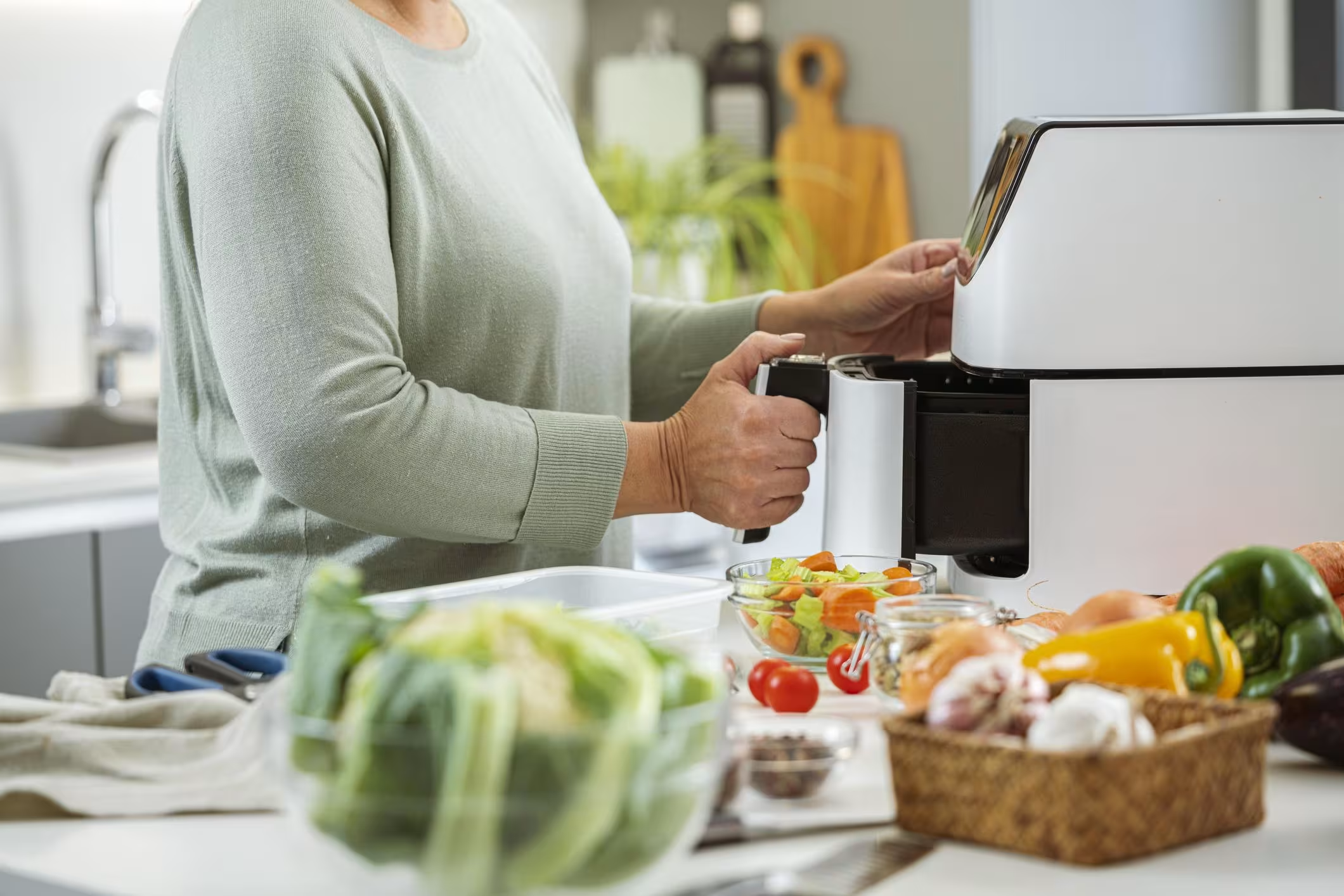
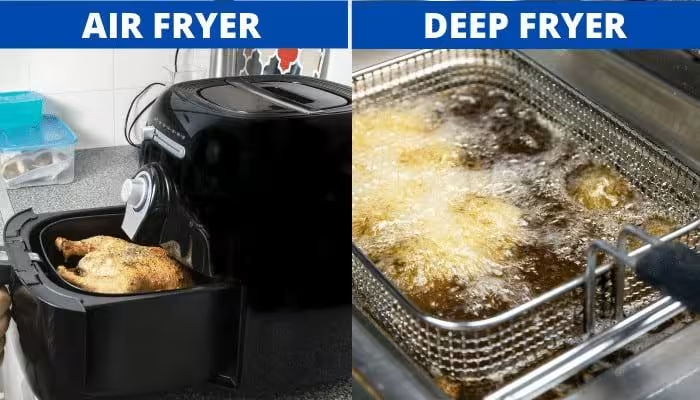
Air fryers work by circulating superheated air around food at high speed — a form of convection cooking. The result is a browned, crispy exterior using a fraction of the oil a deep fryer requires. Research suggests that air frying can reduce oil absorption by 70–80% compared to traditional deep frying, which translates to a meaningful difference in fat and calorie intake over time.
Deep frying submerges food entirely in hot oil — typically at 170–190°C — and that oil gets absorbed into the food during cooking. It’s what creates that distinctive richness and moisture, but it also means you’re eating significantly more fat per portion.
If health is your primary motivation, the air fryer is the clear choice. That said, don’t fall for the idea that air-fried food is “healthy” — it’s healthier than deep-fried, which isn’t the same thing. A plate of air-fried chips is still chips.
Taste and Texture: Where It Gets Complicated
This is the section most comparison articles get wrong by refusing to take a clear position.
The air fryer is genuinely excellent at creating a crispy exterior on dry-seasoned foods — chicken wings, frozen chips, roasted vegetables, breaded items with a dry coating. The convection heat creates surface browning through the Maillard reaction (the same process that makes seared meat taste good), and the results are, in most cases, very satisfying.
But. Wet-battered foods are a different story entirely.
Tempura, beer-battered fish, Korean fried chicken with that particular thin glassy crust — these require hot oil immersion. In a deep fryer, the wet batter hits the oil and sets almost instantly into a rigid, aerated shell while the inside steams to juicy perfection. In an air fryer, wet batter drips, slides off, and you end up with a mess and a disappointing result. The physics just don’t work the same way.
The deep fryer also produces a specific richness of flavour that comes from oil penetrating slightly into the food during frying. It’s why a proper doughnut from a chip shop tastes different from an air-fried one — not just texturally, but in actual flavour depth. I’ve tried to replicate this multiple times. You can get close. You can’t get there.
Food-by-Food Verdict: What Actually Wins Where
Air fryer wins
- Chicken wings — crispy skin, juicy inside, genuinely excellent
- Frozen chips and fries — probably the best use case, significantly better than oven-cooked
- Roasted vegetables — faster than an oven, nicely caramelised
- Breaded chicken or fish (dry-coated) — works very well
- Reheating leftovers — pizza, spring rolls, samosas — all revived properly rather than going soggy in a microwave
Deep fryer wins
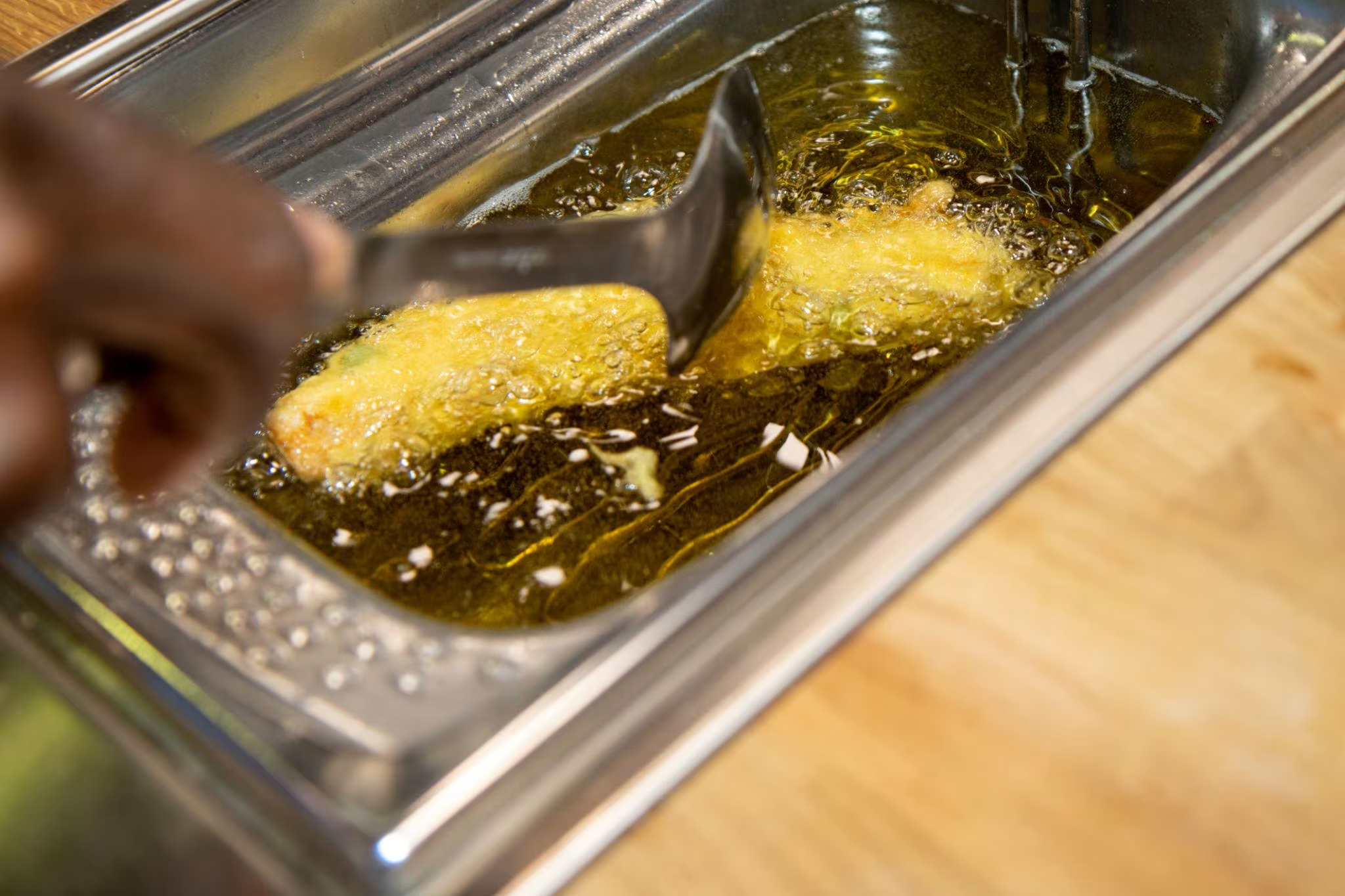
- Tempura and wet-battered fish — no meaningful air fryer alternative
- Doughnuts and fried dough — texture simply can’t be replicated otherwise
- Authentic fried chicken — especially with a thick, craggy batter
- Churros, beignets, and fried desserts — the deep fryer is the only option here
- Anything requiring that distinctive oil-saturation flavour — you’ll know it when you taste it
Convenience: A Genuine Difference in Day-to-Day Use
The air fryer wins this category clearly, and it’s probably why it’s replaced the deep fryer in so many kitchens.
Most models preheat in two to three minutes. You load the basket, set a time and temperature, and walk away. Cleanup is a basket rinse — or a dishwasher run if yours is dishwasher-safe. The whole process, from craving to plate, is genuinely fast.
Deep frying requires heating a large volume of oil to the right temperature, then monitoring it throughout cooking to prevent scorching or temperature drops that lead to greasy results. And when you’re done? You’ve got a pot or tank of hot, used oil to deal with. Cooling, filtering, storing (or disposing of) cooking oil is one of those tasks that sounds minor until you’re actually doing it at 10pm after dinner.
If you’re cooking for a busy household on weeknights, the air fryer is simply more practical. It’s the kind of appliance you’ll actually use every week rather than bringing out for special occasions and quietly dreading the cleanup. For more ideas on making your kitchen work harder, our guide to essential small kitchen appliances is worth a read.
Versatility: No Comparison
An air fryer is essentially a compact convection oven. Beyond frying, it roasts, bakes, dehydrates, and reheats. You can cook salmon fillets, bake a small batch of muffins, roast a head of garlic, or toast bread in most models. That flexibility makes it genuinely useful across different meal types.
A deep fryer does one thing: it fries. Which isn’t a criticism — it does that one thing very well — but it does mean it occupies counter space (or cupboard space) with a very narrow remit. If counter space is tight in your kitchen, these tricks for finding hidden kitchen space might help you decide what’s worth keeping out.
Cost and Running Costs
Air fryers range from budget models around £30–50 to premium units at £150–200+. They use electricity and, beyond that, almost no consumables — a small spritz of oil is all most recipes call for.
Deep fryers have a lower upfront cost in many cases, but the ongoing oil expenditure adds up. A full tank of quality frying oil costs several pounds and needs replacing periodically even with filtering. Over a year of regular use, the air fryer is typically cheaper to run.
Who Should Actually Buy Which
Get the air fryer if:
You want a genuinely useful, everyday kitchen appliance that handles a wide range of cooking tasks. You’re cooking weeknight meals for one to four people. You care about eating reasonably well without completely giving up on crispy food. You hate washing up. This is the right choice for the majority of households.
Get the deep fryer if:
You love making specific dishes that genuinely require it — proper tempura, battered fish, fried dough, authentic Korean fried chicken. You’re cooking for larger groups where batch capacity matters. You’re willing to manage the oil and cleanup because the food quality is worth it to you. You don’t need a multi-purpose appliance — you have other things that handle roasting and baking.
Can You Own Both?
Yes — and honestly, this is what a lot of serious home cooks end up doing.
The air fryer handles 90% of day-to-day cooking, while the deep fryer comes out for the occasional dish that genuinely warrants it. If you’ve got the storage space and you’re serious about cooking, there’s no reason to choose. The two appliances don’t overlap much — they genuinely complement each other.
The caveat: if the deep fryer is going to live in a cupboard and only come out three times a year, it probably isn’t worth the counter space, storage, or oil budget. Be honest with yourself about how often you’d actually use it.
If you’re comparing other kitchen appliances too, our breakdown of electric vs gas grills follows the same logic — different tools for different priorities, and the “best” one depends entirely on how you actually cook. Similarly, the food processor vs blender debate is another case where the answer comes down to what you’re actually making.
FAQs
Can you make wet-battered food in an air fryer?
Not successfully, no. Wet batters — tempura, beer batter, traditional fish batter — require full oil immersion to set properly. In an air fryer, wet batter drips off before it can cook, leaving you with a mess and undercooked coating. Dry breadcrumbs, panko, or seasoned flour coatings work very well in an air fryer. Wet batter needs a deep fryer.
How much less oil does an air fryer use compared to a deep fryer?
Studies suggest air frying uses roughly 70–80% less oil than deep frying. In practice, most air fryer recipes call for a light spray or a teaspoon of oil rather than the litre or more needed to fill a deep fryer tank. The difference in oil absorption — and therefore calorie content — is significant over time.
Is air-fried food actually crispy, or does it just taste dry?
It depends on what you’re cooking. Chicken wings, frozen chips, and breaded items get genuinely crispy in an air fryer — the convection heat creates real surface browning. Foods with a high moisture content or thin delicate coatings can come out drier than expected. The texture is slightly different from deep-fried food, but for many dishes, it’s very close.
What foods are better in a deep fryer than an air fryer?
Anything with wet batter: tempura, beer-battered fish, traditional fried chicken with a thick crust. Fried dough items like doughnuts, churros, and beignets. Dishes where that specific oil-saturated richness is part of the flavour, not just the texture. If the recipe was designed for a fryer, it typically performs better in one.
How do you dispose of deep fryer oil properly?
Let it cool completely, then strain it through a fine mesh or cheesecloth into a sealable container. Properly filtered oil can be reused several times. When it’s done, pour it into a sealed container (the original bottle is ideal) and dispose of it in general waste or at a local recycling point. Never pour cooking oil down the sink — it solidifies in pipes and causes blockages.
Is a deep fryer worth buying if you rarely fry food?
Probably not. If you’re only making fried food a handful of times a year, a deep fryer is hard to justify — the storage space, oil cost, and cleanup overhead don’t balance out for occasional use. For rare frying sessions, a heavy-bottomed pan with a cooking thermometer gets you most of the way there without any dedicated equipment.