Estimated reading time: 13 minutes
Every paint sprayer review online seems to end the same way. Three products. A spec table. A vague conclusion that all of them are “great for DIYers.” You close the tab knowing exactly as much as when you opened it.
The problem isn’t the products — it’s that nobody’s telling you which one actually makes sense for your project. Painting a deck is a completely different job from refinishing cabinet doors, which is nothing like rolling a bedroom. The right sprayer for one of those jobs is potentially the wrong one for the other two.
This guide cuts through the noise. Here’s what each type of sprayer actually does, which models are worth your money for which projects, and a few things about sprayers that nobody mentions until you’re scrubbing paint residue out of a hose at midnight.
First: Do You Actually Need a Sprayer?
Before getting into products, an honest question worth asking: is a sprayer the right tool at all?
For large flat surfaces — exterior walls, fences, decks, full kitchen cabinet sets — sprayers save significant time and deliver a more even finish than a roller can. For furniture and detailed woodwork, a good HVLP sprayer produces a smooth, factory-like result that’s genuinely hard to replicate with a brush.
But for painting one interior room, touching up trim, or a small accent wall? A quality roller and brush will serve you faster, with far less setup, masking, and cleanup time. If you haven’t already read through common DIY painting mistakes beginners make, it’s worth knowing which projects tend to go wrong before deciding to add a sprayer to the equation.
A sprayer earns its keep when:
- You’re covering a large area where roller speed becomes a real bottleneck
- You need a smooth, brush-mark-free finish on furniture or cabinets
- You’re doing exterior work on textured or irregular surfaces
A roller and brush is often the smarter call when:
- The project is a single interior room
- You can’t dedicate time to proper masking (more on this shortly)
- You need to clean up quickly and get back to normal life
HVLP vs Airless vs Handheld: What These Actually Mean
The three main types of home-use sprayers work very differently, and the jargon around them makes the choice feel more complicated than it is.
HVLP sprayers
HVLP stands for high-volume, low-pressure. These systems use a turbine motor to push a large volume of air through the paint at relatively low pressure. The result is a fine, controlled spray with minimal overspray — the fine paint mist that drifts beyond your target surface.
That low-overspray characteristic makes HVLP the clear choice for indoor work, especially on cabinets, furniture, and trim where precision matters. The trade-off is speed: HVLP sprayers apply paint slowly relative to airless systems, and they usually require thinning — reducing the paint’s viscosity slightly with water or a paint conditioner so it flows through the nozzle correctly.
Airless sprayers
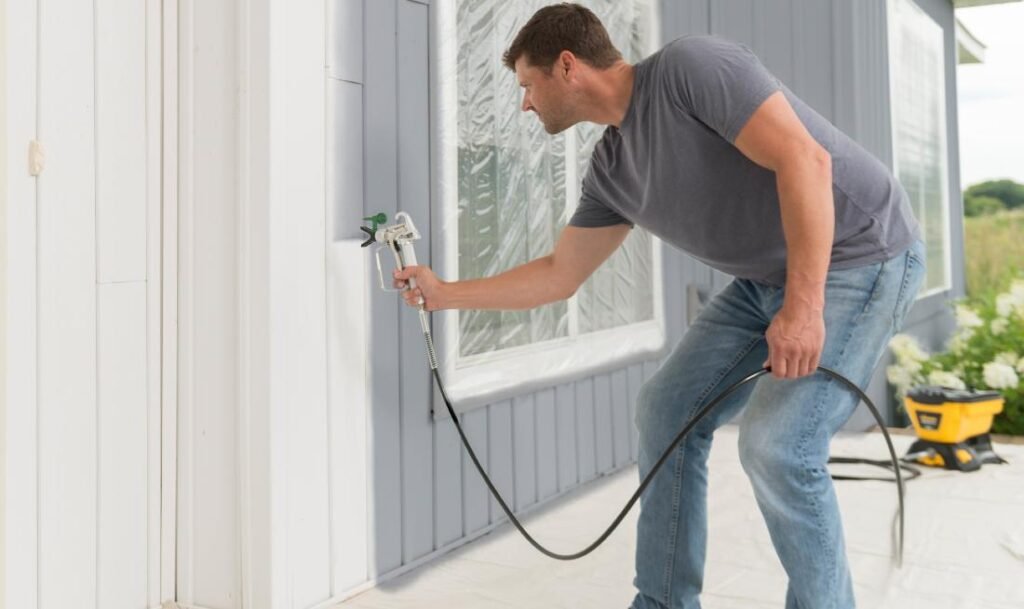
Airless sprayers pump paint at very high pressure through a small tip, atomising it without using air at all. This produces a much heavier, faster spray pattern — ideal for large exterior surfaces where you’re covering a lot of ground quickly.
The drawback is overspray. High-pressure airless systems produce a lot of it, and the first time you use one indoors without proper preparation, you’ll find a fine paint mist on every surface in the room. They’re powerful, fast, and best kept outdoors or in spaces that are fully and methodically masked.
Handheld electric sprayers
These are the consumer-grade, plug-in sprayers you’ll find at most hardware stores for under £50–£80. They work for small projects and quick touch-ups, but they struggle with thicker paints, tend to leave a more textured finish, and require frequent refilling from a small cup. Fine for garden furniture or a feature wall, but not the right tool for a serious project.
The Three Sprayers Worth Buying — And What They’re Each Actually For
Wagner Control Spray Max — best for: small to medium indoor projects, walls, and general DIY use
If this is your first sprayer and you’re not sure how much you’ll use it, the Wagner Control Spray Max is the most sensible starting point. It’s an HVLP system — low overspray, reasonably quiet, and manageable enough indoors with normal masking precautions.
The 1.5-quart hopper holds enough material for a good working session without constant refilling, and the adjustable spray pattern (horizontal, vertical, circular) means you can adapt it to whatever shape you’re covering. A 20-foot hose gives you enough movement without fighting the machine.
In practice, it handles latex paint, stains, and lacquers well when thinned appropriately. Setup is straightforward and cleanup — while not quick — is manageable with a thorough rinse and disassembly.
Honest limitation: It’s not built for heavy-bodied paints or large volumes. Running full exterior masonry paint through it will frustrate you. And like all HVLP systems, the finish isn’t quite as flawlessly smooth as the Fuji system below. For general DIY use it’s excellent; for a cabinet refinish where you want a truly factory-smooth result, it’s a compromise.
Cleanup reality: Around 15–20 minutes for a thorough clean. Remove the cup, flush with water, disassemble the nozzle, rinse the needle and fluid tip. Not terrible.
Graco Magnum X5 — best for: large outdoor projects, decks, fences, exterior walls
The Graco X5 is a proper airless sprayer, and it changes the calculus on large-scale exterior work. Where a roller on a fence panel is genuinely tedious, the X5 covers the same surface in a fraction of the time and gets paint into textured timber in a way rollers simply can’t match.
The standout practical feature is that it pulls paint directly from a 1- or 5-gallon bucket — you’re not stopping to refill a small cup every fifteen minutes on a long fence run. Pressure is fully adjustable, which matters: too high and you’ll get heavy overspray; dialled in correctly for the paint you’re using, you get clean coverage and minimal waste. The hose extends up to 75 feet with an additional extension, which means one machine can reach most of a house exterior without repositioning.
It also handles unthinned paint reasonably well on lower settings, which is a genuine practical advantage over HVLP systems that require thinning for anything thick.
Honest limitation: This is not an indoor sprayer for a beginner. High-pressure airless systems produce serious overspray, and using the X5 inside a room without floor-to-ceiling masking on everything is how you ruin furniture and fittings. Even outdoors, wind affects where the overspray lands. Respect the pressure settings and do your masking properly. For a full walkthrough of exterior prep and conditions, this guide to DIY exterior painting is worth reading before you start.
Cleanup reality: This is where airless sprayers earn their reputation. The pump needs to be flushed before paint dries in the lines — ideally within 20 minutes of finishing. Budget 20–30 minutes minimum for a proper flush and tip clean. If you leave it and the paint dries inside, you’ve got a much bigger problem.
Fuji Semi-PRO 2 HVLP Spray System — best for: cabinets, furniture, and any project where finish quality is the priority
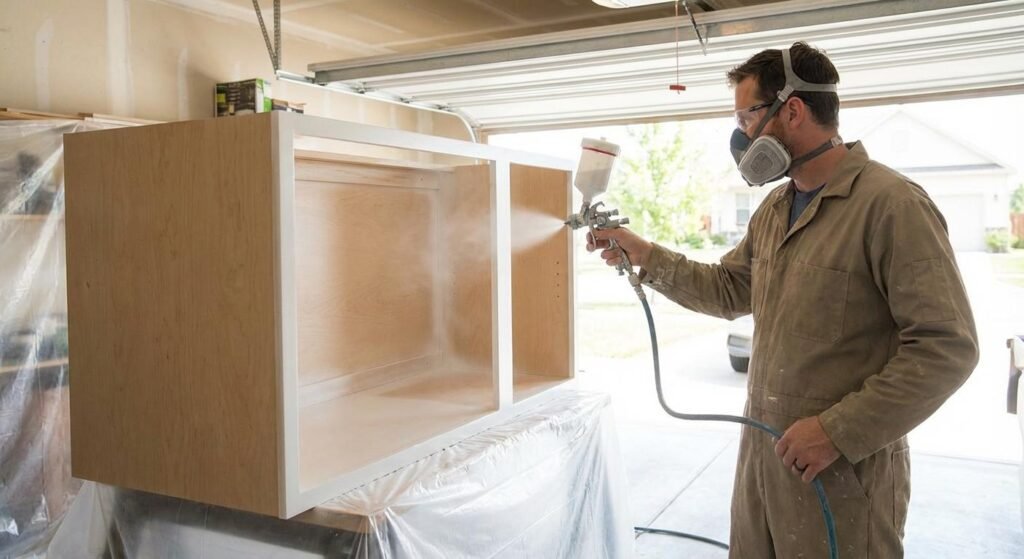
If you’re refinishing kitchen cabinet doors and want a finish that looks genuinely professional — smooth, even, no brush marks, no roller stipple — this is the machine that delivers it. The Fuji Semi-PRO 2 is a turbine-driven HVLP system with a 1400-watt two-stage motor, a stainless steel nozzle and needle that resists corrosion and cleans properly, and a bottom-feed canister design that works consistently with a range of material viscosities.
What makes HVLP turbine systems different from cheaper handheld units is the consistency of the air pressure. The turbine maintains even pressure throughout the spray, which translates directly into an even, fine finish — particularly on flat panel surfaces like cabinet doors. Paired with proper surface prep, the result is noticeably better than anything a brush or roller can achieve on cabinetwork.
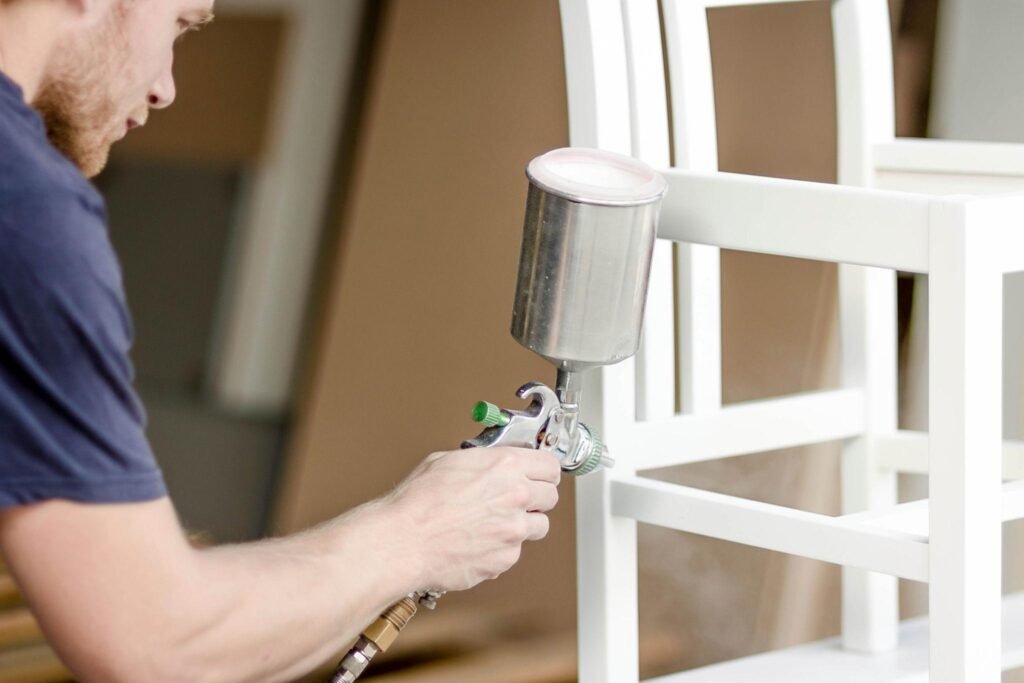
The gravity-feed option (where the cup sits on top rather than underneath) also improves how it handles near the end of a batch of material, reducing sputtering as the cup empties.
For a step-by-step on getting the most out of this type of finish on cabinetry, this cabinet painting guide covers the prep and process in detail.
Honest limitation: The Fuji Semi-PRO 2 is a real investment — significantly more expensive than the Wagner. If you’re doing a one-time project and won’t use it again, that’s a hard number to justify. It’s also bulky compared to handheld units, the hose can get stiff in cold workshop conditions, and it’s more system to learn before you get consistently good results. Worth every penny if you do furniture or cabinet work regularly. Harder to justify for a single weekend project.
Cleanup reality: 20–25 minutes done properly. HVLP turbine systems are actually easier to fully flush clean than airless pumps because there’s no high-pressure internal mechanism — but the canister, nozzle, needle, and air cap all need individual attention. If you’re doing professional-finish furniture work, factor this time into your project planning.
Which Sprayer Should You Actually Buy?
| Your project | The right pick |
| Kitchen or bathroom cabinet repaint | Fuji Semi-PRO 2 |
| Exterior fence, deck, or siding | Graco Magnum X5 |
| General indoor DIY — walls, furniture, trim | Wagner Control Spray Max |
| Furniture refinishing where finish quality matters | Fuji Semi-PRO 2 |
| One large outdoor job, budget-conscious | Graco Magnum X5 |
| First sprayer, mixed projects, not sure yet | Wagner Control Spray Max |
If you’re still torn between the Wagner and the Graco, ask yourself one question: is the project indoors or outdoors, and does it involve detailed surfaces or large flat ones? Detailed indoor work → Wagner (or Fuji if budget allows). Large outdoor surfaces → Graco, without much hesitation.
What Nobody Mentions Before You Buy a Sprayer
This section exists because every buying guide leaves it out, and then new sprayer owners feel blindsided.
Masking takes longer than you expect
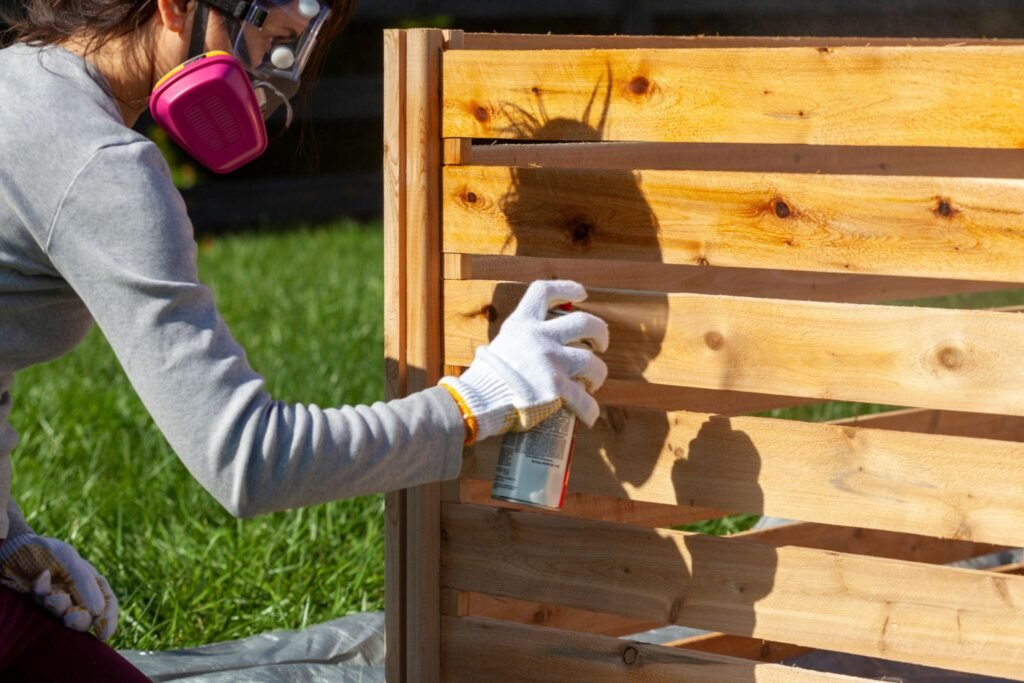
For indoor spraying, masking everything you don’t want painted isn’t optional — it’s a significant part of the job. Cover floors completely. Cover appliances, countertops, and light fittings. Even “low-overspray” HVLP systems deposit fine mist beyond the spray zone, and it settles on surfaces gradually in a way that’s invisible until it’s dry.
The first time I used an airless sprayer inside without thorough masking, I found a faint paint haze on a mirror two rooms away. Not a disaster — but an annoying hour of cleaning that could have been avoided.
Budget at least 30–45 minutes for proper indoor masking before you start spraying.
Paint thinning is usually necessary
Most paints are too thick to spray directly, especially through HVLP systems. You’ll typically need to thin water-based paints with a small amount of water (start around 10% and test) or use a paint conditioner like Floetrol. Oil-based paints thin with mineral spirits. The correct viscosity varies by machine — check your manual for the recommended flow rate and use a viscosity cup if you’re doing this regularly.
The Graco X5 handles unthinned paint better than most — its high-pressure pump can push thicker material — but even then, adjusting viscosity usually improves the finish quality.
Spray distance and fan pattern require practice
Hold the sprayer too close and you’ll get runs. Too far and you’ll get dry, uneven coverage. The sweet spot is typically 8–12 inches from the surface, moving at a consistent pace. Most beginners spray too slowly at first — a slow pass deposits too much material and creates drips. Practice on cardboard or a scrap board before moving to the actual surface.
The fan pattern — wide for large surfaces, narrow for trim and detail — is adjustable on all three models above. Get in the habit of adjusting it for the surface you’re working on rather than using one setting throughout.
Cleanup is non-negotiable and takes time
This has been mentioned under each product, but it’s worth saying plainly: sprayers that aren’t cleaned immediately after use develop dried paint in the nozzle, tip, or pump that can permanently affect performance or block the system entirely. Set aside proper cleanup time as part of every project — not an afterthought.
For tools worth pairing with your sprayer for a complete setup, this guide to the best painter tools for beginners covers what’s actually useful versus what’s marketing padding.
Frequently Asked Questions
Do I need to thin paint before using a sprayer?
Usually, yes — especially with HVLP systems. Most latex paints need thinning by around 10% with water, or with a paint conditioner like Floetrol, to flow properly through the nozzle without clogging. Airless sprayers like the Graco X5 can handle thicker paint at higher pressure settings, but thinning still tends to improve the finish. Always test on scrap material first and check your sprayer’s manual for the recommended viscosity.
How long does it take to clean a paint sprayer?
Budget 20–30 minutes for a proper clean after every use. HVLP systems need the cup emptied, flushed with clean water or solvent, and the nozzle, needle, and air cap individually rinsed and dried. Airless sprayers need the pump flushed before paint dries in the lines — start cleanup within 15–20 minutes of finishing. Skipping or rushing cleanup is how sprayers stop working.
Can I use a paint sprayer indoors?
Yes — with proper preparation. HVLP sprayers like the Wagner or Fuji are far more suitable for indoor use than airless systems due to lower overspray. Whatever you’re using, mask floors completely, cover all furniture and fittings, and ventilate the room well. Airless sprayers indoors require extremely thorough masking and are generally best avoided in fully furnished spaces.
What’s the difference between HVLP and airless sprayers?
HVLP (high-volume, low-pressure) uses a turbine to push a large volume of air at low pressure, producing a fine, controlled spray with minimal overspray. It’s slower but more precise — ideal for cabinets, furniture, and indoor work. Airless sprayers pump paint at high pressure through a small tip, covering large areas quickly but producing more overspray. Better for exterior surfaces and large-scale projects.
Is the Graco Magnum X5 worth it for a one-time project?
For a large one-off outdoor project — a full fence, deck, or exterior wall — the X5 is a strong investment that will save you significant time and deliver better coverage on textured surfaces than a roller can. If it’s genuinely a one-time job and you won’t use it again, renting an airless sprayer from a tool hire shop is worth considering as an alternative. If there’s any chance of repeat use, owning the X5 makes sense.
What’s the best paint sprayer for kitchen cabinets?
For kitchen cabinets, the Fuji Semi-PRO 2 HVLP system delivers the best finish quality — smooth, even, and free of brush marks or roller stipple. It’s a higher investment but produces results that are visibly different from cheaper options. The Wagner Control Spray Max is a reasonable alternative at lower cost, though the finish isn’t quite as refined. Whichever you use, surface prep matters as much as the equipment — proper cleaning, sanding, and priming before you spray is what actually determines the final result.