Estimated reading time: 11 minutes
There’s a particular kind of frustration that comes from mopping your hardwood floors, stepping back to admire the result, and finding them streakier and duller than when you started.
Usually it’s not the floor’s fault. It’s the cleaner.
The DIY hardwood floor cleaner options that get recommended online all have genuine merit — but they don’t all suit the same floors, the same finish types, or the same levels of dirt. Using the wrong one, or using the right one incorrectly, is often what creates the problem instead of solving it.
Here’s an honest comparison of the three most popular homemade recipes, what each one actually does well, where each one falls short, and how to choose the right option for your situation.
Quick Comparison: Which DIY Hardwood Floor Cleaner Should You Use?
Before going deeper, here’s the short version:
| Cleaner | Best For | Avoid If |
| Castile soap + water | Sealed hardwood, everyday cleaning, homes with kids or pets | You have wax or oil-finished floors |
| Vinegar + water | Light surface grime, sealed polyurethane floors | You have natural stone nearby, unsealed floors, or use it frequently |
| Black tea solution | Restoring shine, lightly soiled sealed floors | Heavy dirt or sticky residue — it’s not a degreaser |
If you’re not sure what finish your floor has: most hardwood installed in the last 20–25 years has a polyurethane seal. To check, put a small drop of water on an inconspicuous area. If it beads, the floor is sealed. If it absorbs quickly and darkens the wood, it’s unsealed or wax-finished — and that changes which recipes are safe to use.
Castile Soap and Water — The Most Versatile Option
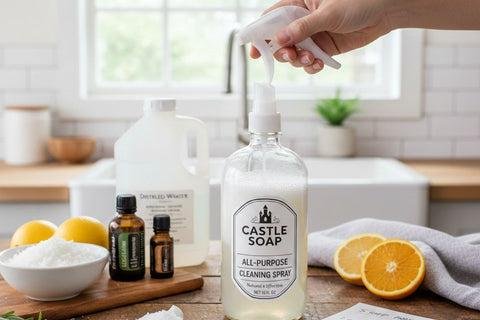
What it is: A pH-neutral, plant-based soap diluted in water. Dr. Bronner’s is the most widely available brand, but any castile soap works.
The recipe:
- 1 teaspoon castile soap
- 4 cups warm water
- 5–10 drops of essential oil (optional — lemon or lavender both work well)
Mix in a spray bottle, shake gently, and you’re ready.
Why Castile Soap Works on Wood
The reason castile soap is genuinely well-suited to hardwood — rather than just popular — is its pH. It’s neutral, which means it won’t gradually break down polyurethane finishes the way acidic or alkaline cleaners can. It lifts dirt without stripping the protective layer underneath.
The critical thing is the ratio. One teaspoon per four cups of water sounds almost too dilute, but too much soap is exactly what causes streaking. The residue from excess soap attracts dust and leaves a film that builds up over time, making the floor look greasy. The dilute recipe is intentional, not cautious.
Best for: Sealed polyurethane hardwood. Homes with pets or children where chemical-free cleaning matters. Regular maintenance cleaning.
Limitations: Not a degreaser — if you’re dealing with kitchen grease tracked onto wood floors, a slightly higher concentration may be needed (but rinse well). Not recommended for wax or oil-finished hardwood, where any soap can lift the protective wax layer.
Effort level: Low. Spray on a small section, mop with a well-wrung microfiber pad, move on.
Vinegar and Water — It Works, With One Important Caveat
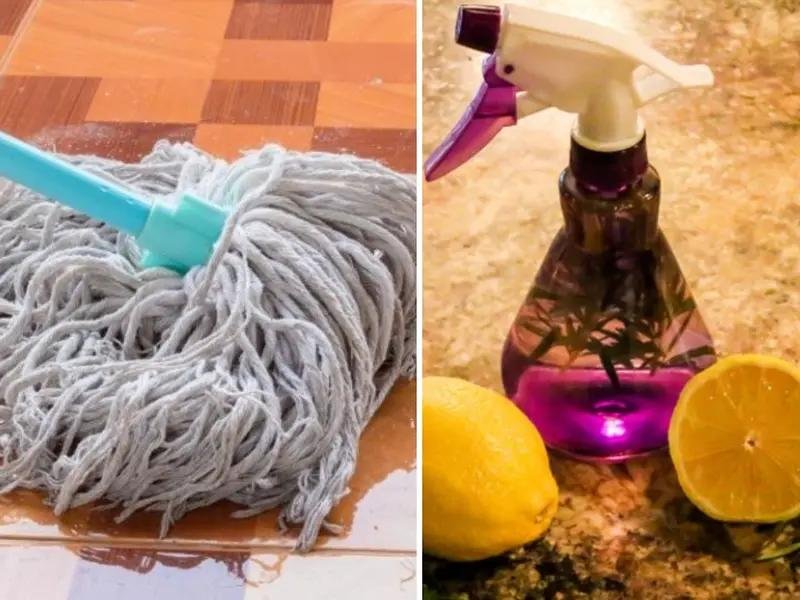
What it is: Diluted white vinegar used as a mild acidic cleaner that cuts through surface grime and residue.
The recipe:
- 1 cup white vinegar
- 1 gallon warm water
- A few drops of lemon or orange essential oil (optional, cuts the vinegar smell)
Mix in a bucket. Use a microfiber mop, wrung out until it’s nearly dry.
The Honest Answer on Vinegar and Wood Floors
The vinegar debate in hardwood cleaning circles is genuinely unsettled, and most articles either ignore it or pick a side without explanation. Here’s the accurate picture:
Vinegar is acidic. On a well-sealed polyurethane floor, occasional use is unlikely to cause visible damage — the seal protects the wood beneath. The problem arises with repeated, frequent use over time. Acidity can gradually dull a polyurethane finish and, on unsealed or wax-finished floors, it can degrade the protective layer and penetrate the wood.
So: vinegar is a reasonable option for sealed floors used occasionally. It’s not a good weekly cleaning habit, and it should never be used on natural stone tiles, unsealed hardwood, or wax-finished floors.
One practical upside: if your floors have a slightly dull, filmy look from product buildup, a single vinegar-and-water clean often removes it effectively — better than castile soap would.
Best for: Sealed polyurethane hardwood with surface buildup or residue from previous products. Occasional use.
Limitations: Repeated use risks dulling the finish over time. Avoid entirely on unsealed, wax-finished, or oil-finished floors. Not suitable near natural stone.
Effort level: Low-medium. Works well, but the smell lingers for 20–30 minutes without essential oil.
Black Tea Cleaner — The One That Surprises People
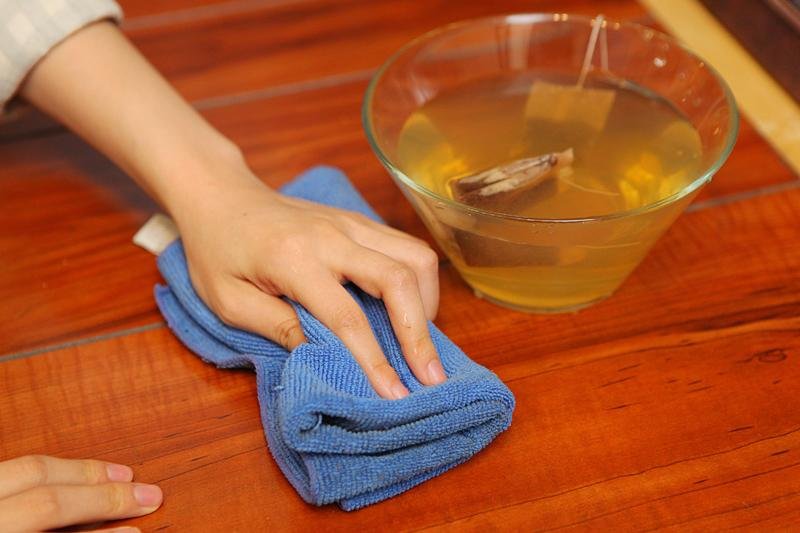
What it is: Steeped black tea, cooled, used as a mild cleaning and conditioning solution for wood floors.
The recipe:
- 3 black tea bags
- 1 quart (roughly 1 litre) boiling water
- Steep for 10 minutes, remove the bags, let it cool fully before use
Apply with a soft cloth or a well-wrung microfiber mop.
It sounds like something your grandmother would swear by. Honestly, she’d be right — there’s a reason this has stuck around.
Why Tea Cleans (and Shines) Hardwood
The cleaning agent here is tannin — the naturally occurring polyphenol that makes black tea astringent. Tannins are mildly acidic and have a slight conditioning effect on wood, which is why floors cleaned with black tea often look noticeably shinier after, not just cleaner. It’s a subtle effect, but it’s real.
What black tea won’t do is cut through grease or lift ingrained grime. It’s a light-duty cleaner that works beautifully on lightly soiled sealed floors and doubles as a mild shine treatment. For floors that just need freshening between deeper cleans, it’s genuinely good.
The other advantage: no residue, no streaking risk from soap, and no smell. It’s the gentlest option of the three.
Best for: Sealed hardwood that’s lightly soiled and needs a shine refresh. Anyone who wants the mildest possible approach.
Limitations: Not effective on heavy dirt, grease, or anything that needs real cleaning power. Cool the solution fully before use — warm or hot liquid on hardwood is a moisture risk.
Effort level: Low, but requires prep time (steeping + cooling = 30 minutes minimum).
How to Mop Hardwood Without Causing Streaks or Water Damage
The recipe matters less than the technique. Most DIY hardwood floor cleaning failures come down to application, not ingredients.
The “Almost Dry” Mop Rule
This is the most important practical thing to understand about cleaning hardwood floors, and it’s the piece of advice most people skip or interpret too loosely.
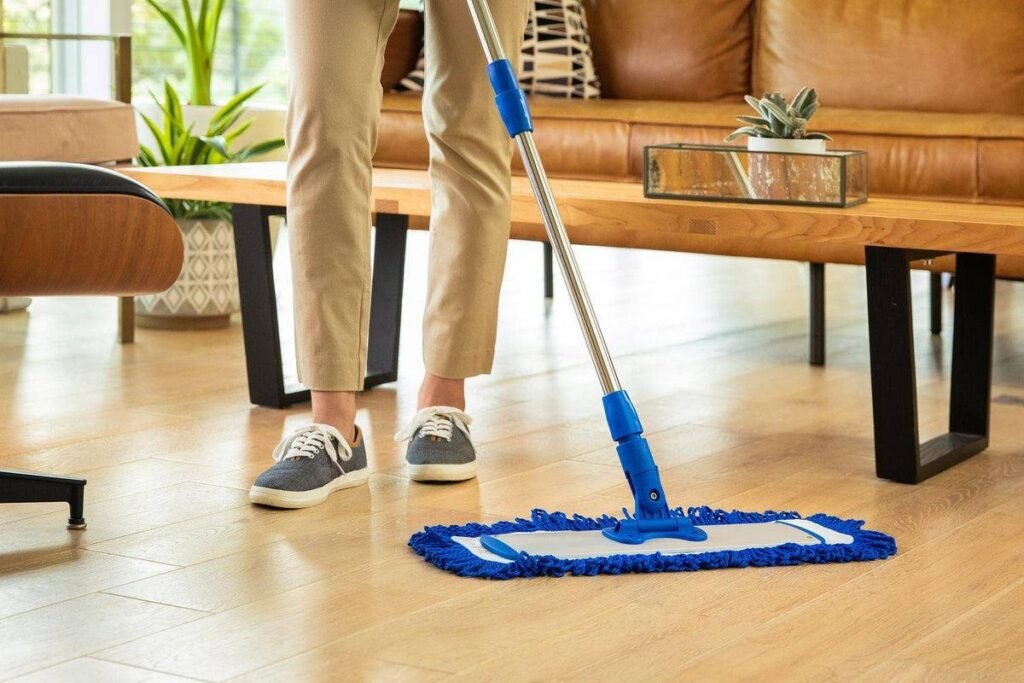
The mop should be wrung out until it feels almost dry to the touch — not damp, not slightly less wet. When you run your hand across the mop pad, there shouldn’t be moisture transferring to your palm. If it does, wring it more.
Excess water is what warps hardwood, clouds the finish, and works into the seams between boards. Hardwood and moisture are not friends. A microfiber mop pad has enough surface area to clean effectively even when almost dry — the cleaning is done by the solution and the friction, not by soaking the floor.
The Streak Problem
Streaks almost always have one of three causes:
- Too much soap in the mix (reduces the recipe, don’t eyeball it)
- Tap water mineral deposits leaving a film — if you’re in a hard-water area, distilled water makes a noticeable difference
- Not rinsing properly — a second pass with a clean damp mop (water only) removes any residue
A microfiber mop is the right tool here. Regular string mops hold too much water and don’t pick up residue as effectively. If you’re still finding streaks after adjusting the recipe, the mop is worth reconsidering. The best cleaning tools for homeowners guide covers what to look for in a good microfiber floor mop.
What Not to Use on Hardwood Floors
Sometimes the more useful comparison is the one that saves you from a mistake. These are the things to avoid:
Steam mops — the combination of heat and sustained moisture is genuinely damaging to hardwood over time, regardless of finish type. The boards can warp, the finish can cloud. Not worth the risk.
Undiluted vinegar — the diluted recipe is manageable on sealed floors. Straight vinegar is unnecessarily harsh and will damage finishes.
Dish soap — a small amount occasionally isn’t catastrophic, but dish soap is formulated to cut grease and strip oil, which means it can lift the protective layer from floors. It also lathers more than castile soap, which means more residue, more streaking, and more problems over time.
Wax-based cleaners on polyurethane-sealed floors — wax and polyurethane don’t play well together. Using wax products on a sealed floor creates a build-up that dulls the finish and is difficult to remove.
Commercial multi-surface cleaners — most aren’t pH-neutral and aren’t formulated with wood finishes in mind. They may clean the surface but they’re not doing the finish any favours.
Avoiding these is part of cleaning mistakes homeowners make that seem minor until you notice the cumulative damage.
Side-by-Side: The Full Comparison
| Castile Soap | Vinegar + Water | Black Tea | |
| Cleaning power | Moderate — good general cleaner | Moderate — better for residue/buildup | Mild — light surface cleaning only |
| Shine effect | Neutral | Can dull finish with repeated use | Mild shine improvement |
| Safe for sealed floors | ✓ Yes | ✓ Occasionally | ✓ Yes |
| Safe for unsealed/wax floors | ✗ No | ✗ No | ✓ Yes (gently) |
| Streak risk | Low (if diluted correctly) | Low | Very low |
| Smell | Mild / pleasant with essential oil | Strong vinegar (fades) | None |
| Pet/child safe | ✓ Yes | ✓ When diluted | ✓ Yes |
| Prep time | 2 minutes | 2 minutes | 30+ minutes (steeping + cooling) |
| Best use frequency | Weekly | Monthly / occasional | As needed |
Which One Should You Actually Start With?
For most households with modern sealed hardwood: castile soap is the best default. It’s gentle, effective, safe for regular use, and the streak risk is minimal if you stick to the dilution.
If your floors have a dull, filmy look from product buildup: vinegar and water once will usually clear it. Then switch back to castile soap for maintenance.
If your floors are lightly dirty and you want a shine refresh without any risk of residue: black tea is worth trying. It’s fiddly to prepare but genuinely pleasant to use and leaves floors looking good.
For the full routine — sweeping, cleaning, and keeping hardwood looking its best year-round — the DIY hardwood floor cleaning tips guide covers the broader maintenance picture. And if you’re comparing this to best natural cleaning products for the rest of your home, castile soap comes up again as a versatile workhorse.
FAQs
What is the best DIY hardwood floor cleaner?
For most sealed hardwood floors, a solution of one teaspoon castile soap to four cups of warm water is the safest and most versatile option. It cleans effectively without risking the floor’s finish, and it’s safe for homes with children and pets.
Is vinegar safe to use on hardwood floors?
Occasional use on polyurethane-sealed hardwood is unlikely to cause damage. Used frequently over time, the acidity can gradually dull the finish. It should never be used on unsealed, wax-finished, or oil-finished hardwood, or anywhere near natural stone tiles.
Why do my hardwood floors look streaky after cleaning?
Streaking is almost always caused by too much soap in the mix, a mop that isn’t wrung out enough, or tap water mineral deposits. Try reducing the soap quantity, wringing the mop until it’s nearly dry, or switching to distilled water. A clean second pass with a water-only mop can also remove residue left behind.
Can I use black tea to clean hardwood floors?
Yes — cooled black tea is a gentle, effective cleaner for lightly soiled sealed hardwood floors. The tannins in the tea have a mild conditioning effect that can add subtle shine. It’s not powerful enough for heavy dirt or grease, but it’s an excellent low-impact option for routine freshening.
What should you never use on hardwood floors?
Avoid steam mops (heat and sustained moisture damage the boards), undiluted vinegar, dish soap used regularly, wax-based products on polyurethane-sealed floors, and general multi-surface sprays not formulated for wood.
How often should I clean hardwood floors with a DIY cleaner?
For most households, once a week with a castile soap solution is enough for general maintenance. Vinegar should be used no more than once a month, and only when there’s visible residue buildup to address. Between wet cleans, a dry microfiber sweep or a robot vacuum used regularly significantly reduces how hard each wet clean needs to work.
Does the type of hardwood floor finish change which cleaner I should use?
Yes — and this is the piece most DIY guides skip. Polyurethane-sealed floors (most modern hardwood) can handle all three recipes used correctly. Unsealed, wax-finished, or oil-finished floors are more vulnerable. Avoid vinegar and castile soap on these; black tea (cooled and well-wrung) is the gentler option, but even then, test in an inconspicuous area first.