Estimated reading time: 12 minutes
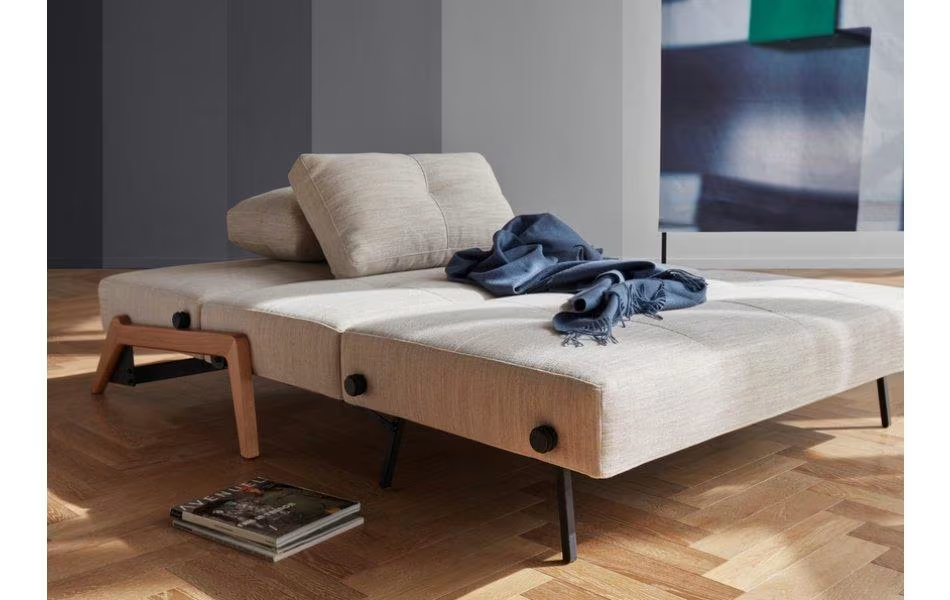
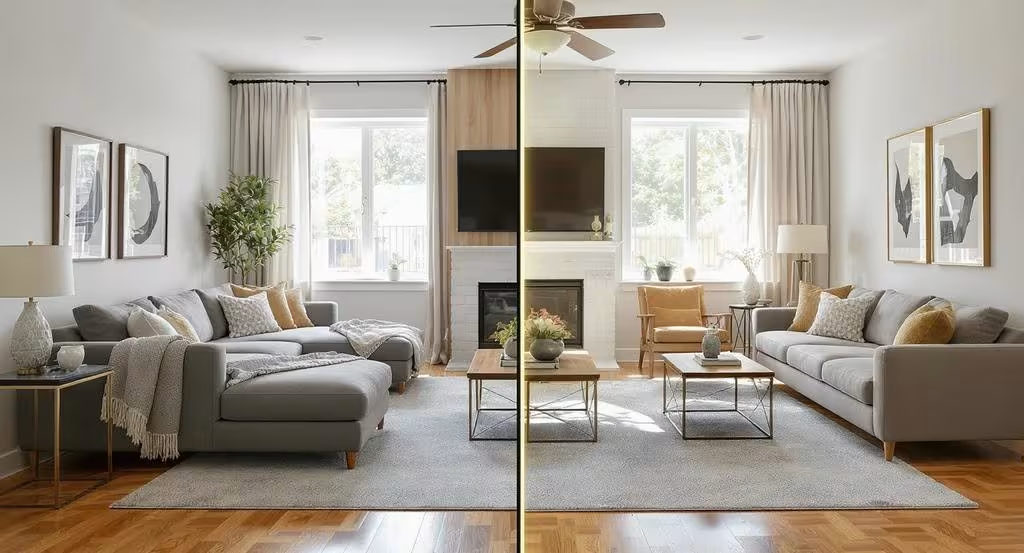
You’re on the furniture website. Tabs open everywhere. One shows a gorgeous L-shaped sectional that looks like it was pulled from a design magazine. The other is a clean, classic three-seater sofa that would probably work just fine.
And you’ve been staring at both for twenty minutes.
This is one of those decisions that feels simple until you’re actually making it — and then suddenly room dimensions, budget, lifestyle, and pure aesthetic preference are all pulling you in different directions at once. The stakes are real. This isn’t a throw pillow. It’s a piece of furniture you’ll sit on every single day, probably for the next five to ten years.
So let’s actually sort this out. Not with a vague pros-and-cons list that leaves you exactly where you started, but with the kind of honest, specific guidance that helps you make a call you won’t regret.
The Short Answer First
A sectional sofa makes sense if you have a larger room, a household that needs serious seating capacity, or an open-plan space that needs a furniture anchor. It’s built for flexibility and volume.
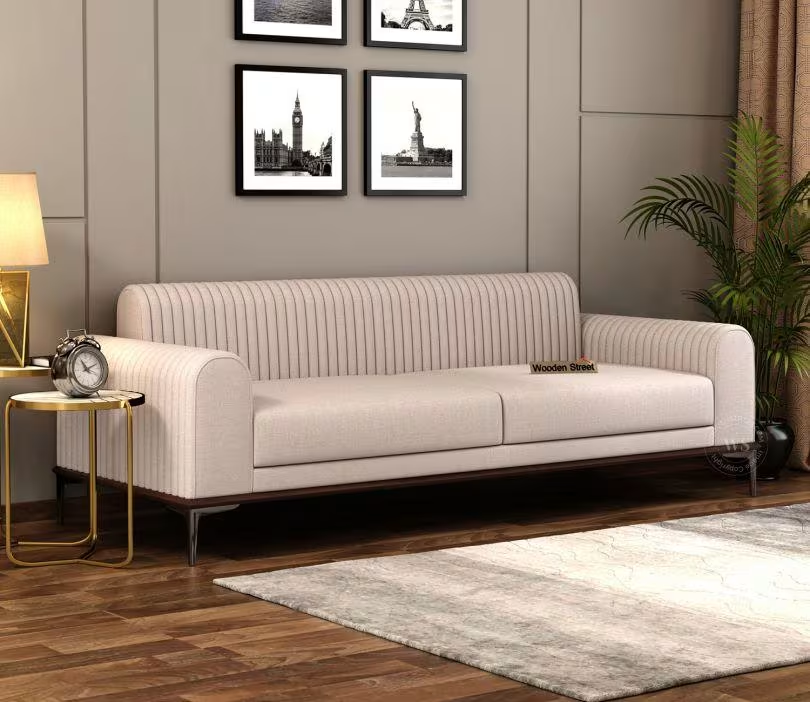
A regular sofa makes sense if your space is limited, you’re renting, you move often, or you want something versatile that works across different room configurations. It’s simpler, more adaptable, and usually easier on the budget.
Now let’s get into the actual details, because the short answer only takes you so far.
What Actually Makes Them Different
At the most basic level, a regular sofa is a single, self-contained piece of furniture. It has a back, two armrests, and seats anywhere from two to four people depending on the size. Loveseats, three-seaters, four-seaters — they’re all variations of the same fundamental design. One unit, one footprint, done.
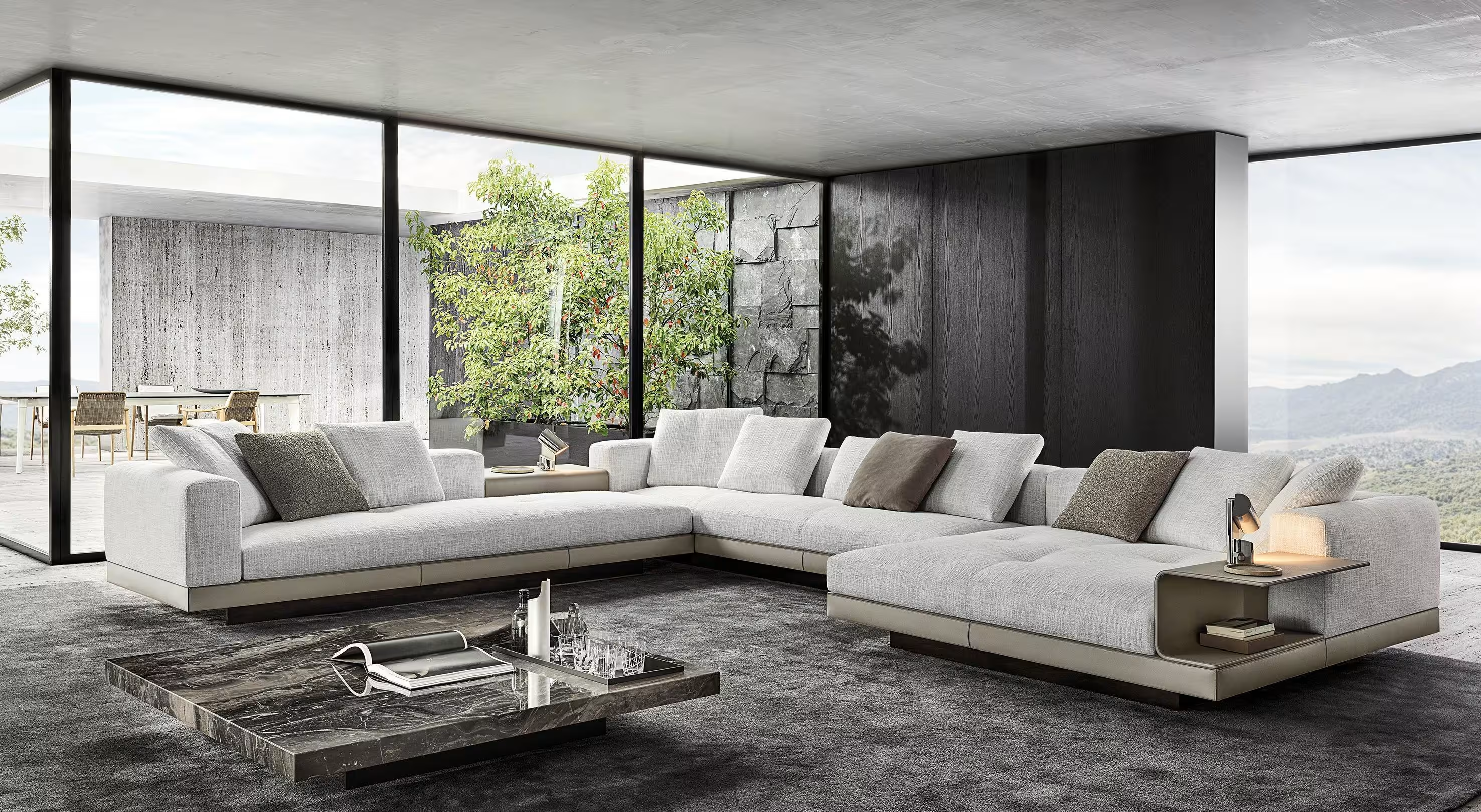
A sectional is modular by nature. It’s built from multiple connected pieces — a corner unit here, a chaise extension there, sometimes a recliner section or an armless middle chair. Those pieces join together to form larger configurations: the classic L-shape, the more expansive U-shape, or a chaise-inclusive layout where one end extends into a full lounging surface.
That modularity is both the sectional’s biggest strength and the source of its most common problems, which we’ll get into shortly.
The configurations matter more than people realize. An L-shaped sectional sits against two walls and points seating toward a focal point — usually a TV. A U-shaped sectional wraps around a coffee table and creates a more social, conversation-oriented setup. A chaise sectional gives you built-in lounging space without needing an extra ottoman or chair. Understanding which configuration you’re considering changes the entire space calculation.
If you want to go deeper on the different layouts and how they function, there’s a full breakdown of types of sectional sofas worth reading before you decide.
The Space Question — And Why Most Articles Get It Wrong
Here’s where the generic advice fails people: “sectionals need more space” isn’t useful. Of course they do. What people actually need to know is how much more, and what happens when you push those limits.
A standard three-seater sofa typically runs between 84 and 96 inches wide — that’s roughly 7 to 8 feet. It needs a few feet of clearance in front for comfortable seating and walkway access. In a living room around 10 × 12 feet or larger, a regular sofa works with room to spare.
A sectional is a different conversation. A mid-size L-shaped sectional commonly measures around 100 to 110 inches on the long side and 85 to 95 inches on the short side. That footprint demands a living room of at least 12 × 14 feet to breathe properly — and that’s on the modest end. In a space smaller than that, a sectional doesn’t just fill the room; it starts to dictate the room. Traffic flow becomes constrained. The furniture ends up defining the space rather than serving it.
This is the scenario people fear: you order the sectional, it arrives, and suddenly your living room feels like a furniture showroom with no floor visible. If your room is under 300 square feet, or if you’re working with an awkward layout — a long narrow rectangle, odd doorway placements, pillars — a regular sofa almost always gives you more workable flexibility.
That said, medium-sized rooms aren’t automatically ruled out for sectionals. A compact L-shaped sectional in a 12 × 14 room can absolutely work if you’re strategic about placement and keep the rest of the furniture minimal. The problem is when people try to fit a sectional and a full coffee table and additional chairs into a space that can only really support one centerpiece.
Seating Capacity and How You Actually Use Your Living Room
Be honest with yourself about this one, because it’s where a lot of people either over-buy or under-buy.
A regular three-seater sofa comfortably seats three people. Add an armchair or a loveseat and you’ve got a complete seating arrangement for five or six. That covers most households and most dinner party situations without a problem.
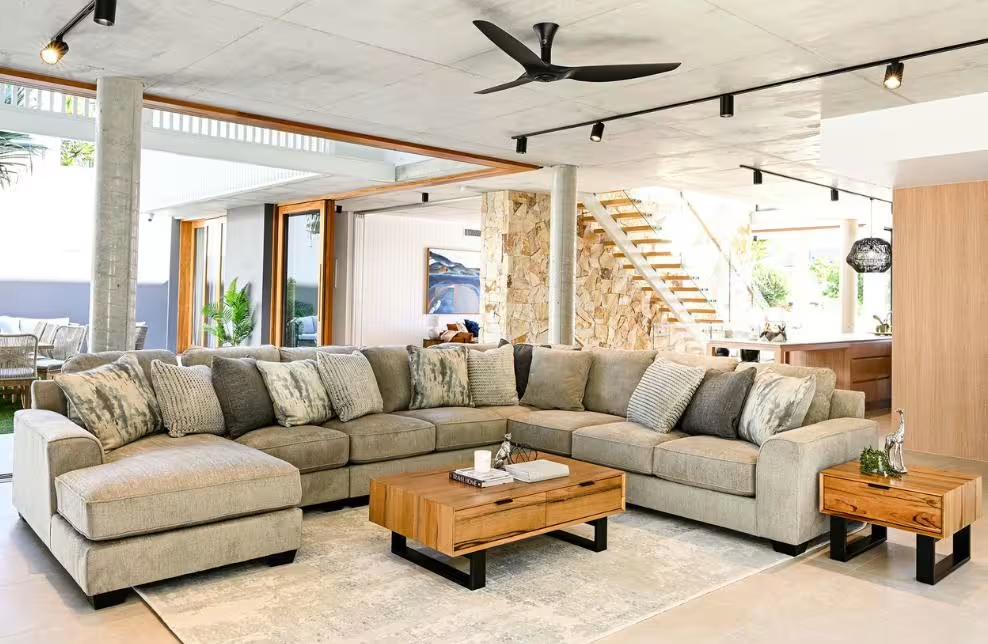
A sectional changes the math significantly. Depending on configuration, a standard L-shaped sectional seats four to six people on its own. A U-shaped configuration can accommodate eight or more. If you host frequently, have kids who bring friends home, or just have a large family that regularly occupies the same room at the same time, a sectional means nobody ends up on a dining chair dragged in from the kitchen.
But if it’s typically just you, or you and a partner, in the room? A sectional can actually feel oddly isolating. You end up occupying one corner of a massive seating arrangement. There’s something slightly strange about two people rattling around on a sofa designed for eight.
Think about the actual daily use, not the hypothetical gathering you’re hosting twice a year. If your living room is primarily for two people watching TV most evenings, a well-chosen regular sofa — maybe with a good ottoman for stretching out — will serve you far better than a sectional that’s mostly unoccupied.
And it’s worth thinking about how your sofa fits into the rest of your living room setup. If you’re putting together a coordinated space with matching furniture pieces, check out what goes into building a living room set before locking in a sofa decision — sometimes the sectional vs. regular sofa question is actually a question about the whole room’s direction.
The Cost Conversation Nobody Has Honestly
Sectionals cost more. That’s just true, and it’s worth addressing directly rather than softening with “but they offer great value.”
A decent regular sofa runs anywhere from a few hundred to a couple of thousand dollars depending on quality. A comparable sectional — same build quality, same fabric — typically costs at least 30 to 50 percent more, sometimes significantly higher once you factor in the additional sections.
The long-term value argument for sectionals has merit, though. A high-quality sectional that lasts a decade and comfortably replaces multiple pieces of seating furniture can work out to be a sound investment. You’re not buying a sofa and an ottoman and chairs to fill the room — the sectional does that work on its own.
But here’s the honest part: cheaper sectionals are often a worse deal than cheaper regular sofas. Budget sectionals have more connection points, more stress on the frame, and more ways for things to go wrong over time. A lower-priced regular sofa from a reputable brand will often outlast a similarly priced sectional from a brand cutting corners on construction.
If you’re working with a limited budget and you can’t stretch to a genuinely well-built sectional, a quality regular sofa will serve you better in the long run. Don’t buy a mediocre sectional just because it looks impressive in photos.
The Moving Problem — Seriously, Think About This
This deserves its own section because it’s consistently the thing people wish someone had told them earlier.
Sectionals are a pain to move. That’s not an exaggeration — it’s a recurring complaint from everyone who’s ever had to relocate one.
The individual sections are large and heavy. They don’t fold, they don’t compress, and in some configurations the chaise or corner pieces are awkward shapes that don’t fit through standard doorways without careful maneuvering. If you move to a new apartment with differently proportioned rooms, there’s no guarantee your sectional layout even works in the new space. You might be stuck with a configuration that doesn’t suit the room, or you’ll be reselling a sectional that’s now mildly used and harder to move than it was new.
Regular sofas aren’t always easy to move either, but a single piece is almost always more manageable than five or six connected sections. You can often get a three-seater through a doorway in one go. You can tilt it, angle it, work with it.
If you rent, if you tend to move every few years, or if you live in a building with tight staircases and narrow hallways, this consideration should carry real weight in your decision. A sectional in a ground-floor house with wide doorways is a different proposition to a sectional in a third-floor apartment in an older building.
How Each Choice Shapes the Feel of a Room
Beyond the practical stuff, the two options create genuinely different atmospheres.
A sectional anchors a room. It becomes the visual centerpiece — everything else arranges around it. Done well, this gives a living room a strong, intentional look. Done poorly, it makes the room feel overwhelmed. Sectionals tend to work best in open-plan spaces where they can define a “living zone” within a larger area without making the room feel cramped.
A regular sofa gives a room more breathing space. It’s a statement piece that doesn’t dominate. You have more freedom to add other seating, an interesting rug, a console table — the composition of the room has more room to develop. If you care about a layered, styled living room rather than a seating-maximalist one, a regular sofa usually gives you more to work with aesthetically.
There’s also the matter of style flexibility. Regular sofas come in a wider range of designs — from slim Scandinavian silhouettes to deep-cushioned classic profiles to streamlined modern frames. Sectionals have come a long way stylistically, but the sheer bulk of the form limits how refined they can look in certain room styles. A mid-century modern living room with clean lines and tapered legs, for example, almost always looks better with a well-chosen sofa than with a sectional.
For spaces where floor-level seating makes more sense — think compact apartments, minimalist interiors, or rooms that need to feel open — a Japanese floor sofa is worth considering as a third option that splits the difference between the two.
Choose a Sectional If…
- Your living room is at least 12 × 14 feet, ideally larger
- You regularly have four or more people using the living room simultaneously
- You have an open-plan space that needs a furniture anchor to define the seating area
- You own your home, or you’re in a long-term rental with no plans to move soon
- You want built-in lounging without needing extra furniture like ottomans or chaise chairs
- You can invest in quality — a well-built sectional is worth the premium; a cheap one isn’t
Choose a Regular Sofa If…
- Your living room is under 12 × 12 feet or has an awkward shape
- You rent, move frequently, or live in a building with tight access points
- It’s typically one or two people using the living room day-to-day
- You want design flexibility — a curated room with multiple furniture pieces rather than one dominant centerpiece
- You’re working with a moderate budget and want to prioritize build quality over size
- You have a formal living room or a room with a specific style that a sectional would overwhelm
A Quick Comparison at a Glance
| Sectional Sofa | Regular Sofa | |
| Seating capacity | 4–8+ people | 2–4 people |
| Ideal room size | 12×14 ft minimum | Works in most sizes |
| Cost | Higher upfront | More affordable |
| Portability | Difficult to move | Manageable |
| Style flexibility | Limited by scale | High |
| Best for | Families, large rooms, open plans | Renters, smaller spaces, styled rooms |
| Long-term value | High if quality-built | Consistent across price points |
FAQs
What size room do I need for a sectional sofa?
Most interior designers recommend a minimum of 12 × 14 feet for a standard L-shaped sectional. That allows for the sofa’s footprint plus adequate clearance for traffic and a coffee table. In anything smaller, the sectional tends to dominate the room rather than serve it.
Is a sectional sofa worth the extra cost?
It depends on how you use it. If you genuinely need the seating capacity and have the space, a quality sectional replaces multiple pieces of furniture and offers strong long-term value. If you’re buying one mainly because it looks impressive online, a well-chosen regular sofa will likely serve you better.
What are the downsides of a sectional sofa?
The main drawbacks are cost, difficulty moving, and the space commitment. Sectionals are hard to relocate, don’t always adapt well to new rooms, and can make smaller spaces feel overcrowded. Budget sectionals also tend to wear less gracefully than regular sofas in the same price range.
Can a sectional work in a small apartment?
Sometimes — but it has to be the right sectional. Compact L-shaped sectionals exist and can work in a well-proportioned apartment living room of around 12 × 12 feet if the rest of the furniture is kept minimal. In anything smaller, or with an awkward layout, a regular sofa will almost always work better.
Which is better for families with kids?
Sectionals are often a better fit for active family households — they offer more seating, built-in lounging space, and hold up well to heavy daily use if built from quality materials. Look for performance fabrics like microfiber or stain-treated weaves if kids and pets are part of the picture.
Is a sectional sofa hard to move?
Yes, genuinely. The individual sections are large, heavy, and awkward to maneuver, especially through narrow hallways or up staircases. If you move regularly or rent, this is a real practical consideration — not a minor inconvenience.
What’s the difference between a sectional and a regular sofa?
A regular sofa is a single piece of furniture with a fixed configuration. A sectional is made up of multiple connected modules that can be arranged into L-shapes, U-shapes, or chaise layouts. Sectionals offer more seating and flexibility in large rooms; regular sofas are simpler, more portable, and work across a wider range of spaces. For a deeper look at how sectionals are configured, the types of sectional sofas guide covers all the main layouts in detail.