Estimated reading time: 9 minutes
Last updated on June 23rd, 2026 at 07:19 am
Standing in the middle of a half-set-up nursery (or, let’s be honest, a corner of your bedroom) trying to decide between a bassinet and a full crib is one of those moments where the internet does not help. Half the articles tell you a crib is the only “real” safe option. The other half talk about how cozy and secure bassinets are for newborns, like a crib is somehow second-best. So which one is it?
Here’s the short, honest answer: both a baby bed (bassinet or Moses basket) and a baby crib can be safe for your newborn — they just serve different stages and different setups. The bigger question isn’t really “which one is safer.” It’s “am I using whichever one I choose the right way.” That distinction matters more than people realize, and it’s where this gets a lot less stressful once you understand it.
Baby Bed vs Baby Crib — What’s Actually Different
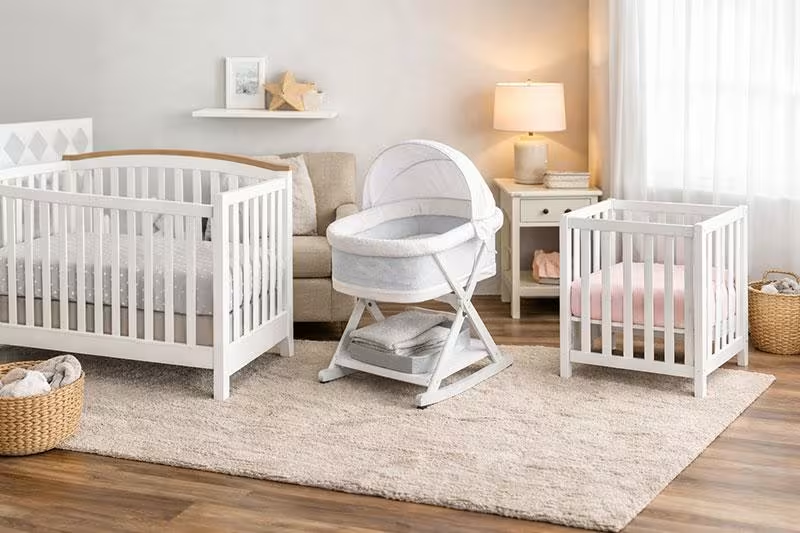
A baby bed (bassinet or Moses basket) is small, lightweight, and usually portable. It’s designed for roughly the first four to six months. Because it’s compact and a bit enclosed, a lot of newborns seem to settle into it more easily — and it’s genuinely convenient if you’re keeping the baby close to your bed for those early months.
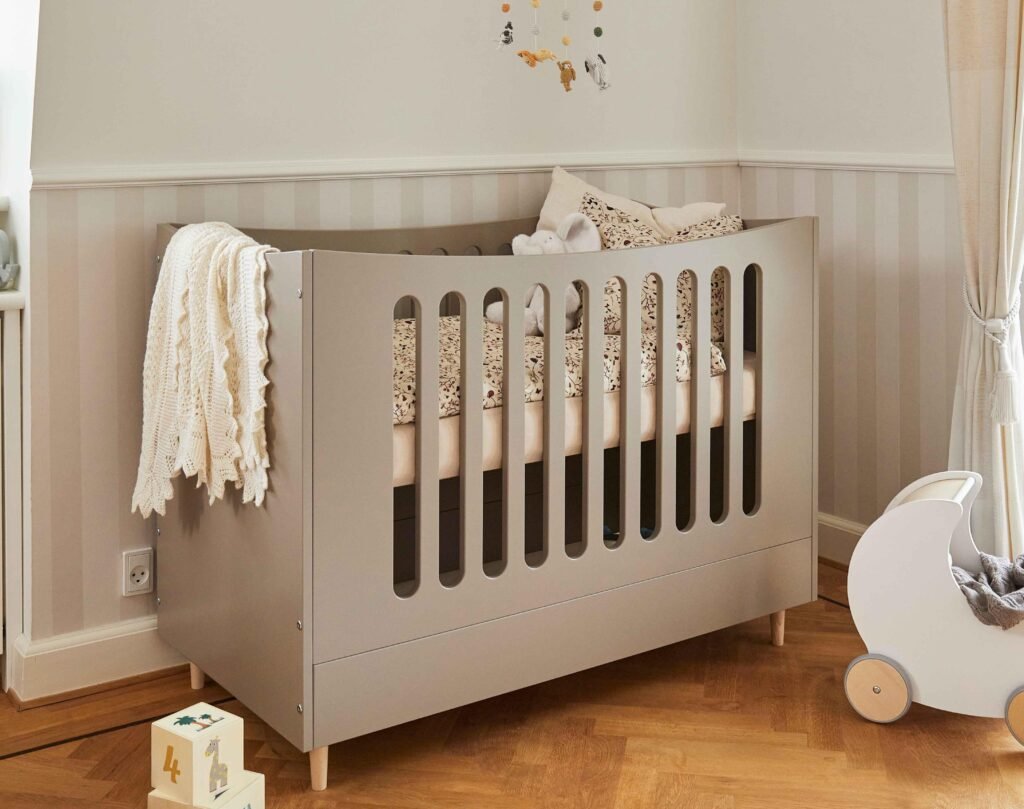
A baby crib is bigger, heavier, and fully rigid, with slatted sides that meet specific spacing requirements. Cribs are built to last — many have adjustable mattress heights so the setup can change as your baby grows, and a standard crib will typically take your child well into toddlerhood.
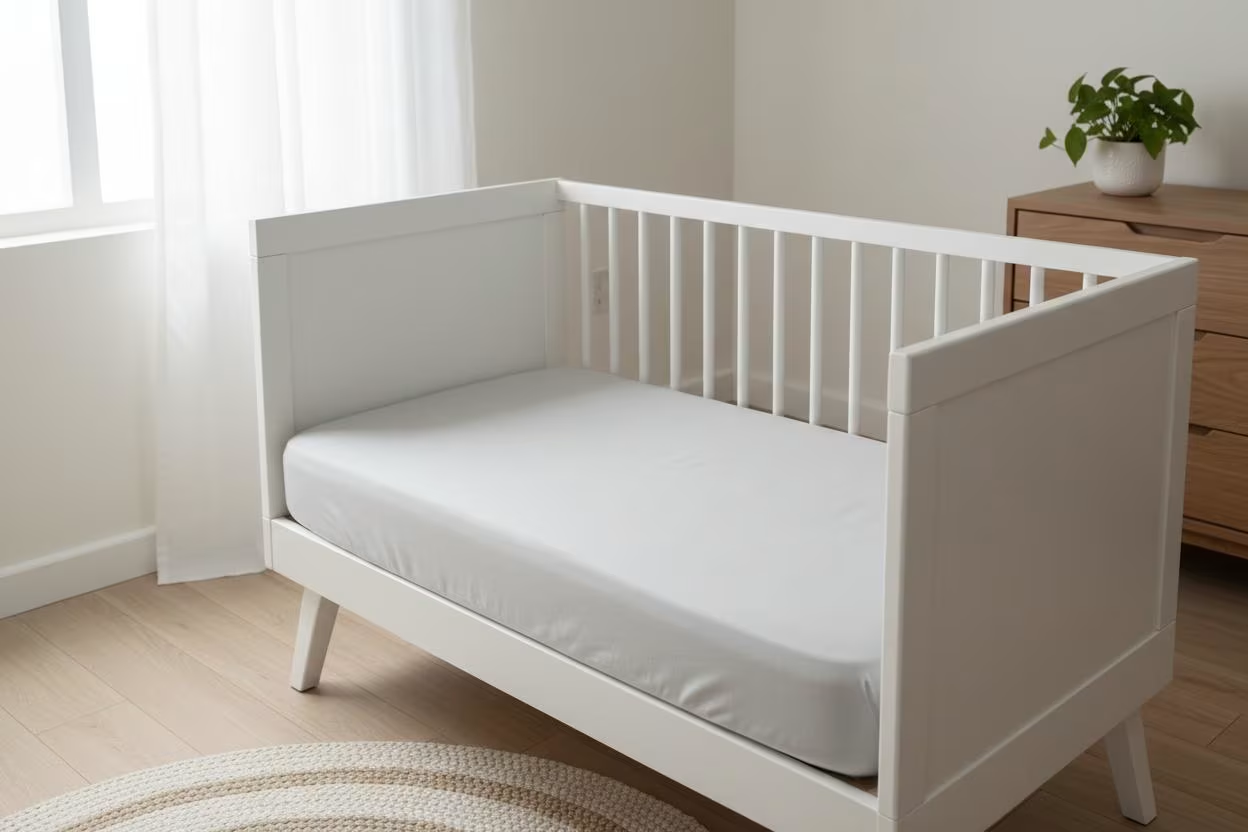
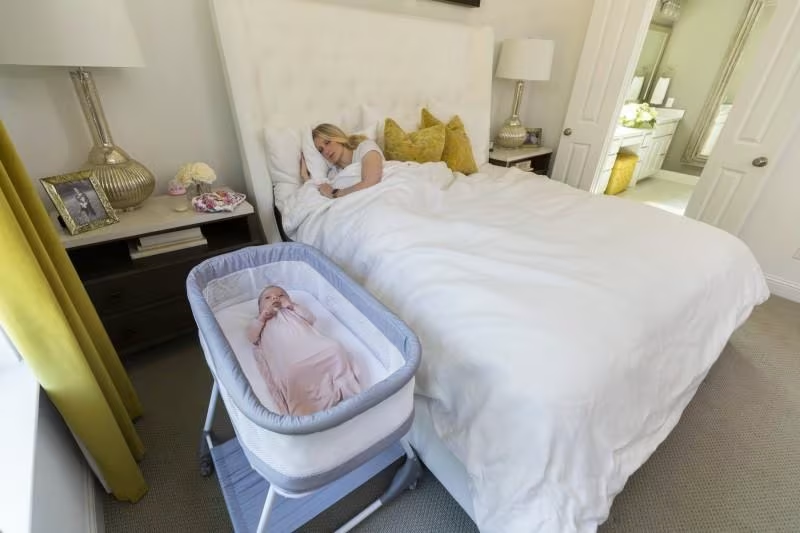
Here’s the part that often gets lost in the “which is safer” framing: a crib being more durable and certified for longer use doesn’t mean a bassinet is less safe for what it’s designed for. The American Academy of Pediatrics actually recommends room-sharing — keeping your baby’s sleep space in your room, but on its own separate surface — for at least the first six months. A bassinet next to your bed is, for a lot of families, exactly the setup that’s recommended for this stage. It’s not a placeholder until you’re “ready” for a real crib. It’s doing its job.
If you’re trying to picture what a baby bed actually looks like and how the different styles compare, what is a baby bed and types of baby beds are good starting points before you buy.
The Safe Sleep Practices That Matter More Than Which One You Pick
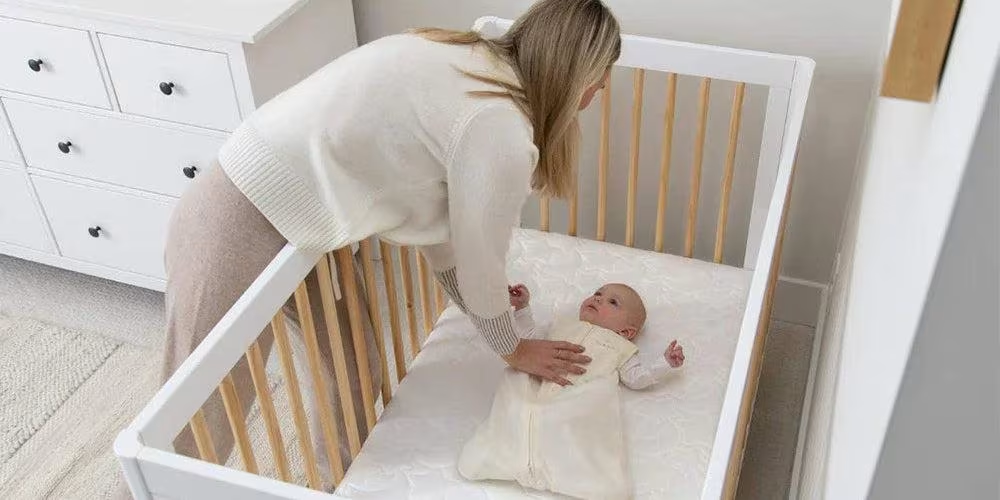
This is genuinely the part that determines whether your baby’s sleep space is safe — far more than whether it’s a $40 bassinet or a $400 crib. The guidelines below come from the AAP’s safe sleep recommendations, and once you understand the reasoning, they’re easy to remember.
The mattress needs to be firm and flat — not the soft, plush feel that seems “comfortable” to an adult. A firm surface keeps a newborn’s face from sinking in, which matters because babies can’t reposition themselves the way older kids and adults can.
The sleep space itself should be bare — no loose blankets, pillows, bumper pads, or stuffed animals, no matter how cute the matching set looks in the store. Anything soft near a newborn’s face is a suffocation risk, and this is one of those areas where what looks nice in photos and what’s actually safe are two very different things.
The sheet should be a fitted sheet that’s snug with no bunching or loose fabric — same reasoning, less fabric near the face, no loose material to bunch up.
Always put your baby down on their back to sleep, for naps and at night. This one’s been repeated so often it can start to feel like background noise, but it’s one of the most well-supported pieces of advice in infant sleep safety.
Skip wedges, positioners, and inclined sleepers entirely, even ones marketed specifically for sleep. They can restrict airflow in ways that aren’t obvious, and several products in this category have been recalled over the years for exactly this reason.
For warmth, use a sleep sack (a wearable blanket) instead of a loose blanket. It does the same job — keeping your baby warm — without anything loose in the sleep space.
Things to Leave Out of the Sleep Space
If you’ve been handed hand-me-down crib bumpers, or you’re tempted by a soft, padded bassinet liner because it “looks cozy,” this is the moment to set those aside. They were common advice a generation ago, and some are still sold today, but current guidance is clear that anything soft and loose near a newborn’s face — bumpers included — adds risk without adding any real benefit. It’s not about judging anyone who used these before; it’s just that the guidance has genuinely evolved, and following the current version is one of the simplest things you can do.
When (and How) to Move From a Bassinet to a Crib
If you started with a bassinet, the transition to a crib usually happens around four to six months — but the actual trigger isn’t the calendar, it’s your baby’s development.
Signs Your Baby’s Outgrowing the Bassinet Early
Watch for your baby starting to roll over on their own, or push up onto their hands and knees. Either of these means it’s time to move to a crib, even if your baby is younger than the typical range — a bassinet that felt secure for a baby who couldn’t move much suddenly isn’t built for a baby who can shift around and potentially roll toward the sides.
The other clear signal is hitting the weight or height limit listed by the manufacturer for your specific bassinet. These limits exist because the structure and depth of a bassinet are designed around a certain size — past that point, the margin of safety the product was built around starts to shrink.
If either of these happens earlier than you expected, that’s completely normal, and it’s worth treating it as a “this week” task rather than something to plan around for next month. Babies don’t wait for the timeline in the manual.
Looking further ahead, once your baby’s in a crib, the next milestones (crib mattress choices, and eventually the move to a toddler bed) are worth getting familiar with early — toddler mattress vs crib mattress and what is a toddler bed cover what’s coming next, even if it feels far off right now.
What Actually Fits Your Situation
Safety guidelines are the same no matter your living situation, but the practical decision between a bassinet and a crib (or going straight to a crib) often comes down to things that have nothing to do with safety — and that’s completely fine to factor in.
If you’re in a smaller bedroom or apartment and room-sharing is part of the plan, a bassinet is the natural starting point — it’s compact, it fits beside your bed, and it’s exactly aligned with current room-sharing guidance. If a full-size crib feels like too much for your space right now, but you still want something crib-style sooner, it’s worth looking at crib vs mini crib — a mini crib can bridge that gap without taking up a full nursery’s worth of room.
If budget is the bigger factor, it’s worth knowing that a bassinet is a short-term purchase by design — most babies are out of it within six months regardless of which one you buy. Some families skip it entirely and go straight to a crib with the mattress set at its highest position, which is also a completely safe option as long as the safe sleep practices above are followed. Neither path is the “better” one — it’s really about what makes sense for your space, your budget, and how you’re planning those first few months.
Whatever you land on, the decision that actually matters most isn’t bassinet-versus-crib. It’s making sure wherever your baby sleeps — bassinet, crib, or eventually a toddler bed — follows the same basic safe sleep practices every single time, including at grandma’s house, in a hotel, or anywhere else that isn’t the carefully set-up nursery at home.
FAQs
Is a bassinet safer than a crib for newborns?
Neither is inherently safer — both can be completely safe for a newborn when used correctly. Bassinets are designed for the first four to six months and work well for room-sharing, while cribs are built to last longer and meet certification standards for extended use. Safety comes down to following safe sleep practices, not which one you choose.
When should I move my baby from a bassinet to a crib?
Most babies transition around four to six months, but the real signs are developmental: once your baby can roll over or push up onto their hands and knees, or reaches the manufacturer’s weight or height limit for the bassinet, it’s time to move to a crib — regardless of age.
What are the AAP’s safe sleep guidelines?
The key guidelines include using a firm, flat mattress designed for the sleep space, keeping the area free of blankets, pillows, bumpers, and toys, using a snugly fitted sheet, always placing babies on their backs to sleep, avoiding wedges and inclined sleepers, and using a wearable sleep sack instead of loose blankets.
Can crib bumpers be used safely?
Current safe sleep guidance recommends against crib bumpers entirely. Even padded or “breathable” versions add soft material near a baby’s face without providing any real safety benefit, so the sleep space is safest when left bare.
Is room-sharing safer than bed-sharing?
Yes. The AAP recommends room-sharing — keeping your baby’s crib or bassinet in your bedroom on its own separate sleep surface — for at least the first six months, as it’s associated with a lower risk of sleep-related infant deaths compared to bed-sharing, where the baby sleeps in the same bed as an adult.